Journalists in Togo are facing fresh scrutiny after the suspension of a correspondent for reporting publicly available information, reigniting debates over press freedom and regulatory boundaries in the country.
Emmanuelle Sodji’s case: a timeline under scrutiny
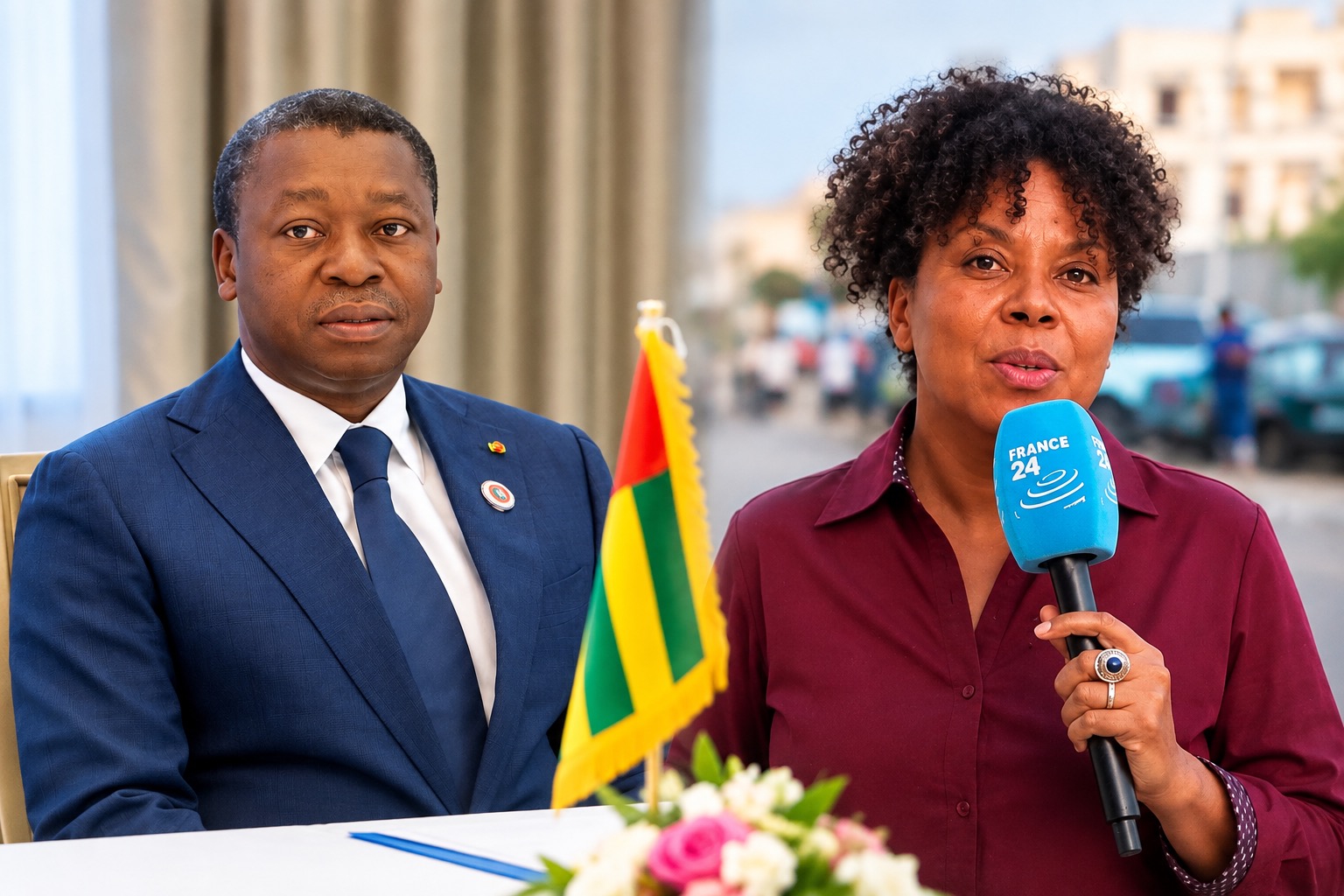
On August 18, 2026, Emmanuelle Sodji, a veteran correspondent for France 24 based in Benin, relayed details regarding the ongoing legal case of two French nationals detained in Togo. The pair, filmmakers Gaël Mocaër and Sebastian Perez Pezzani, had been arrested on July 27, 2026, while working on a documentary in northern Togo. They were charged with visa irregularities and later granted provisional release on September 1, allowing them to leave the country.
The controversy centers on the timing of the information’s release. According to the Syndicat national des journalistes CGT, the facts Sodji reported were already circulating in local media and on social platforms prior to her broadcast. The regulatory authority in Togo acknowledged the next day that the information had been in the public domain since August 18, raising questions about the grounds for any punitive action against the journalist.
The journalists’ union argues that the suspension—or removal—of Sodji constitutes a form of retroactive punishment, calling into question the notion of prior notice and editorial accountability. The SNJ-CGT emphasizes that professionals should not face penalties for reporting on information already in the public realm, especially when no explicit editorial restriction has been issued.
Togo’s media landscape: growing restrictions
This incident is not isolated. In June 2025, Togo’s broadcasting regulator suspended RFI and France 24 for three months, citing concerns over impartiality and factual accuracy in certain programs. Authorities claimed that some content was misleading or biased. While the targeted outlets defended their editorial standards, critics warned that such measures risk narrowing the media space in a politically charged environment.
This broader context frames the Sodji case as part of a wider pattern. The key issue is not whether journalists must adhere to professional standards—clearly, they should—but whether the rules governing those standards are transparent, consistently applied, and free from political influence.
Where the line should be drawn
In any functioning democracy, authorities may restrict sensitive information when national security or due process is at stake. However, such restrictions must be clearly defined, communicated in advance, and enforced without discrimination.
Journalists, for their part, must verify their sources, respect legal procedures, and avoid turning sensitive reports into speculation. The challenge lies in defining the boundaries between legitimate editorial judgment and interventions that may amount to censorship.
In the Togolese context, the question is particularly acute: when information is already public and widely shared, how can a journalist’s accountability be fairly assessed? The timing, clarity, and intent behind restrictions become central to the debate.
Broader implications for press freedom under Gnassingbé
Since taking office, President Faure Gnassingbé’s administration has faced repeated criticism over democratic space, including restrictions on assembly and press freedoms. In June 2025, protests in Lomé were met with heavy security measures amid ongoing institutional shifts involving the Council of Ministers.
Each new restriction on media outlets or personnel is weighed not only for its legal justification but for its political symbolism. The Sodji case underscores a fundamental question: can journalists investigate and report freely when their work touches on state interests or sensitive political affairs?
The answer should not depend on a media outlet’s country of origin, its political leanings, or the identity of the reporter. It should rest on two pillars: clear, apolitical rules and robust legal protections that allow journalism to function without fear of reprisal.
As Togo moves forward, the international and domestic response to this case will be closely watched. Will authorities clarify the rules? Will journalists receive the protections they need to report without intimidation? Or will each sensitive story come with the risk of punitive action?
What comes next for Togolese media
The outcome of this controversy will shape the future of journalism in Togo. It will signal whether the country is committed to a free press defined by clear, fair rules—or whether it allows regulatory uncertainty to become a tool of control.
One thing is certain: the stakes extend beyond a single correspondent. They touch on the very essence of democratic governance in Togo.