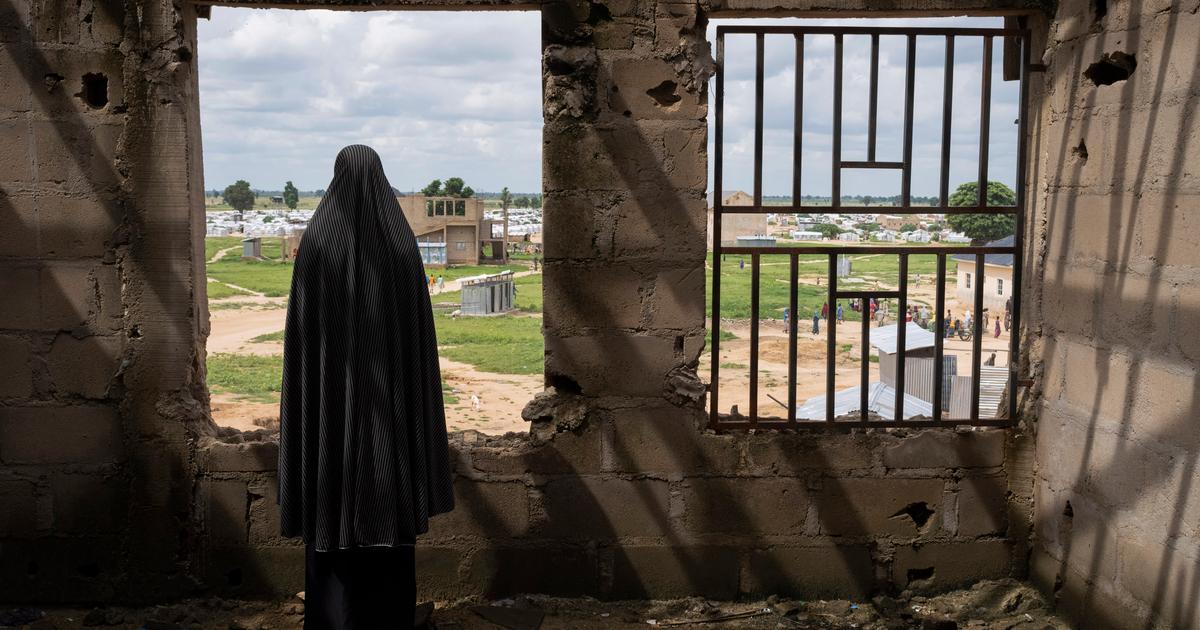

Aisha, Juliana, and Hauwa. These three names belong to women whose harrowing stories of survival have often been overlooked. While mass abductions by the jihadist group Boko Haram frequently capture international headlines, the personal testimonies of the women who live through the horror remain largely unheard.
Aisha’s life was irrevocably altered one Saturday evening in April 2014. She was preparing a stew in her village of Gamboru Ngala, in Nigeria’s northeastern Borno State, when insurgents attacked. Unable to flee, she watched as they killed her brother. Aisha, along with other women from the village, was taken captive. She was brought to a camp, led into a tent, and confronted by a tall, bearded man who identified himself as a Boko Haram commander and claimed her as his wife. “Every night, they would come for me in the room, and he would rape me,” Aisha recounted.
“Boko Haram Wife”
She finally escaped during a Nigerian military offensive after two years of captivity, an ordeal that included multiple forced marriages, repeated rapes, and three forced pregnancies.
Juliana, another survivor, was abducted at the age of 15 with her mother in Adamawa State, also in northeastern Nigeria. After two years in captivity, she managed to escape with the assistance of an elderly woman.
“Before her abduction, she dreamed of finishing high school and going to university to become a computer engineer.”
The longest ordeal was endured by Hauwa, who spent a decade as a prisoner of the insurgents. During this time, she was married off to three different men and gave birth to four children. Upon her return home, she felt not only “defiled” but deeply “stigmatized.” She was often referred to as a “Boko Haram wife,” and her children were treated like pariahs, forbidden from interacting with other children.
This discrimination is a central part of their story, exploring how former captives, freed from their aggressors, are often rejected by their own communities. The narrative also examines reintegration initiatives and the potential for transitional justice to combat impunity for gender-based violence and address the lasting trauma of the conflict. This is a crucial step in helping these women, who have multifaceted needs, to heal.
Juliana’s words capture the lingering psychological wounds: “People congratulate me for being free, but a part of my heart is still a prisoner in that forest. I am haunted by the thought of the women we left behind.”