geopolitical shifts in the Sahel: a quiet american comeback
The Sahel is witnessing a subtle yet significant geopolitical reshuffle. While European forces have gradually withdrawn from Mali, Burkina Faso and Niger, and Russia has bolstered its presence through proxy structures, the United States is appearing to regain momentum in the region. However, as Emmanuel Dupuy, president of the Institut de Prospective et de Sécurité en Europe (IPSE), points out, this isn’t a full-scale return—rather, it’s a calculated repositioning. “It’s not about a resurgence; it’s about confirming that the U.S. never fully left and waited for the erosion of other actors before reclaiming its position,” he explains.
Dupuy argues that Washington hasn’t abandoned the Sahel but has instead adopted a low-profile strategy, allowing internal dynamics to realign and European influence to wane before stepping back in.
pragmatism over ideology in us Sahel strategy
The American approach aligns with its long-standing tradition of pragmatic diplomacy. “Americans negotiate with partners they don’t necessarily agree with,” Dupuy notes. In this transactional framework, ideological alignment takes a backseat to security and economic interests.
He adds: “The U.S. doesn’t view Russia as a threat—in fact, it sees complementary opportunities arising from the strategic vacuum left by European withdrawals.” Rather than direct confrontation, this emerging Sahel dynamic reflects a mutual adjustment game, where each power capitalizes on the space vacated by others.
Several factors, according to Dupuy, are creating a window of opportunity for Washington. “Everything is aligning for the Americans. The UN’s credibility is fading, and Russia struggles to effectively counter armed terrorist groups.” The decline of UN authority and Russia’s operational limitations are opening indirect redeployment pathways for the U.S.
diplomatic pragmatism: engaging with military regimes
America’s strategy hinges on structured dialogue with incumbent authorities, regardless of how they came to power. Dupuy draws a parallel: “The U.S. applies the same structured engagement with Malian authorities as it did with Afghan officials, ultimately paving the way for negotiations with the Taliban.”
This approach sets the U.S. apart from Europe: “Unlike Europeans, who reject military regimes—referred to as ‘juntas’—Americans are willing to work with them.” While the outcome remains uncertain, this stance highlights a willingness to accept political realities.
economic leverage: the african growth and opportunity act
Beyond security, the U.S. is leveraging economic tools. Dupuy highlights the revival of the African Growth and Opportunity Act (AGOA), which grants tariff exemptions to 30 African nations, including several Sahel countries. This framework complements security strategies by fostering economic ties.
private military contractors and the us-Russia coexistence model
The question of U.S.-Russia coexistence in the Sahel often arises. Dupuy dismisses concerns: “It works because neither the U.S. nor Russia will deploy regular troops. Instead, private military companies (PMCs) and security firms will operate—exactly what the Americans are doing.”
He cites the facilitation of a deal between the Democratic Republic of the Congo and Rwanda as an example, where American involvement was indirect, involving firms like Blackwater. This outsourcing model mirrors practices seen in other conflict zones.
Turkey and China: limited roles in Sahel dynamics
Dupuy notes that the U.S. shares convergences with other actors, such as Turkey, while China’s presence in Sahel security remains minimal. This gap presents another opportunity for Washington to expand its influence.
Morocco: the unexpected linchpin of american influence
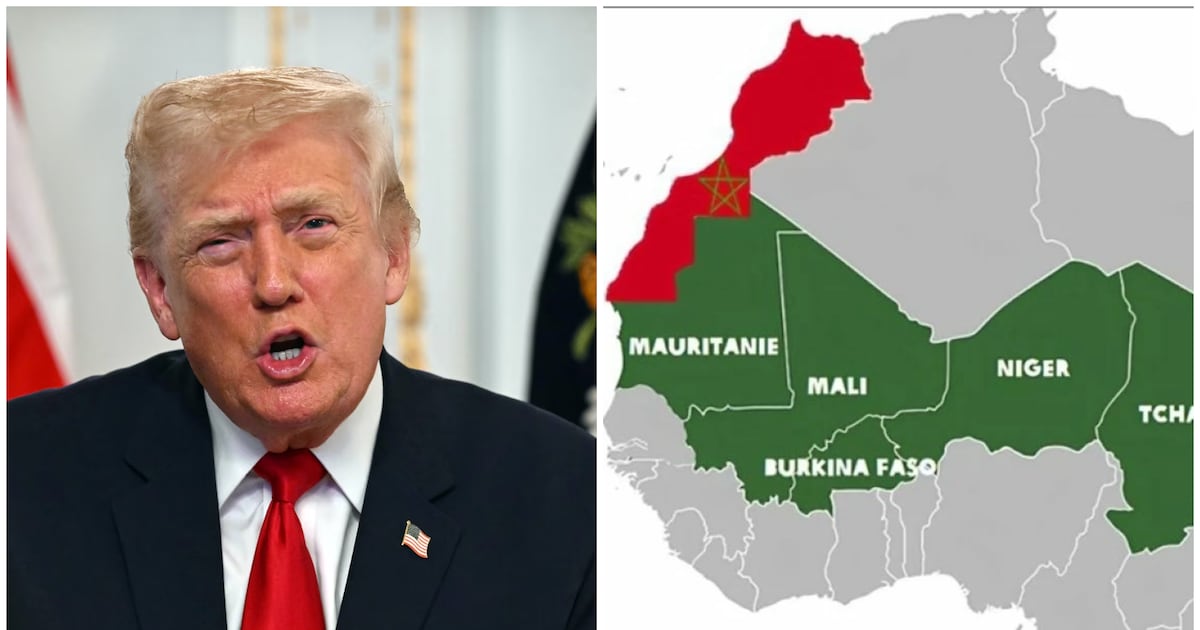
In this evolving landscape, Morocco is emerging as a pivotal partner for the U.S. Bilateral cooperation between Rabat and Washington has deepened across military, economic, and diplomatic spheres. Dupuy believes a broader Sahel partnership could emerge: “Morocco is likely the ideal partner the U.S. needs.”
He emphasizes that the U.S. cannot intervene directly in the Sahel and thus relies on Morocco’s diplomatic leverage. “The kingdom maintains strong ties with governments in Mali, Niger, and Burkina Faso, even those formed after coups.” This unique position allows Morocco to act as a bridge between Washington and regional authorities.
soft power tools: religious diplomacy and economic corridors
Morocco’s influence extends beyond politics. Since 2015, the Mohammed VI Institute for the Training of Imams has trained religious leaders from across the region, promoting a moderate, Maliki-Sufi Islam. “This is an extremely effective tool for soft power and regional stabilization,” Dupuy notes.
Additionally, Morocco offers economic prospects, such as logistical corridors connecting Burkina Faso, Niger, and Mali via Mauritania, as well as investments in southern Morocco. While these projects are long-term, they underscore Rabat’s strategic vision.
the Maghreb-Maghreb and atlantic axis
Dupuy highlights that Morocco’s partnership with the U.S. isn’t confined to the Sahel. Since 2016, the kingdom has held a “major non-NATO ally” status, reflecting its role in a Maghreb-Atlantic-Mediterranean triangle. This status reinforces Morocco’s credibility as a stable interlocutor in integrating Euro-Mediterranean initiatives, from the 1995 Barcelona Declaration to the Union for the Mediterranean.
Algeria’s shrinking influence in the Sahel
Algeria’s role in the Sahel appears increasingly constrained. Dupuy questions its remaining leverage: “Honestly, I don’t see any.” He argues that Algeria’s diplomatic maneuvers, particularly on the Sahara issue, are unlikely to shift regional dynamics. “The U.S. has reiterated that the only framework for discussion is the autonomy plan.”
Projects like energy initiatives have stalled, leaving Algeria with limited options. The Madrid meeting marked a turning point, shifting discussions from ideological debates to practical implementation—focusing on local governance, economic development, maritime zones, agriculture, and exclusive economic zones.
a new Sahel strategy: extractive interests and logistical networks
The Sahel is no longer just a theater of security rivalries but a space for strategic realignment. Extractive interests, military outsourcing, religious diplomacy, and logistical corridors are intertwined. In this chessboard, the U.S. adjusts its posture, and Morocco solidifies its role as a regional pivot bridging the Atlantic, Mediterranean, and African interior.