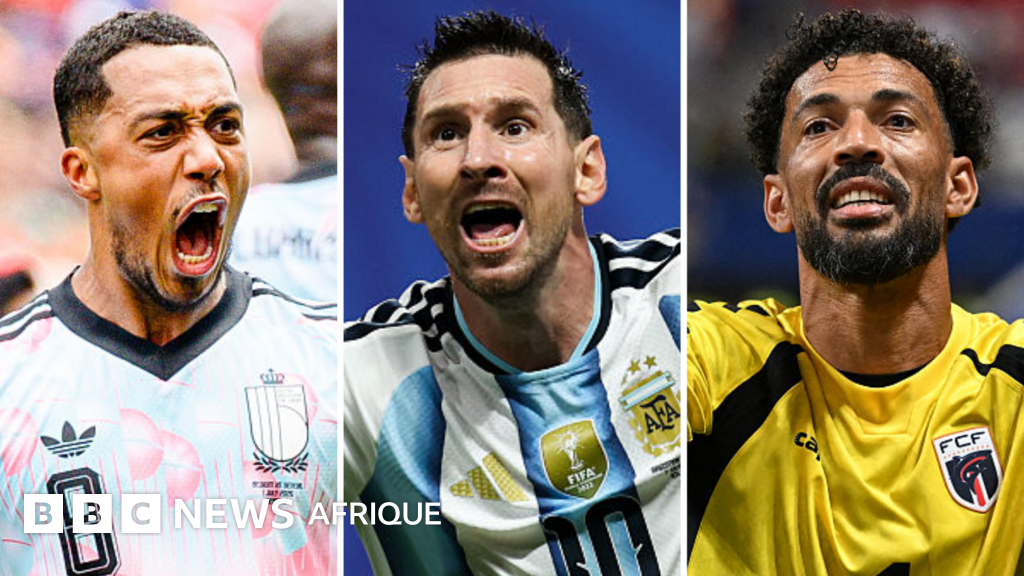
A festival of football: goals, suspense and records define the 2026 World Cup
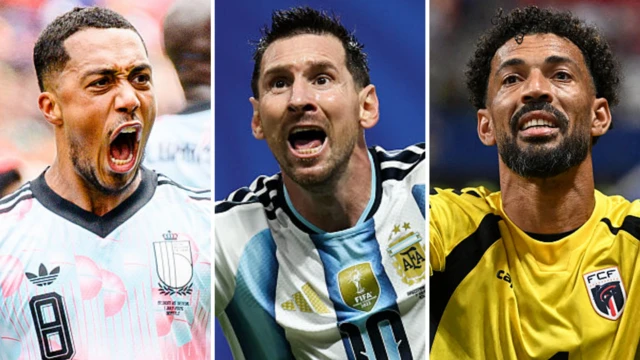
With the quarter-finals underway and eight matches still to play, the 2026 World Cup has already delivered a tournament like no other. Hosted across Canada, Mexico and the United States for the first time with 48 teams, the competition has redefined what a football extravaganza should be.
But is it the greatest World Cup of all time? The answer, as ever, is subjective. For some, their first taste of the tournament will always hold that title. For others, it may hinge on their team’s journey through the competition. Yet the statistics suggest this edition is already standing shoulder-to-shoulder with the very best.
Goals galore and thrilling encounters
In 104 matches played so far, 280 goals have been scored — an average of 2.92 per game. This is the highest scoring rate since Mexico 1970, where 95 goals were netted in 32 games (2.97 per match). Compared to recent tournaments, this edition is significantly more attacking: 2.69 goals per game in Qatar 2022, 2.64 in Russia 2018, 2.67 in Brazil 2014, and 2.27 in South Africa 2010.
The highest-scoring match was Germany’s 7-1 thrashing of Curaçao, but seven other games also featured six goals, and 13 ended with five strikes. Only 5% of goals came from penalties — the lowest proportion in World Cup history — while 74.6% were scored in open play, one of the highest rates ever recorded.
Late drama and unforgettable comebacks
The knockout stages have been nothing short of spectacular. Of the 24 knockout matches played, eight were decided by a goal scored after the 85th minute. Argentina needed extra time to overcome Cape Verde in a gripping round-of-16 clash, and four matches went to penalties.
Enzo Fernández’s 90th-minute winner against Egypt marked the 10th goal scored in the 90th minute or later, setting a new World Cup record. Three of July’s most unforgettable games saw Belgium, Argentina and England come from behind to beat Senegal, Egypt and Mexico respectively, all by 3-2 scorelines.
Belgium and Argentina, in particular, completed remarkable comebacks from two-goal deficits — a feat not seen since 1970, when multiple teams achieved the same in a single tournament. England’s victory was even more remarkable, achieved after 40 minutes of numerical inferiority and a heroic display in the electrifying atmosphere of Mexico City’s Azteca Stadium.
The tournament has also seen eight clean sheets in group-stage matches — a World Cup high — raising questions about whether this reflects defensive mastery or a growing attacking balance across teams.
A global fan spectacle in packed stadiums
Despite concerns over high ticket prices and travel costs, stadiums have been filled to near capacity. FIFA reports a 99.7% attendance rate, with over 4.4 million spectators across group-stage matches and 6.2 million so far in the knockout rounds. Average attendance stands at over 65,000 per game — second only to the 1994 U.S. World Cup, where average crowds topped 69,000.
This isn’t just a numbers story — it’s a global celebration. Fans from every continent have traveled vast distances, filling stadiums with color, passion and unforgettable chants. The atmosphere has been electric, proving that football’s magic transcends borders.
Star power and underdog stories
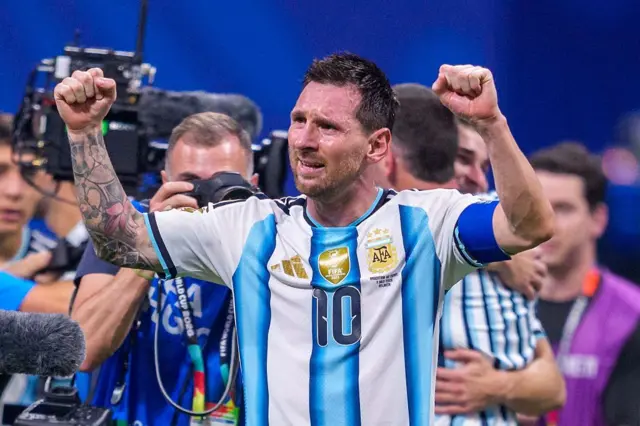
The tournament has also showcased the world’s top talents. The race for the Golden Boot is fierce: Lionel Messi (Argentina) leads with eight goals, followed by Kylian Mbappé (France) and Erling Haaland (Norway) with seven each, and Harry Kane (England) with six. It’s the first time in World Cup history that three players have scored seven or more goals in a single tournament.
But the real story may be the underdogs. Curaçao, the smallest nation ever to qualify, stunned fans with a draw against Ecuador after a heavy loss to Germany. Qatar, despite a 6-0 drubbing by Canada, fought back to earn a 1-1 draw with Switzerland — a quarter-finalist. Cape Verde, led by veteran goalkeeper Vozinha, delivered one of the competition’s most inspiring campaigns, holding Spain, Uruguay and Saudi Arabia to draws before pushing Argentina to extra time in a breathtaking round-of-16 clash.
Controversies and challenges
No tournament is without its shadows. High costs for travel, accommodation and tickets have strained the budgets of supporters like never before. Hydration breaks, introduced to protect players in extreme heat, drew mixed reactions — welcomed in scorching conditions, but criticized during rain or in air-conditioned stadiums with closed roofs.
The tournament’s length — from June 11 to July 19 — has also raised concerns. With nearly every day of the month featuring matches, physical and mental fatigue is a growing issue for players. The Premier League’s August 21 restart leaves barely a month’s recovery after the final.
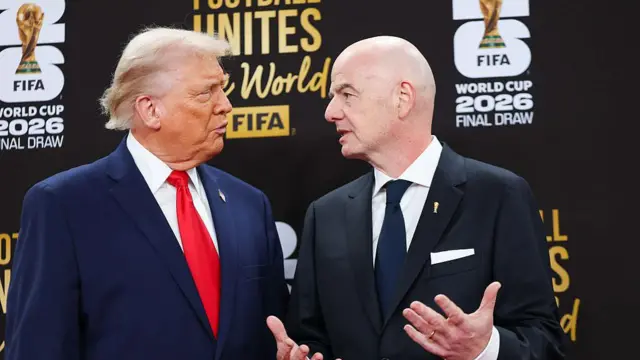
The integrity of officiating has been questioned, too. The controversial overturning of Folarin Balogun’s red card following direct intervention from former U.S. President Donald Trump and FIFA President Gianni Infantino — using a rarely invoked disciplinary clause — has sparked outrage. Balogun, sent off against Bosnia-Herzegovina, was allowed to play in the next round, becoming only the second player in World Cup history to avoid suspension after a red card. The first was Garrincha in 1962, amid allegations of political interference.
Criticism came from UEFA, the Belgian FA and England manager Thomas Tuchel. Belgian players later admitted it fueled their motivation. The episode has fueled debates about the politicization of the game and the need for stronger safeguards against external influence.
Can the final live up to the hype?
As the quarter-finals approach, four of the world’s top-ranked teams — Argentina, Spain, France and England — remain in contention. With attacking football, dramatic comebacks and record crowds, the stage is set for a thrilling climax.
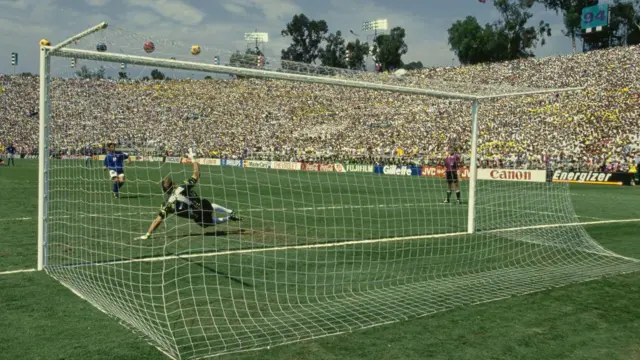
History shows that even great tournaments can be remembered for less-than-memorable finals. Recall Italia ’90 or USA ’94, whose legacies were overshadowed by uninspired deciders. But Qatar 2022 redeemed itself with a pulsating final.
If the 2026 World Cup delivers a similarly unforgettable final, it may well cement its place in history as the greatest of all time.