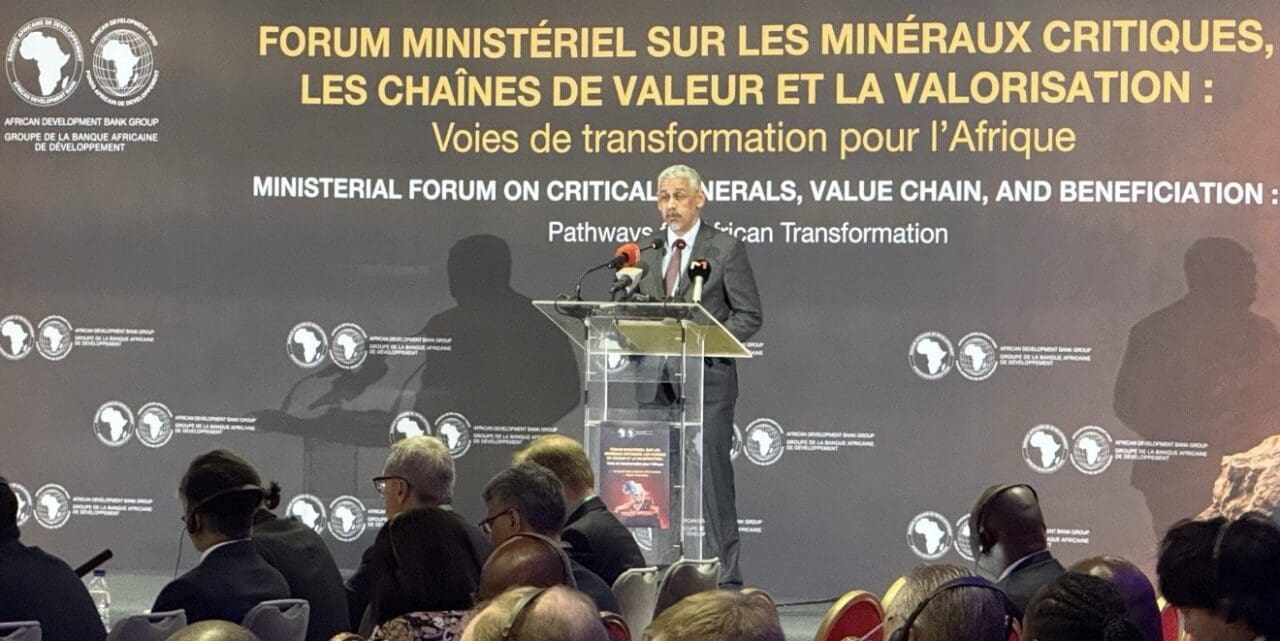
African nations rich in critical minerals and their development partners gathered in Abidjan this month to chart a bold new course for the continent’s most valuable resources. The goal? To turn Africa’s vast mineral wealth—estimated at $29.5 trillion—into a driving force for economic growth, industrialization, and social progress across the region.
The high-level ministerial conference brought together ministers from African countries with key portfolios in mining, energy, industry, and green economy, alongside representatives from the African Union Commission, the African Continental Free Trade Area (AfCFTA) secretariat, the United Nations Economic Commission for Africa, regional development banks, financial institutions, and global investors.
Abidjan summit launches a new era for Africa’s minerals
The central focus of the discussions was clear: shifting from raw material export to value-added processing, strengthening regional supply chains, and ensuring that mineral wealth translates directly into tangible benefits for African citizens. Speakers emphasized the need for a unified strategy to capture a larger share of the global supply chain—currently dominated by foreign actors.
Redefining Africa’s role in the global minerals market
In his opening remarks, the President of the African Development Bank (AfDB), Sidi Ould Tah, described the gathering as a chance to break away from decades of underutilization. “This is not just about mining—it’s about industrial transformation,” he said. “We must move from exporting ore to exporting technology, jobs, and sustainable development.”
He highlighted the urgent need to reform Africa’s development finance landscape, noting that while the continent hosts over 100 development finance institutions, collectively they account for just 1% of global development finance assets. “We need to consolidate and recapitalize these institutions to unlock the capital required for industrial infrastructure and local beneficiation,” he emphasized.
Côte d’Ivoire’s bold plan to leverage its mineral wealth
The Ivorian government, represented by Minister of Mines, Petroleum and Energy Mamadou Sangafowa-Coulibaly, underscored the country’s vast potential. With nearly three-quarters of its territory believed to hold critical minerals, Côte d’Ivoire is positioning itself as a future hub for green energy metals.
Minister Sangafowa-Coulibaly stressed the importance of continental solidarity: “No single country can go it alone. We must build regional value chains that create jobs, build skills, and ensure prosperity reaches all corners of Africa.” He also outlined Côte d’Ivoire’s long-term strategy—a $38 trillion investment plan (2026–2040) aimed at transforming the mining sector into a pillar of the economy. The plan, largely funded by the private sector, aligns with President Alassane Ouattara’s vision of elevating Côte d’Ivoire to upper-middle-income status by 2030.
Why Africa’s minerals are the key to the energy transition
Africa holds approximately 30% of the world’s reserves of minerals critical to the energy transition, including cobalt, lithium, graphite, rare earths, platinum group metals, copper, manganese, and nickel. The total estimated value of these resources stands at nearly $29.5 trillion—over eight times the continent’s annual GDP and close to 20% of global mineral wealth. Of this, about $8.6 trillion remains untapped.
Meanwhile, global demand is surging. By 2040, demand for platinum group metals is projected to rise by over 1,000%, lithium by 842%, and copper by 88% compared to 2023 levels. The electric vehicle and battery value chain alone could grow from $7 trillion in 2030 to $59 trillion by 2050.
A historic moment for industrial sovereignty
Leaders at the summit made it clear: Africa cannot afford to remain a raw material supplier forever. The push for local processing, infrastructure development, and skill-building is seen as essential to breaking the cycle of dependency and capturing more value within the continent.
With the right policies, partnerships, and investments, Africa’s critical minerals could power not just a green energy transition—but a new era of equitable, sustainable growth across the continent.