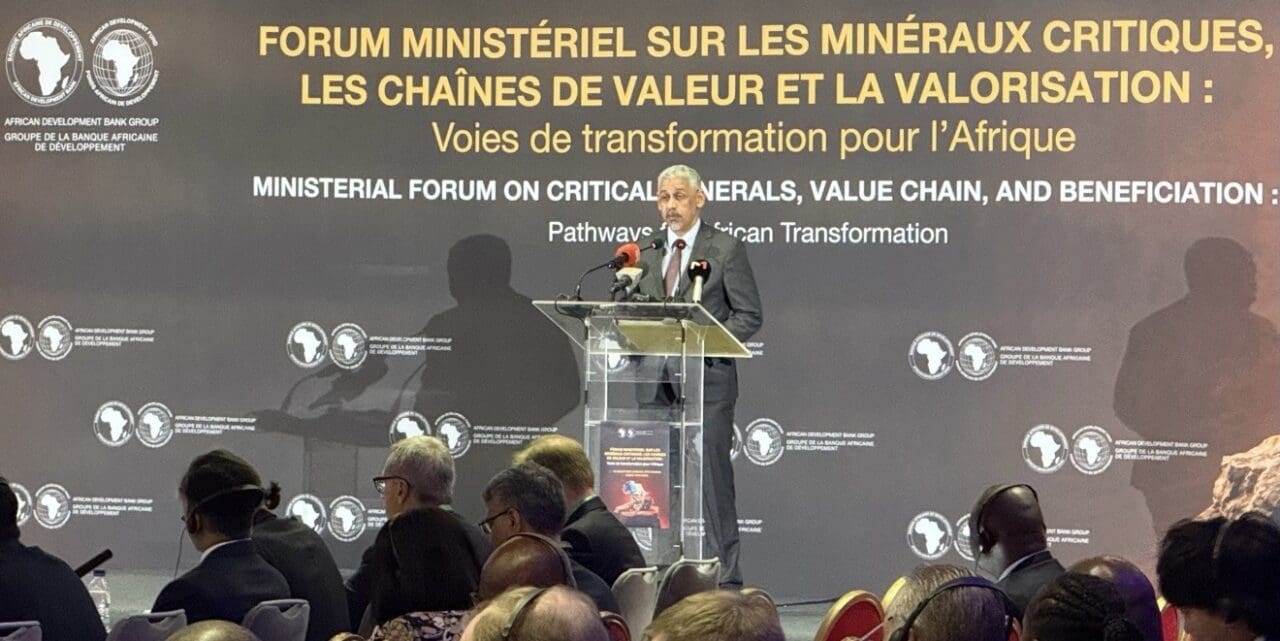
Leaders from Africa’s top mineral-rich nations convened in Abidjan this week to forge a bold new strategy for harnessing the continent’s vast critical mineral wealth. The gathering of ministers, financial institutions, and investors centered on transforming these resources into engines of economic growth, industrialization, and social progress.
With global demand for critical minerals surging, African nations are pushing for greater local processing and value addition to shift from raw material exporters to high-value producers. The discussions highlighted the need for stronger regional supply chains, innovative financing models, and policy reforms to ensure sustainable extraction and equitable benefits.
A united front for Africa’s mineral wealth
The high-level conference brought together ministers of Mines, Energy, Industry, and Green Economy from across the continent, alongside representatives from the African Union Commission, African Continental Free Trade Area (AfCFTA) Secretariat, United Nations Economic Commission for Africa, regional development banks, financial institutions, and international investors.
The overarching goal: maximize the continent’s mineral potential to drive inclusive and sustainable development. Africa holds an estimated 30% of the world’s reserves of key transition minerals, including cobalt, lithium, graphite, and rare earths—resources critical for clean energy technologies and electric mobility.
Reimagining Africa’s resource governance
In his keynote address, the President of the African Development Bank (AfDB), Sidi Ould Tah, called for a fundamental overhaul of Africa’s approach to natural resource management. He emphasized the need to shift from exporting unprocessed minerals to building integrated value chains on the continent.
“This conference is about changing the narrative—moving from dependence to self-reliance. We must ensure that Africa’s resources directly benefit its people through industrialization, infrastructure development, and equitable policies,” he stated.
The AfDB President also highlighted the underutilization of Africa’s development finance institutions, noting that despite over 100 such institutions, their combined impact remains minimal on the global stage. He advocated for recapitalization and consolidation to unlock trillions in domestic and international funding.
Côte d’Ivoire’s mineral strategy takes center stage
The Ivorian Minister of Mines, Petroleum, and Energy, Mamadou Sangafowa-Coulibaly, underscored the importance of continental solidarity in unlocking mineral wealth. He pointed to Côte d’Ivoire’s untapped potential, with nearly 75% of its territory believed to contain critical minerals.
“No single country can go it alone. We need regional collaboration to build value chains that create jobs, drive innovation, and ensure prosperity reaches every citizen,” he said.
The minister outlined Côte d’Ivoire’s 2026–2040 mineral and energy strategy, a $60 billion plan (38 trillion CFA francs) with 88% private sector financing. This initiative aligns with President Alassane Ouattara’s vision to elevate the country to upper-middle-income status by 2030 through industrial diversification and resource-driven growth.
Tapping into a $29.5 trillion opportunity
Africa’s mineral wealth is staggering. With an estimated value of $29.5 trillion—eight times the continent’s annual GDP—its reserves of critical minerals represent nearly 20% of global resources. Yet, an estimated $8.6 trillion remains untapped, waiting to be unlocked by smarter policies and investment.
The global appetite for these minerals is exploding. By 2040, demand for platinum group metals is projected to surge by over 1,000%, lithium by 842%, and copper by 88% compared to 2023 levels. This demand is fueled by the clean energy transition, with the electric vehicle and battery value chain alone expected to grow from $7 trillion in 2030 to $59 trillion by 2050.
A historic turning point for Africa
The Abidjan conference marks a pivotal moment in Africa’s economic trajectory. By prioritizing local processing, regional integration, and fair trade practices, the continent aims to capture a larger share of the mineral value chain. The shift from raw material export to high-value production could redefine Africa’s role in the global economy, fostering industrialization, job creation, and long-term prosperity.
As global powers compete for control over critical minerals, Africa is asserting its right to shape its own future—turning its geological wealth into a foundation for sustainable development and shared progress.