Bénin’s upper house launches with stabilizing mandate
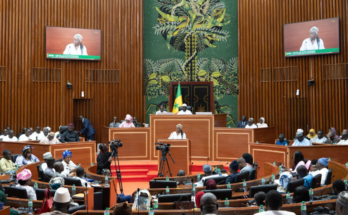
The newly established Senate of Benin convened its inaugural ordinary session on October 28, 2026, in Cotonou, with its president, Patrice Talon, positioning the chamber as a critical instrument for political mediation. The timing underscores the institution’s strategic value, particularly as Senegal grapples with a high-stakes budgetary dispute that has exposed vulnerabilities in legislative processes.
At the core of Benin’s Senate mandate is the prevention of political gridlocks that threaten institutional continuity. Talon articulated this vision plainly: “Our Senate exists solely to calm political tensions and uphold stability.” The statement reflects a deliberate effort to differentiate Benin’s approach from the confrontational dynamics witnessed in neighboring Senegal, where budget negotiations have stalled over fundamental disagreements.
Senate’s design: A conflict-prevention framework
Established through the 2025 constitutional reform, Benin’s Senate consists of 25 members tasked with safeguarding democratic principles and social cohesion. Its role extends beyond symbolic representation; key responsibilities include reviewing constitutional amendments, election laws, and political party regulations before final enactment. Most critically, the Senate serves as an arbitrator in institutional disputes, particularly when the president and National Assembly clash over legislative content.
The chamber’s structure includes a provision for a second reading of contentious bills—except those related to finance—aimed at fostering consensus. This mechanism is designed not to eliminate disagreement but to channel conflict into a structured dialogue, ensuring policy continuity even amid political rivalries.
Senegal’s budget battle: A cautionary tale
Just days earlier, Senegal’s National Assembly rejected the 2026 rectified budget proposal, highlighting the fragility of legislative harmony. The October 23 rejection by the finance committee—alongside two government-sponsored amendments—revealed deep divisions over fiscal priorities. While subsequent discussions in plenary sessions suggested room for compromise, the episode underscored how budgetary disputes can paralyze governance and delay essential public services.
The standoff centered on mid-year adjustments to revenue and expenditure forecasts, a process critical to aligning state resources with evolving economic realities. For Senegalese citizens, the delay translated into postponed infrastructure projects, social programs, and bureaucratic delays—concrete consequences of institutional friction.
Contrasting models: Mediation versus confrontation
Benin’s Senate and Senegal’s legislative experience represent two approaches to managing political differences. The Beninese model emphasizes institutionalized mediation, leveraging the Senate’s constitutional authority to mediate disputes before they escalate. Senegal, in contrast, demonstrated how unresolved tensions can hijack legislative agendas, with budgetary gridlock threatening to derail economic planning.
It is crucial to note that Benin’s Senate lacks jurisdiction over finance bills, which limits its direct role in budgetary disputes. However, its broader mandate—fostering political stability and consensus-building—positions it as a potential buffer against systemic crises. The chamber’s effectiveness will hinge on its ability to deliver credible, timely arbitrations that reinforce rather than disrupt the democratic process.
The ultimate test: Governance beyond politics
The true measure of Benin’s Senate will be its impact on governance. Can it transform political disagreements into constructive outcomes, or will bureaucratic inertia erode its influence? The challenge is existential: to demonstrate that institutional innovation can coexist with pluralistic debate, ensuring that the needs of citizens—not partisan agendas—remain the priority.
As the Senate commences its second legislative year, Patrice Talon’s vision faces its first real-world test. The stakes extend far beyond the halls of Cotonou: the ability to govern amid political diversity will determine whether Benin’s democratic experiment sets a precedent or becomes another cautionary tale.