The Senegalese government is scrambling to secure support for its revised finance bill ahead of a critical parliamentary vote on Tuesday, October 27. A sharp rejection of the proposal by Pastef lawmakers in committee on Friday has escalated tensions, raising the specter of another institutional deadlock.
Government under fire from its own ranks
Prime Minister Ahmadou Al Aminou Lô now faces an unprecedented challenge: convincing lawmakers from his own party to back a budget revision they have already rejected in committee. The setback sends a clear warning to the executive branch, signaling that even within the ruling coalition, fiscal priorities are sparking deep divisions.
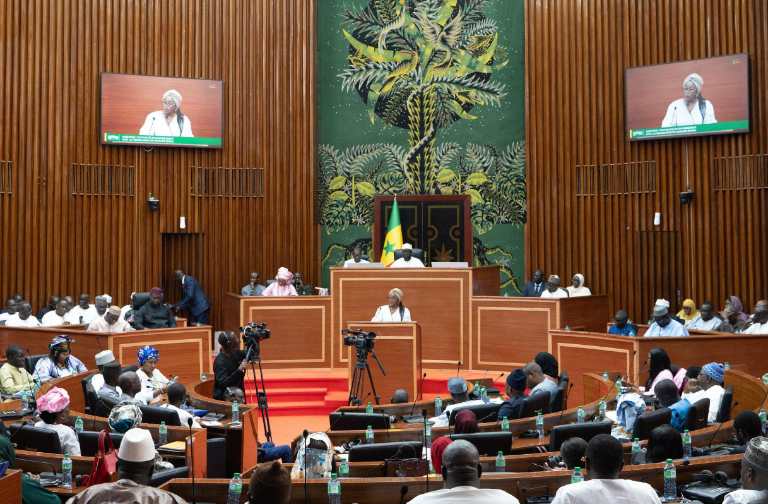
With Pastef holding a commanding majority in the National Assembly, the government’s ability to push through the revised bill is far from guaranteed. The committee vote—where the proposal was dismissed—underscores a growing rift between the executive and its parliamentary allies, leaving little room for complacency.
Economic constraints fuel political friction
The revised finance bill aims to realign state finances amid tightening economic conditions. However, the adjustments required to balance the budget have exposed fault lines in the government’s approach. Lawmakers are questioning the necessity of certain fiscal measures, the distribution of spending cuts, and the overall strategy for managing public resources.
The government argues that the revisions are essential to maintain fiscal stability and fund critical public services. Yet, the lack of consensus within its own ranks suggests that the proposed solutions may not align with the priorities of its parliamentary supporters. The debate now centers on whether the executive can justify its choices—or whether it must compromise to secure passage.
Dialogue as the last resort
With the full parliamentary vote just days away, Prime Minister Lô has shifted strategy, prioritizing negotiations with Pastef lawmakers in a bid to salvage the bill. The push for dialogue reflects the urgency of the situation: failure to reach an agreement could derail the government’s fiscal agenda and deepen institutional tensions.
The discussions hinge on finding common ground—whether through adjustments to the bill or clarifications on its economic rationale. For the government, the goal is to preserve core fiscal objectives while addressing lawmakers’ concerns. For Pastef’s parliamentary bloc, the challenge is to balance opposition with the need to avoid a prolonged standoff that could undermine governance.
Tuesday’s vote: a make-or-break moment
The upcoming plenary session on October 27 will determine the bill’s fate. A second rejection would not only block the revised finance law but also weaken the government’s authority to implement its economic policies. Conversely, a last-minute compromise could restore stability—though at the cost of significant concessions.
The outcome will hinge on the government’s ability to negotiate and the willingness of lawmakers to engage constructively. Beyond the immediate budget dispute, the episode raises broader questions about the balance of power between the executive and parliament in Senegal’s political system.
Will compromise prevail?
As the deadline approaches, both sides face a stark choice: double down on their positions and risk prolonged conflict, or seek a pragmatic solution that preserves stability. The government’s next move will be closely watched—not just for its impact on the budget, but for its signal about Senegal’s political cohesion in an era of economic strain.