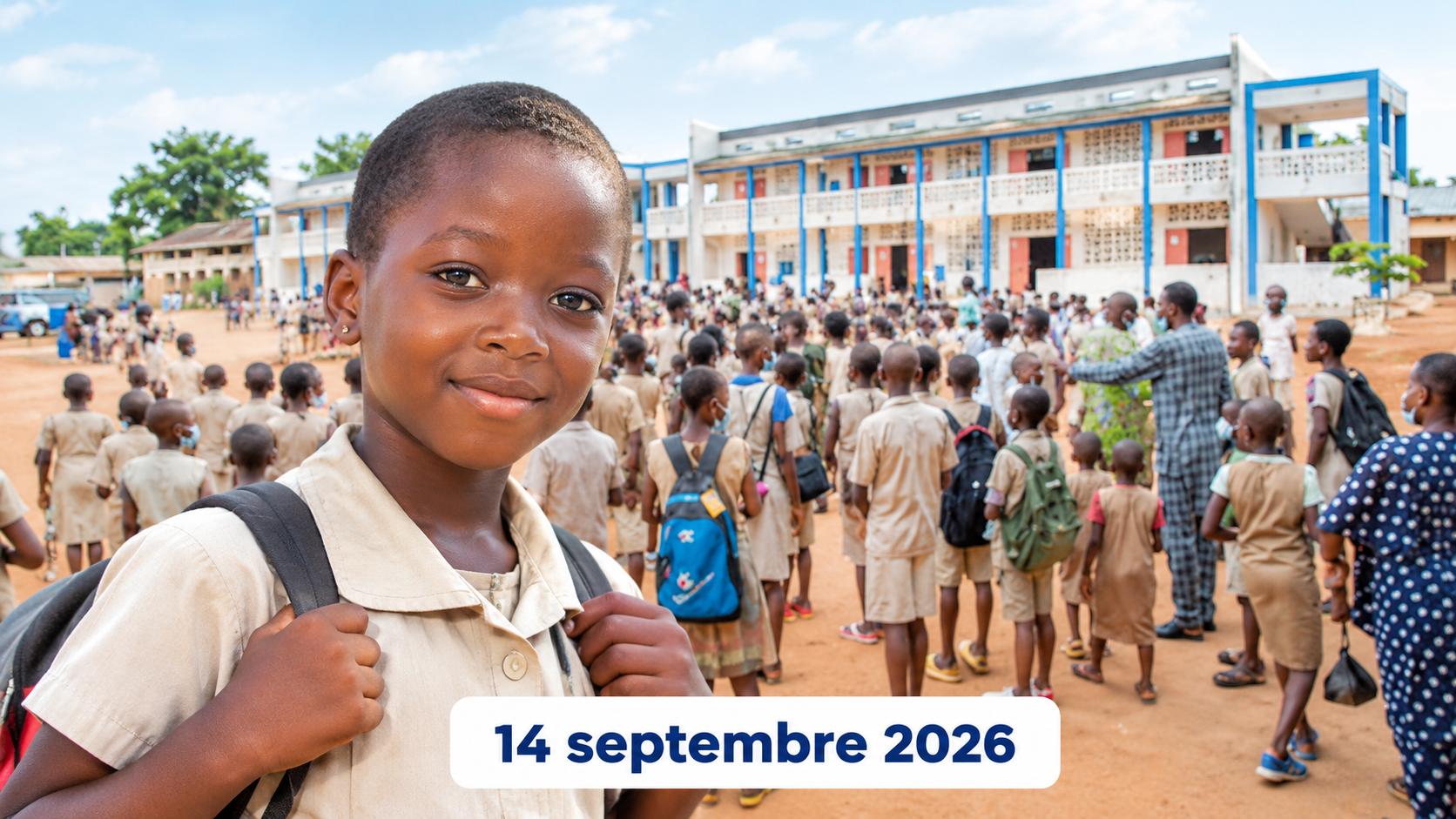
Classrooms across Benin came back to life on Monday, 14 September 2026, as students and teachers returned for the official start of the new academic year. From the far north to the southern coast, schools resumed their familiar rhythm, with learners filing back into classrooms and educators picking up where they left off before the holidays.
This year’s reopening lands in a more encouraging climate. Jihadist attacks in exposed areas have dropped considerably, and the government’s social measures for learners — including free tuition at the relevant levels — remain firmly in place.
Schools up and running from north to south
After weeks away, Beninese pupils walked back through school gates on Monday, 14 September 2026. Primary schools and secondary institutions alike swung back into action, gradually settling into the new academic timetable.
In towns and villages across the country, teachers and school administrators worked to welcome learners and get lessons underway under the best possible conditions. A nationwide return on this scale is a major moment for Benin’s education system.
It also reflects a determination to keep education running without interruption, even as the wider region grapples with serious security challenges. For families, seeing children back in class signals the start of another year devoted to learning and to building their futures.
A security picture that has steadied
The reopening also unfolds against a security backdrop that has seen encouraging shifts. Faced with the terrorist threat affecting several countries in West Africa, Benin has spent recent years strengthening its defence and security apparatus, especially in the northern departments.
Operations by the defence and security forces have helped contain armed group incursions and sharply reduce jihadist attacks. That improvement matters greatly for keeping economic and social life going, education included.
Security remains a priority, of course. Authorities are continuing surveillance, prevention and protection efforts in sensitive zones. That vigilance helps preserve, as far as possible, the conditions schools need to operate.
The 14 September restart thus stands as a positive signal: despite persistent threats in some areas, the country keeps its education system functioning and upholds children’s right to learn.
Free tuition eases the burden on households
Beyond security, another key factor is social support for families. The government has rolled out several measures to make it easier for children to attend school and to lighten the load on parents.
Among them is free tuition at the levels concerned. This policy offers meaningful relief to many households, particularly those on modest incomes.
By cutting costs tied directly to schooling, the state aims to widen access to education. The measure also helps combat dropouts driven by families’ financial difficulties.
For parents, the policy is a form of support that can make enrolment and keeping children in the system easier. For learners, it opens more possibilities to continue their schooling under better conditions.
Social measures that widen inclusion
Free tuition forms part of a broader push to strengthen inclusion and fairness in education.
The goal is to ensure economic hardship does not become a permanent barrier to schooling. Since education is a major driver of development, making it more accessible also means investing in human capital and in the country’s future.
Access, however, is only the first step. Keeping learners in class, the quality of teaching, the availability of infrastructure and better learning conditions all remain significant challenges.
A successful school year will therefore depend on the commitment of the entire education community: government, teachers, parents, school leaders and learners.
A reopening that carries hope
The effective return to class on 14 September 2026 across the national territory stands out as an encouraging indicator. It comes at a time when security efforts are containing the jihadist threat more effectively and social policies are working to lower financial barriers to schooling.
This combination of security and social support creates a more favourable environment for the education of Beninese children.
The challenge now is to sustain that momentum throughout the school year — preserving peace and security, consolidating social measures and continuing efforts toward accessible, quality education.
On this 14 September, classrooms have their students back. More than the simple start of a new academic year, this reopening symbolises the continuity of the public education service and the ambition to give every learner the means to prepare for the future.