Incidents in Bam Province highlight operational challenges for new military equipment
The stark contrast between military ambitions and battlefield realities has once again come into focus in Burkina Faso. Reports claim that on September 16, 2026, the Jama’at Nusrat al-Islam wal Muslimin (JNIM) seized two positions held by the Volunteer Defense Forces (VDP) in Mahlou and Winten, located in Bam Province. While the group has claimed responsibility, independent verification remains pending.
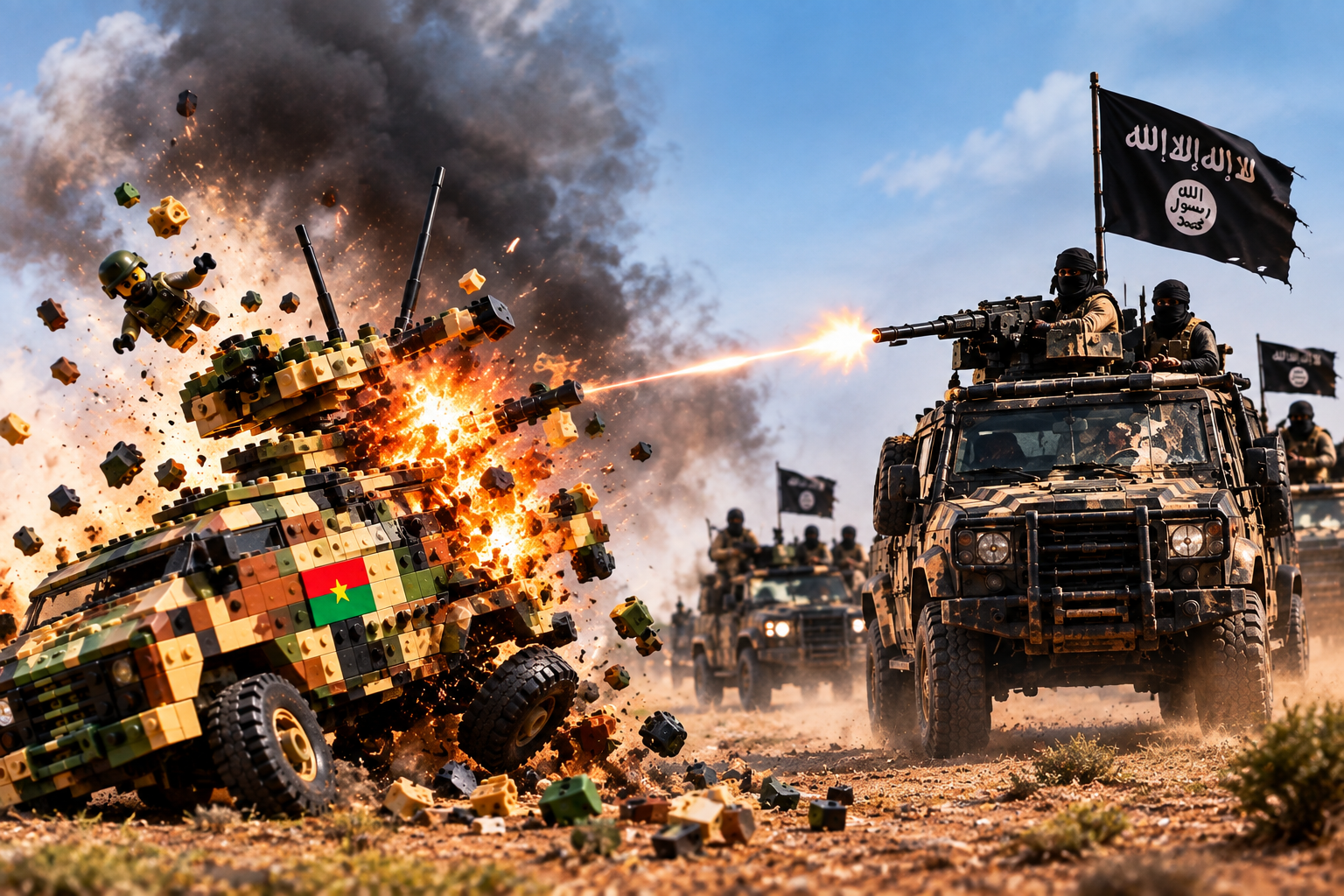
This development serves as a critical test for the country’s locally manufactured or assembled armored vehicles, which the government has promoted as a cornerstone of its military sovereignty strategy. The equipment, often compared to modular “Lego” constructions due to their assembly-based production, have faced scrutiny over their operational durability in conflict zones.
So far, the vehicles have been showcased in controlled demonstrations, but their true performance under real combat conditions remains untested until now.
From production lines to the frontlines: Evaluating effectiveness
The Burkinabe government has repeatedly emphasized its push for domestic military production as a means to reduce reliance on foreign suppliers. These efforts include the assembly of armored vehicles designed to enhance the mobility and protection of national security forces operating in volatile regions.
However, the practical challenges of warfare often differ significantly from industrial claims. The recent loss of positions in Bam Province raises questions about the vehicles’ combat effectiveness, particularly their ability to withstand attacks, maintain operational readiness, and secure territory.
Previous incidents, such as the JNIM’s claimed captures of positions in Séguénéga and Bourzanga on August 19, underscore the broader difficulties faced by Burkinabe forces in maintaining control over contested areas, even after recapturing them.
What defines military success: Equipment or strategy?
The performance of Burkina Faso’s armored vehicles is no longer a hypothetical debate; it is now a tangible concern. The events in Mahlou and Winten could reveal whether these assets are as durable as advertised or merely symbolic of industrial progress rather than tactical utility.
Military analysts suggest that the true measure of success lies not in the number of vehicles produced but in their ability to contribute to tangible battlefield outcomes. This includes preventing insurgent advances, sustaining defensive positions, and ensuring the survival of troops.
For now, the verdict remains uncertain. The JNIM’s claims, if confirmed, would signal a significant setback for both the military’s operational capacity and the credibility of its domestically produced equipment. Until these vehicles prove their worth in active conflict, their role in Burkina Faso’s security strategy will remain under scrutiny.