The African Football Confederation has officially endorsed the joint interest declaration submitted by Burkina Faso, Mali, and Niger to host the 2032 Africa Cup of Nations (CAN). This milestone marks the initial administrative step for the three Sahelian nations, who must now demonstrate their readiness in infrastructure and security to advance further.
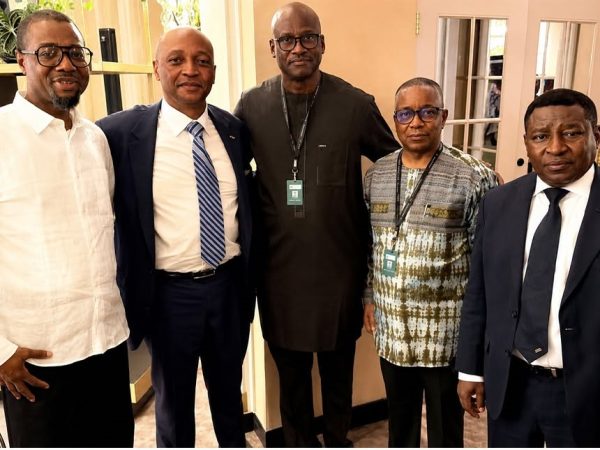
In a pivotal meeting held in New York on July 18, the leaders of Burkina Faso, Mali, and Niger engaged with CAF President Patrice Motsepe to secure formal recognition of their bid. The delegation included Colonel Oumarou Sawadogo, Mahamadou Cissé, and Issaka Adamou, presidents of the respective national football federations. The announcement was made public two days later by the Nigerien Football Federation, sparking discussions across the region.
An early but not final victory
While the validation of their declaration of interest is a necessary procedural step, it does not guarantee success. According to CAF’s candidacy regulations (Article 7.3), the trio has met the basic administrative requirement, allowing their bid to proceed. However, this approval does not prejudge the final decision, which will depend on the technical feasibility of the project.
Why is the CAF considering three tournaments at once?
In early July 2026, the CAF initiated a simultaneous call for bids for the CAN tournaments of 2028, 2032, and 2036. This strategic move aims to provide member associations with ample time to develop robust and sustainable proposals. For the 2032 edition, the CAF will evaluate the feasibility of the Sahelian bid, focusing on the quality of sports facilities, hospitality services, and transportation networks.
The assessment will also consider the security landscape, a critical factor in the region’s ongoing challenges. Recent attacks in Niger and Mali, reported on July 17 and 18, underscore the importance of stability in the evaluation process.
The East African precedent
The concept of a tripartite co-hosting arrangement is not unprecedented for the CAF. Kenya, Uganda, and Tanzania have been selected to jointly organize the 2027 CAN, setting a precedent that the Sahelian bid could emulate. This collaborative approach allows countries to share the burden of meeting CAF’s stringent hosting standards while leveraging existing infrastructure.
CAF’s leadership has praised the Sahelian initiative as a forward-thinking example of regional cooperation. The federation has emphasized the importance of adhering to established procedures, as outlined in a statement released by the Nigerien Football Federation.
Football as a tool of regional diplomacy
Beyond the sporting realm, the joint bid reflects a broader geopolitical strategy. Since severing ties with ECOWAS, the military-led governments in Ouagadougou, Bamako, and Niamey have pursued closer collaboration under the Alliance of Sahel States (AES). A successful bid for the CAN 2032 could serve as a high-profile platform for the bloc, showcasing its unity and resilience amid ongoing security concerns in the region.
The CAF’s upcoming evaluation will scrutinize not only infrastructure but also the trio’s capacity to ensure long-term stability and operational readiness. The outcome could redefine the Sahel’s role on the continental stage.
What’s next for the Sahel’s bid?
The July 18 validation was merely the first hurdle in a lengthy journey. While the trio has cleared the initial administrative phase, the real challenge lies ahead: compiling a technical dossier that meets CAF’s exhaustive criteria for facilities, security, and logistics. The 2032 CAN is still years away, and the CAF has yet to finalize the timeline for the final decision.
The football federations of Burkina Faso, Mali, and Niger have pledged to work closely with their governments to build a competitive proposal. Success will hinge on their ability to transform political unity into a tangible, world-class hosting experience.
The CAN 2032 could emerge as more than a tournament—it may symbolize the Sahel’s capacity to turn regional solidarity into a global showcase.