France’s 2026 GEX military drill unites West African partners in historic security pact
The French Defence Ministry has confirmed what military analysts describe as a groundbreaking multinational exercise aimed at strengthening security ties across West Africa. GEX 2026, set to unfold across Côte d’Ivoire and Gabon in November 2026, represents a strategic pivot in France’s post-deployment posture, shifting from permanent bases to dynamic interoperable partnerships.
The exercise is structured into two distinct phases: “FANGHA 2026” in Côte d’Ivoire (7–14 November) and “WAIYA 2026” in Gabon (24–29 November). Over 2,000 troops—including 1,181 Ivorian, 100 Gabonese, and 850 French service members—will conduct joint operations under realistic multi-domain scenarios.
What GEX 2026 aims to achieve for regional defence
- Coordinated crisis response: Testing joint planning across air, land, and naval units to counter transnational threats such as piracy, arms trafficking, and coastal instability.
- Multinational interoperability: Developing shared operational procedures and real-time communication protocols for future joint missions.
- Maritime security focus: Protecting critical sea lanes in the Gulf of Guinea, a hub for energy resources and global trade.
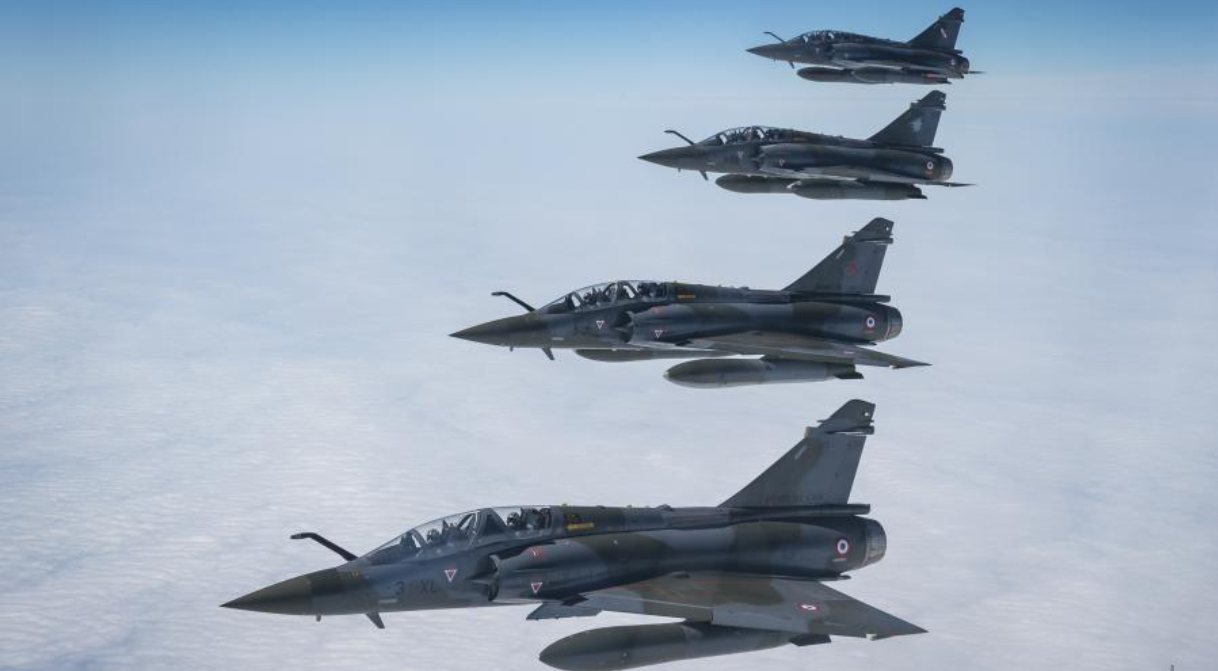
Equipment deployed includes France’s Mistral amphibious assault ship and Mirage 2020 fighter jets, enabling combined amphibious landings, air support, and naval escort simulations. These assets underscore France’s capacity to project power while supporting African partner forces.
Why Côte d’Ivoire and Gabon were selected
Both countries sit on the Gulf of Guinea’s strategic Atlantic frontline, facing overlapping security challenges:
- Côte d’Ivoire monitors northern instability potentially spilling southward.
- Gabon prioritises maritime domain surveillance amid rising Gulf threats.
- Both seek diversified defence partnerships to reduce reliance on external powers.
Observers from Benin, Guinea, Liberia, and Senegal are also invited, hinting at a broader regional integration initiative.
From boots on the ground to strategic agility
The exercise arrives as France reconfigures its African footprint—withdrawing from Mali, Burkina Faso, and Niger while shifting focus to Côte d’Ivoire and Gabon. The Port-Bouët base restitution to Côte d’Ivoire in 2025 symbolised this transition toward partnership-based defence cooperation.
GEX 2026 validates France’s ability to maintain operational relevance without permanent garrisons. For Ivorian and Gabonese forces, the drill offers a chance to master multinational command structures and enhance autonomous decision-making in joint operations.
Will GEX 2026 build lasting security architecture?
The trial raises pivotal questions:
- Can shared drills evolve into sustained intelligence-sharing frameworks?
- Will maritime surveillance initiatives lead to coordinated Gulf patrols?
- Can African partners develop independent planning, command, and logistics capabilities?
Success depends on translating November’s manoeuvres into enduring mechanisms that reduce vulnerability to transnational threats without replicating historical dependency models.
As the Gulf of Guinea emerges as a new security frontier, GEX 2026 signals a decisive step toward a collaborative defence paradigm—one where partnerships matter more than permanent presence.