The return of Jean Léonard Teganya to Rwanda marks a significant moment in the pursuit of justice for the 1994 genocide against the Tutsi. After 32 years in exile, the 55-year-old former medical student arrived in Kigali on November 9, 2026, following his deportation from the United States.
Extradition concludes decades-long fugitive saga
Teganya, who was wanted by Rwandan authorities for genocide and crimes against humanity, is accused of playing a direct role in the 1994 massacres in the former Butare Prefecture—now part of Huye District in southern Rwanda. His deportation concludes a years-long legal battle that began with his arrest in the U.S. in 2014.
From medical student to genocide suspect
During the 1994 genocide, Teganya was studying medicine at the former National University of Rwanda and completing an internship at Butare University Hospital (now CHUB). Prosecutors allege he was affiliated with the MRND party—a former ruling party—and the Interahamwe militia. Court documents from his U.S. immigration fraud trial indicate he allegedly led armed groups targeting Tutsi patients and refugees who had sought refuge within the hospital premises.
The accusations extend beyond wartime activities. Prosecutors also presented evidence connecting him to sexual violence and extrajudicial killings. However, these claims will be formally reviewed under Rwandan law, where individual accountability must be rigorously established before any conviction.
Decades of evasion across three continents
After fleeing Rwanda in 1994, Teganya traveled through the Democratic Republic of the Congo, Kenya, and India before settling in Canada in 1999, where he sought asylum.
Canadian authorities denied his claim due to credible allegations of his involvement in atrocities in Butare. Following multiple appeals, a deportation order was issued. In 2014, he illegally crossed into the U.S. from Canada and was later arrested in Maine. His attempt to seek asylum in America backfired when he was charged with immigration fraud and perjury.
A federal jury in Boston convicted him on two counts of immigration fraud and three counts of perjury in April 2019. He was sentenced to 97 months in prison on July 1, 2019, serving time solely for immigration-related offenses—not for genocide.
Kigali takes over the case
With his deportation, Teganya’s journey through multiple legal systems ends. While the U.S. addressed his immigration violations, Rwanda now assumes jurisdiction over the genocide charges. Prosecutors in Kigali, who had filed the indictment in 2014, will re-examine the evidence, call witnesses, and prepare for trial.
Teganya is now in police custody and will undergo interrogation before his case moves to the prosecutor’s office. His arrival in Kigali makes him the eighth genocide suspect extradited or deported from the U.S. to Rwanda since 2007—a testament to international efforts to bring perpetrators to justice.
Survivors await closure after 32 years
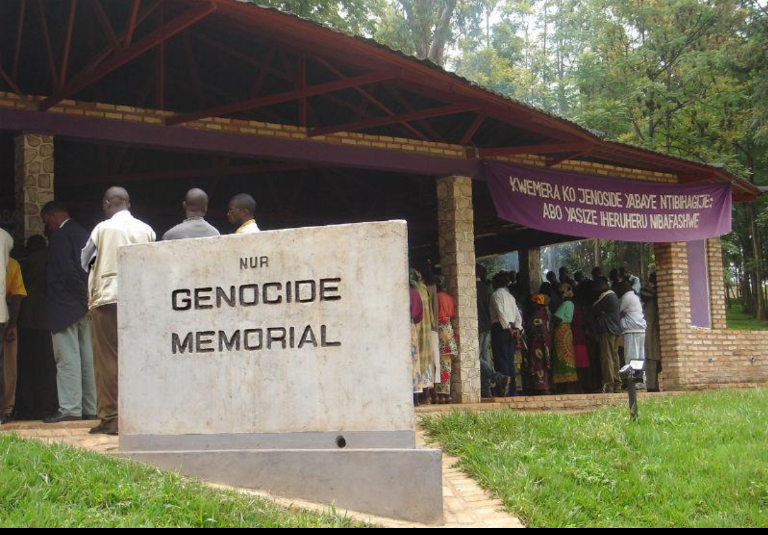
For survivors and families of victims in Huye District, Teganya’s return brings long-overdue hope. The genocide left deep scars, and many have waited decades for accountability.
His case underscores a critical truth: geography offers no sanctuary for those accused of international crimes. Even after decades, justice can still prevail—through persistence, cooperation, and legal determination.
What lies ahead in the judicial process
Rwandan prosecutors must now build a case based on fresh investigations and existing evidence. Teganya’s legal team will have the opportunity to present a defense, while judges will weigh testimony from survivors, witnesses, and forensic experts.
The trial, if held, will be conducted under Rwandan law with international observers monitoring due process. It will determine whether the allegations—long denied by Teganya—can be substantiated beyond reasonable doubt.
As the judicial process unfolds, one question remains central: Can Rwanda deliver justice to survivors after 32 years of waiting?