French national day: France backs DRC peace efforts at UN Security Council
- Politics
On French National Day, Ambassador Rémi Maréchaux reaffirmed France’s unwavering support for peace initiatives in the Democratic Republic of the Congo (DRC) and underscored the country’s active role within the United Nations Security Council.
Speaking at a ceremony held at his residence in Kinshasa, the French envoy emphasized that the celebration was not merely a tribute to France’s independence or President Emmanuel Macron, but a commemoration of the 1789 Revolution and its enduring values of liberté, égalité, fraternité.
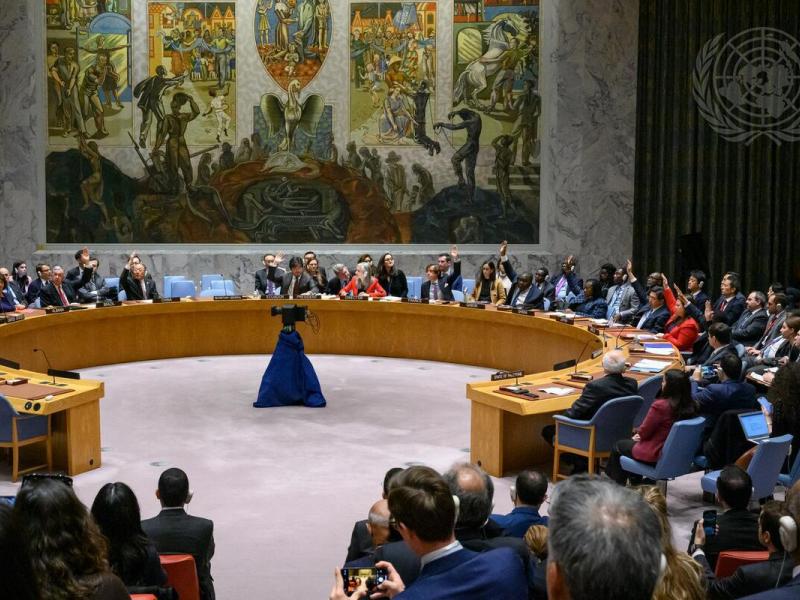
Addressing the ongoing security crisis in eastern DRC, Maréchaux reiterated France’s commitment to securing a lasting resolution through its engagements at the UN Security Council. He highlighted France’s leadership in advancing key resolutions aimed at restoring peace in the region.
« The Democratic Republic of the Congo is confronted with serious challenges today, foremost among them a prolonged conflict in its eastern provinces. France has been instrumental at the UN Security Council, contributing to the adoption of critical resolutions. Resolution 2773, adopted unanimously, establishes the framework for a sustainable resolution to the crisis. The M23 must immediately cease hostilities, withdraw its forces, and dismantle all parallel, illegitimate administrations. Rwanda must halt its support for the M23 and withdraw its troops from DRC territory. »
He also referenced Resolutions 2808 and 2825 (2026), which respectively extend the mandate of the MONUSCO peacekeeping mission for one year and prolong sanctions against armed groups in DRC until 1 July 2027. The latter resolution renews the mandate of the Group of Experts tasked with monitoring sanctions implementation.
« Two additional resolutions empower MONUSCO to support the implementation of the Washington Agreement and renew sanctions against armed groups, alongside the mandate of the Group of Experts, which documents the realities on the ground. France salutes, encourages, and supports the mediation efforts currently led by the United States, Qatar, and the African Union. As President Tshisekedi reiterated on 30 June, the pursuit of diplomacy is not a sign of weakness. A negotiated solution must uphold the DRC’s sovereignty and territorial integrity. »
Beyond multilateral engagements, Maréchaux highlighted France’s strengthened bilateral cooperation with Kinshasa, particularly in security. He cited recent French-led initiatives, including the regeneration of a Jungle Brigade battalion in Kisangani in March and plans for a second battalion regeneration in October this year.
« Just as the DRC made a historic return to the football World Cup, the country is also reclaiming its rightful place on the global stage. For the first time in 35 years, the DRC holds a seat on the UN Security Council, which it currently presides over this month. It is also a member of the UN Human Rights Council, chairs the International Conference on the Great Lakes Region, and strengthens its engagement within the Francophonie with the candidacy of Ms. Juliana Lumumba for Secretary-General of the International Organisation of La Francophonie. »
The ambassador framed these developments as positive not only for the DRC’s international standing but also for global governance. In an era marked by shifting power dynamics, he defended multilateralism as the most effective means of ensuring inclusive and equitable international relations.
« In a time of increasing international tensions, France remains convinced that the answer lies in inclusive multilateralism—one that places Africa at the heart of global governance. The DRC’s return to the international stage comes at a pivotal moment. Despite ongoing challenges, the country is increasingly recognized for its vast potential and strategic role in the global energy transition and climate action. »
These remarks follow the signing of the Washington Peace Agreement, mediated by the United States, between the DRC and Rwanda. The agreement outlines measures for de-escalation, the progressive withdrawal of Rwandan forces from Congolese territory, and the neutralization of armed groups operating in eastern DRC, including the FDLR, which Kigali considers a security threat. While the agreement was widely welcomed, the security situation in eastern DRC remains deeply concerning.
Meanwhile, the Doha Process, facilitated by Qatar to foster dialogue between the Congolese government and the AFC/M23 rebellion, has yet to yield significant progress. On the ground, the AFC/M23 rebels—accused by Kinshasa, the UN, and several international partners of receiving Rwandan backing—maintain control over cities such as Goma and Bukavu, as well as numerous other localities in North Kivu and South Kivu. Clashes continue in several zones, underscoring the persistent gap between diplomatic commitments and ground realities.
Clément Muamba