Gabonese president embraces direct dialogue: the mayumba shift
Libreville, Wednesday, June 24, 2026 – For an extended period, a consistent critique echoed throughout Gabon’s public discourse. Since assuming power on August 30, 2023, President Brice Clotaire Oligui Nguema had maintained a strong presence across the nation, yet direct engagements with local journalists remained conspicuously rare. While speeches, inauguration ceremonies, and official travels were frequent, spontaneous responses to public queries were notably infrequent.
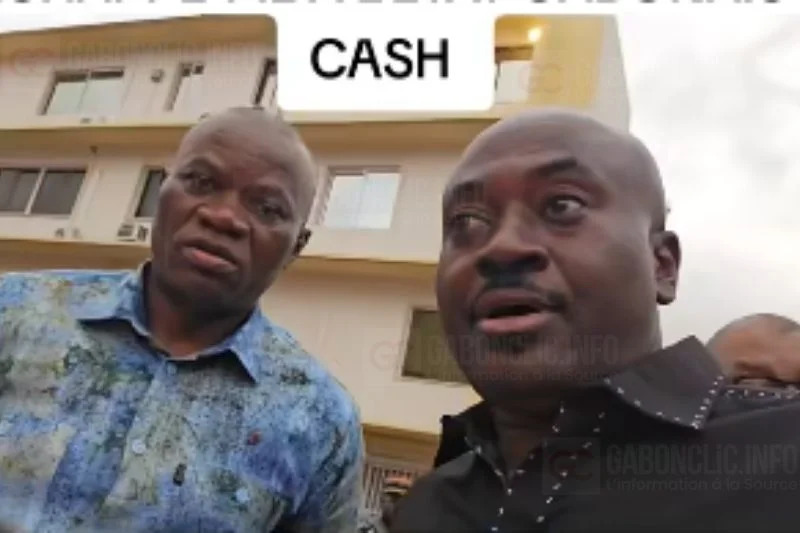
This perception appears to have shifted dramatically in recent weeks. The change wasn’t brought about by a formal press conference or a meticulously staged institutional event. Instead, it emerged through a series of candid interviews conducted by journalist Chamberland Moukouama during the presidential visits to Mayumba and Tchibanga, followed by stops in Libreville, specifically in areas like Baraka, Bikélé, and at Poste SA in the City Centre.
Beyond its immediate media impact, this initiative potentially signals a more profound evolution: a presidential communication strategy now striving to break free from traditional formats, seeking to reconnect with a form of political authenticity increasingly scarce across the continent.
The power of genuine interaction
The innovation of this approach isn’t solely attributable to the journalist’s personality; it lies fundamentally in the methodology employed. Chamberland Moukouama, the visionary behind the « CASH » concept, champions an approach centered on citizen pedagogy, popular education, and unvarnished honesty. His primary aim transcends mere information dissemination; he endeavors to translate complex public issues into language accessible to all Gabonese citizens.
During his time in Mayumba, Moukouama chose to articulate the very questions that ordinary citizens ponder daily. These were simple, direct, occasionally uncomfortable inquiries—topics frequently absent from conventional institutional interviews.
Even more remarkably, the exchange unfolded far from official reception rooms. By accompanying the President on a nocturnal fishing excursion, the journalist deliberately shifted the political dialogue into an unconventional setting. Protocol yielded to genuine spontaneity.
This newfound proximity facilitated discussions on sensitive subjects: governance, criticisms leveled against the administration, the influence of certain collaborators, public perception of ongoing reforms, and even more personal aspects of exercising presidential power.
The outcome surprised numerous observers. Gabonese citizens witnessed a Head of State who appeared less formal, more approachable, and capable of responding without apparent filters to concerns circulating in neighborhoods, across social media platforms, and in everyday conversations.
When communication becomes a political act
In established democracies, certain journalists have etched their names into history by bridging the gap between leaders and citizens. Jean-Pierre Elkabbach in France built his reputation on intellectual confrontation with political figures. Jean-Jacques Bourdin established a style rooted in the concrete concerns of the public. Christophe Boisbouvier, active across the African continent, distinguished himself by his ability to interview leaders in sometimes unexpected contexts.
In his own way, Chamberland Moukouama aligns with this tradition, albeit with a notable distinction: where others prioritize the studio, he opts for direct engagement in the field.
This approach emerges at a pivotal juncture in Gabon’s political narrative. Following the recent transition and presidential election, expectations for transparency are exceptionally high. Citizens demand more than merely top-down communication; they seek to comprehend, to question, and at times, to challenge.
Within this dynamic, the willingness to engage in direct, less structured exchanges itself constitutes a significant political statement. Modern communication transcends simply broadcasting information; it necessitates cultivating conditions for genuine dialogue, even when the questions posed are uncomfortable.
Authenticity as a leadership strategy
This recent media sequence also illuminates the governing philosophy that Brice Clotaire Oligui Nguema intends to embed within his mandate. “The best safeguard against hubris is memory. I never forget my origins,” the Gabonese President previously stated. This declaration gains particular resonance when viewed alongside these informal interactions, where the Head of State underscored his intimate understanding of local realities, social challenges, and the daily struggles faced by the populace.
Furthermore, this initiative directly addresses a criticism frequently voiced by many national journalists over several months, who felt their access to presidential information was restricted.
By participating in this exercise, President Oligui Nguema sends an unequivocal message: his administration intends to remain deeply connected to its grassroots base, resisting enclosure within institutional confines. The crucial question now is whether this episodic openness will evolve into a sustained practice. The implications extend far beyond the success of a single interview; they touch upon the fundamental quality of the bond between the government and its citizens. Should this experimental approach proliferate, Mayumba could indeed be remembered in Gabon’s recent political history as the site where presidential communication underwent a fundamental transformation—a moment when official discourse ceased to be exclusively vertical, becoming significantly more conversational.
In a continent where distrust towards institutions often runs deep, this evolution could represent far more than a mere media innovation. It has the potential to become a vital instrument of governance. In the 21st century, proximity is no longer just a desirable political attribute; it has become an essential condition for legitimacy.