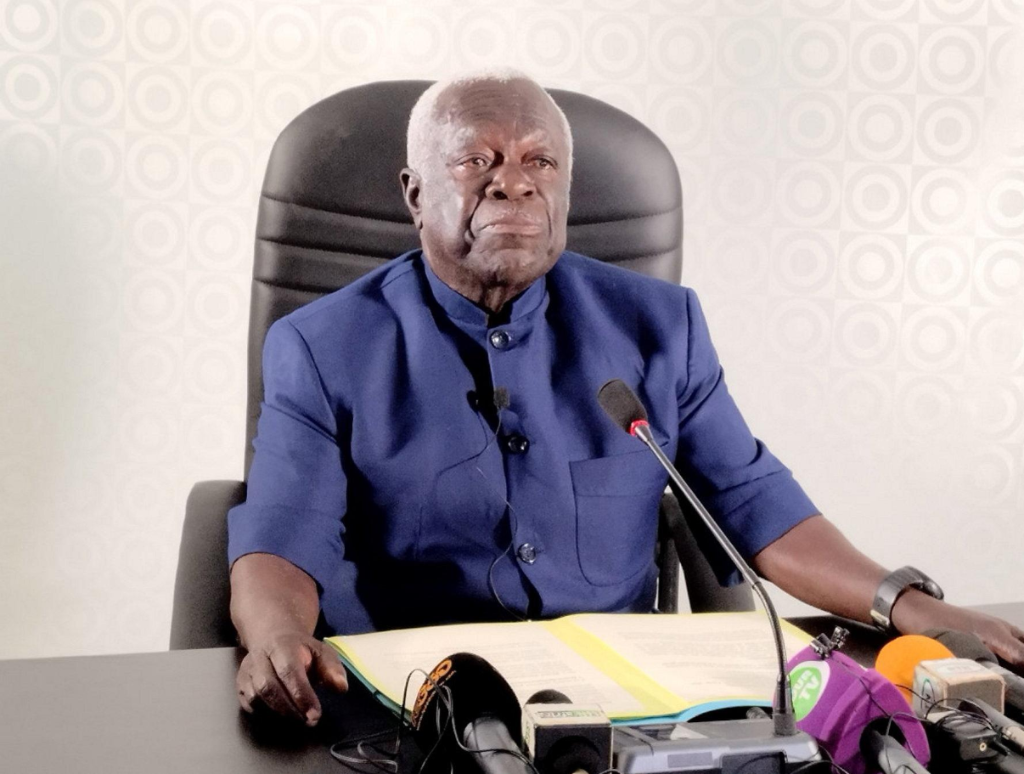
An ex-commander of Gabon’s national police force and former interior minister has been jailed following an incident at a Libreville football pitch that left a 12-year-old boy critically wounded. Jean-Boniface Assélé, 87, now faces criminal charges after a routine match in the Sibang district turned violent. The case has ignited nationwide debate over whether powerful figures can be held to account under Gabon’s judicial system.
Football match ends in tragedy after shots ring out on Sibang pitch
What started as a youth football match on the morning of November 13, 2026, at the Augustin-Monedan stadium in Libreville’s 6th arrondissement took a sudden and violent turn. Local teenagers had taken over the field when Jean-Boniface Assélé arrived with a 16-gauge shotgun in his vehicle, driven by his son.
The former police commander approached the players and reportedly ordered them off the pitch. Eyewitness accounts indicate that after brief verbal exchanges, Assélé fired a single shot. The projectile struck 12-year-old Jason Merlin Midioko in the lower right torso, causing severe internal injuries. The boy was rushed to the Mère-Enfant Fondation Jeanne-Ebori University Teaching Hospital, where he underwent emergency surgery and was placed in intensive care.
Immediate legal response and suspect’s surrender
Following the shooting, preliminary investigations were initiated by the prosecutor’s office in Libreville under the direction of Dick Fabrice Boungou Mikolo. Assélé left the scene and later voluntarily surrendered to judicial police in the early hours of November 14. Authorities confirmed that a formal investigation has been launched to determine the exact circumstances of the shooting and identify any other potential parties involved.
The prosecutor filed preliminary charges of attempted murder and illegal firearm possession against Assélé. These charges carry significant penalties under Gabonese law and represent a rare instance in which a high-profile former official has been subjected to criminal prosecution.
Young victim Dylan’s fight for recovery draws national attention
The identity of the teenager, widely known as Dylan, became a rallying symbol across Gabon as the public followed news of his condition. After emergency surgery, Dylan remained in critical but stable condition, though a bullet fragment remained lodged near a vital organ, requiring ongoing medical supervision.
President Brice Clotaire Oligui Nguema visited Dylan in hospital on November 16, personally ensuring that all medical expenses, including potential medical evacuation, would be fully covered by the state. The ministers of Social Affairs and Health mobilized to provide additional support to Dylan’s family, while a wave of public solidarity swept across social media under the hashtag “JusticeForDylan.”
The boy’s parents have expressed their grief while cooperating with authorities to seek justice and reparation for their son’s injuries.
From police command to prison cell: the fall of a political heavyweight
Jean-Boniface Assélé is no stranger to Gabonese politics or law enforcement. A career police officer, he rose to the rank of national police commander and served multiple ministerial posts under the administration of former president Omar Bongo. He also held parliamentary office and led the Cercle des Libéraux Réformateurs (CLR), making him one of Gabon’s most recognizable political figures for decades. At 87, his incarceration marks a stunning reversal of fortune.
On November 16, Assélé was presented before a Librevillan investigating judge. Despite his advanced age and former status, the judge ordered his detention at the central prison in Gros-Bouquet, pending completion of the investigation. He remains in custody on provisional charges of attempted murder and illegal firearm possession.
Under Gabonese law, Assélé is presumed innocent until proven guilty. The investigation must now clarify intent, motive, and the sequence of events that led to the shooting.
Nation grapples with justice, equality, and accountability
The case has transcended a local crime story, becoming a flashpoint in the national conversation about legal equity. President Oligui Nguema, during his hospital visit to Dylan, reaffirmed that “the law applies equally to all citizens.”
Public sentiment, fueled by social media campaigns and widespread outrage, has demanded full transparency and accountability. While Assélé’s family has expressed regret over the incident and initiated steps to support the victim’s recovery, many Gabonese are questioning whether the judicial system can truly hold former elites to the same standards as ordinary citizens.
Legal process now in motion: what’s next?
The investigation continues to piece together the events of November 13. Key questions include:
- Whether the use of the firearm was justified or intentional
- The legal status of the football field at the time of the incident
- Possible involvement or awareness of others on site
- The exact trajectory and effect of the gunshot
The investigating judge will examine evidence, interview witnesses, and assess whether the charges of attempted murder and illegal firearm possession are substantiated. A final ruling will determine whether the case proceeds to trial or is dismissed.
Accountability over privilege: a test for Gabon’s judiciary
As Gabon’s justice system navigates a complex and politically sensitive case, the outcome will send a powerful message about the rule of law in the country. For Dylan, now in a delicate phase of recovery, the road to justice is far from over. For Assélé, the fall from decades of influence to incarceration stands as a stark reminder: no individual, regardless of background or rank, is above the law.
With the investigation ongoing and public scrutiny intensifying, all eyes remain on Libreville as the nation awaits the next chapter in this unprecedented legal confrontation.
