Shock claims link UAE to production facilities in eastern Libya
The latest allegations from Algerian journalist Mehdi Ghezzar are reshaping regional security debates. Speaking on AL24 News, he accused the United Arab Emirates of directly funding industrial-scale production plants for psychotropic drugs in Libya’s east—a territory under the control of Khalifa Haftar’s forces. According to Ghezzar, these facilities are not rogue workshops but well-organized industrial units equipped with specialized machinery and staffed by personnel producing large quantities of illicit substances.
Ghezzar’s statement was blunt: « These are Emirati-owned factories. » He alleged the aim was to flood Algeria with contraband drugs, exploiting youth vulnerability and social instability.
Concrete evidence emerges from Libyan courts
While the Emirati link remains unproven, Libya’s role in synthetic drug production is now undeniable. On November 6, 2026, a court in Qubbah handed down severe sentences to six individuals involved in operating a Captagon production facility. The lead defendant received a 25-year prison term, while five others, tried in absentia, were sentenced to life imprisonment. Court-released images showed drug tablets, packaging, and industrial equipment—confirming on-site manufacturing.
A month earlier, in October 2026, Haftar’s eastern forces intercepted over 1.3 million Captagon tablets in Kufra during a large-scale anti-trafficking operation. These seizures underscore a troubling reality: Libya is no longer just a transit route—it has become a production center for synthetic drugs.
Geopolitical implications of Haftar’s alliances
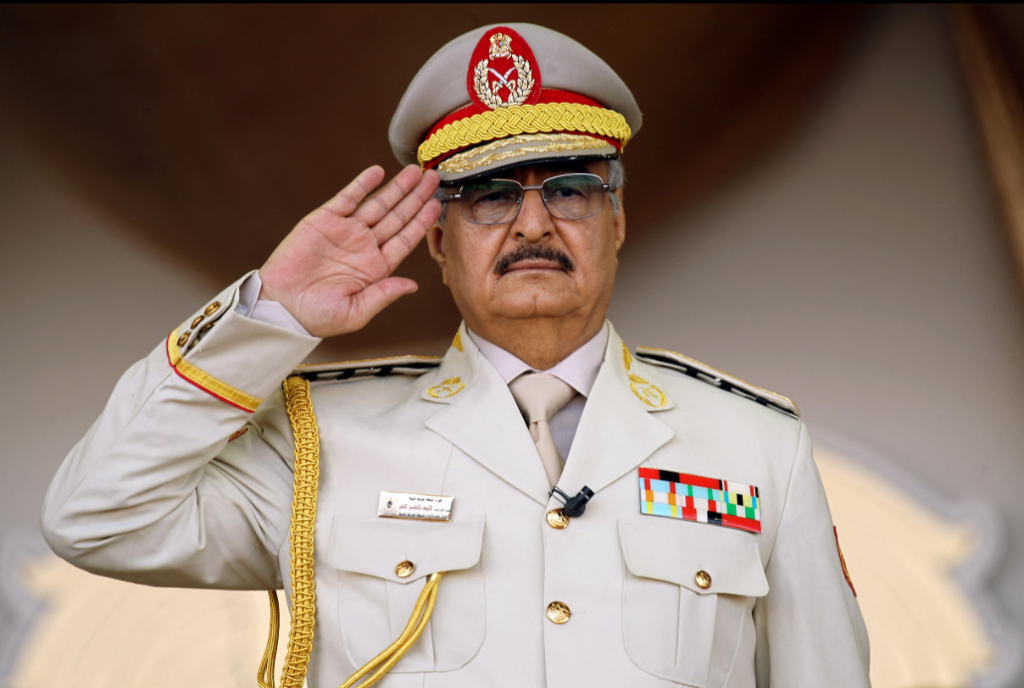
The relationship between the UAE and Haftar’s Libyan National Army (LNA) has fueled speculation. The Emirates have been a long-standing ally of Haftar, providing military and financial support to his forces operating across eastern and southern Libya. This alliance heightens concerns in Algiers, where officials see a possible connection between Emirati backing and the rise in drug production targeting Algeria.
However, correlation does not equal causation. To substantiate the claims, investigators would need to map funding flows, trace equipment origins, and determine if political, military, or business figures in the UAE are directly involved in funding or protecting these facilities.
Algiers and Abu Dhabi: a diplomatic feud deepens
Accusations of Emirati involvement arrive amid a severe deterioration in Algeria-UAE relations. Diplomatic tensions have simmered for years, fueled by disputes over regional influence, military partnerships, and evolving security dynamics in the Sahel. In September 2026, Algeria announced the severing of diplomatic ties with the UAE—a move framed as a response to sustained interference and destabilizing behavior.
In this charged environment, any suggestion of state-backed criminal networks operating near Algeria’s borders takes on heightened significance. Yet public allegations require concrete evidence before they can be treated as fact.
Algeria’s president frames drug influx as an existential threat
On November 15, 2026, during the opening of the 2026–2027 judicial year, President Abdelmadjid Tebboune declared the surge in drug trafficking a « full-scale war against our people and our youth. » He vowed to target drug sources using all available legal and security tools, signaling a major escalation in the state’s response.
While Tebboune’s remarks reflect growing alarm over drug proliferation, they do not name any foreign state as the source. The focus remains on dismantling smuggling networks, penalizing traffickers, and protecting youth from addiction.
Public health crisis overshadows diplomatic disputes
Beyond geopolitics, the human cost of psychotropic drug proliferation is severe. Synthetic substances—whether diverted pharmaceuticals or homemade pills—are flooding Algerian streets. Criminal networks exploit economic hardship and social vulnerability, recruiting young dealers and undermining public health.
Combating this epidemic demands more than border seizures. It requires coordinated international investigations, financial intelligence to trace illicit funds, strict control of chemical precursors, and expanded addiction prevention programs.
What would prove the Emirati connection?
To move beyond conjecture, investigators must establish:
- Ownership and management: Who legally controls the production facilities in eastern Libya?
- Financial trails: Where do the operational funds originate? Are they channeled through shell companies or front organizations?
- Supply chains: How are drugs smuggled from Libya into Algeria?
- Protection networks: Are there ties between producers, local warlords, and high-level officials?
- Strategic intent: Is there evidence that production is coordinated to weaken Algerian society?
Until such proof emerges, accusations remain unproven. Yet the possibility of state-level involvement underscores the need for transparency and regional cooperation.
A regional powder keg?
The stakes go beyond Algeria. If investigations confirm that foreign governments are funding drug production networks targeting North Africa, the diplomatic fallout could destabilize the entire region.
For now, what is certain is that Libya’s east has become a major hub for synthetic drugs, with unknown figures profiting from the trade. The hunt for truth is on—but the path forward is fraught with geopolitical landmines.