Gabon’s president urges honest dialogue for national progress
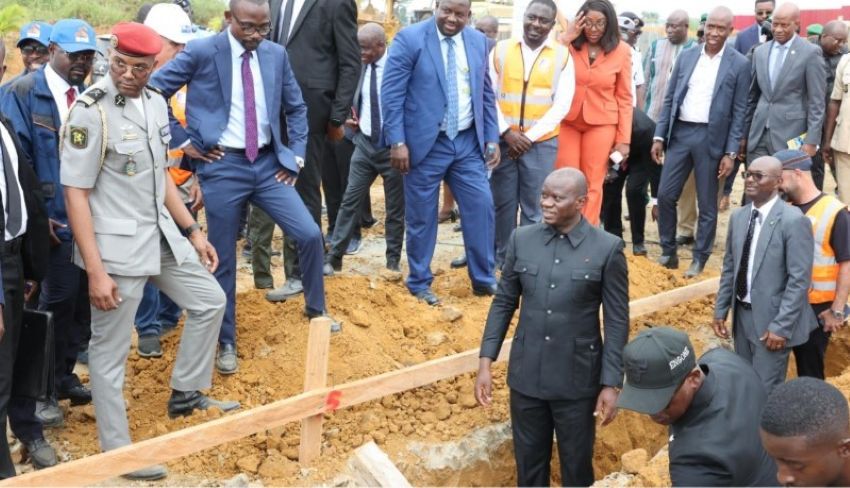
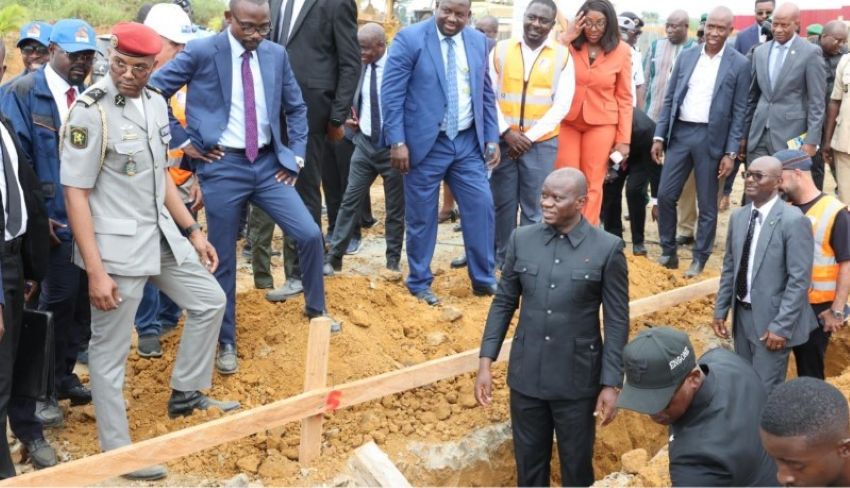
Libreville, June 3, 2026 — In a political landscape often marked by cautious rhetoric and cautious approval, Gabonese President Brice Clotaire Oligui Nguema has sparked fresh debate by emphasizing the vital role of truth in governance. Speaking during the groundbreaking ceremony for 3,100 new housing units in Bikélé, he called for a culture where leaders welcome honest feedback—not just applause—as a cornerstone of effective leadership.
Addressing journalist Chamberlain Moukouma, the president stressed that a leader must not only accept praise but also embrace constructive criticism when it serves the public good. His remarks transcended political rhetoric, touching on the very core of democratic accountability.
Rejecting blind allegiance in favor of accountability
By asserting that leaders need to hear when they are wrong in order to correct course, President Oligui Nguema challenged a long-standing political norm in Gabon—one where unconditional support for the government often overshadows genuine oversight. His stance reframes applause not as a sign of political health, but as a potential blind spot in national development.
This call represents more than a symbolic shift; it signals a demand for a new kind of relationship between those in power and the citizens they serve. At its heart lies the principle that governance should be built on transparency, mutual responsibility, and the courage to face reality—whether success or shortcomings.
The power of constructive criticism in nation-building
The president’s words revive a long-neglected truth: that criticism, when delivered responsibly, is not an act of opposition but a civic duty. Far from fostering division, he portrays public debate as a mechanism for continuous improvement—where citizens recognize progress while identifying areas needing reform.
This vision assumes a mature citizenry—one that distinguishes between progress and failure, and speaks up not to tear down, but to build. It requires journalists, social actors, and the public to engage with objectivity and a shared commitment to the nation’s future. Criticism, in this context, becomes a tool for refining public policy, not an end in itself.
Redefining political dialogue for a stronger Gabon
Beyond the speech, President Oligui Nguema is outlining a governance philosophy centered on active listening. He positions citizen feedback not as interference, but as a strategic input for policy direction. Development, in this framework, is no longer a top-down process but a collaborative effort—one where the state and society engage in constant dialogue.
Such a model demands balance: acknowledging achievements while maintaining high standards of performance. The interview with Chamberlain Moukouma, shared across social platforms as a civic education initiative, further reinforces this vision of a more informed and engaged public.
Ultimately, the president’s message invites Gabon to adopt a new political grammar based on three pillars: praise when deserved, criticism when necessary, and action always guided by the national interest. In a climate where political posturing often dominates, this call for shared truth stands as a litmus test for democratic maturity. It redefines the citizen not as a passive observer, but as an active participant in the nation’s continuous improvement.