Germany is taking its military partnership with Benin to a new level, shifting from equipment deliveries to a more structured security cooperation framework. This development comes as Benin grapples with rising terrorist threats in its northern regions bordering Burkina Faso and Niger.
From emergency supplies to strategic defense partnership
Berlin’s engagement has evolved significantly in recent months. While earlier cooperation focused primarily on military hardware deliveries, recent initiatives demonstrate a more comprehensive approach. In 2026, Germany provided 550 helmets and 1,266 mobile breathing devices to Benin’s armed forces. Earlier that year, military equipment worth approximately €3 million was delivered, including night vision and individual protection gear.
The shift becomes evident in the proposed assistance package presented to Benin’s Deputy Minister of National Defense, Gildas Agonkan. This includes specialized training for the Beninese engineering corps alongside new logistical equipment, marking a step toward building sustainable defense capabilities rather than one-off deliveries.
High-level strategic consultations set to commence
German Ambassador to Benin Stefan Buchwald announced in October 2026 that strategic-level joint staff meetings would soon begin between the two nations. These consultations represent the most significant political signal yet, indicating an intention to establish a deeper strategic framework beyond technical exchanges.
The ambassador also revealed plans for a new bilateral agreement whose specific terms remain undisclosed. This development follows decades of German military training for Beninese personnel, with over 350 soldiers having received instruction in Germany over the past 40 years.
Planned deployment of German military experts in 2027
Another key development is the proposed deployment of six to eight German military experts to Benin in late 2027. While these personnel won’t be combat troops, their presence would significantly enhance technical assistance and knowledge transfer to Benin’s armed forces. The exact nature of their mission and operating procedures will be determined through ongoing negotiations.
Regional security context drives cooperation
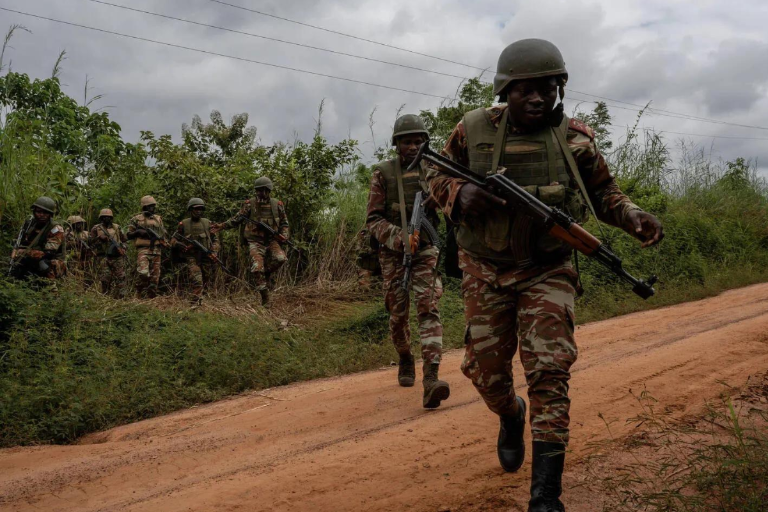
These strengthened ties occur against a backdrop of growing terrorist incursions into Benin’s northern departments—particularly Atacora and Alibori regions. The shared border with Burkina Faso and Niger exposes Benin to the spillover effects of the Sahel’s security crisis. Germany’s involvement aims to bolster Benin’s defense infrastructure through improved intelligence, surveillance, mobility, and logistical capabilities.
European Union coordination amplifies impact
Germany’s bilateral efforts align with broader European security initiatives in the region. The European Peace Facility has already allocated €35 million to Benin’s armed forces in July 2024, while the European Security and Defense Initiative for the Gulf of Guinea coordinates security cooperation among Benin, Togo, Ghana, and Côte d’Ivoire.
Berlin appears positioned to integrate its bilateral assistance with these European mechanisms, potentially creating a more cohesive security support structure for the Gulf of Guinea region.
Diplomatic diversification benefits both nations
For Benin, expanded military partnerships provide multiple benefits: access to diverse expertise, training programs, and equipment sources while enhancing international cooperation opportunities. For Germany, Benin serves as a crucial partner in a region where Gulf of Guinea security is increasingly linked to Sahel developments.
The coming months will reveal the exact terms of the new bilateral agreement, the operational framework for German experts, and the financial commitments accompanying this enhanced cooperation. What’s clear is that military relations between Berlin and Cotonou are transitioning from transactional equipment transfers to a more comprehensive, strategic partnership addressing West Africa’s evolving security landscape.