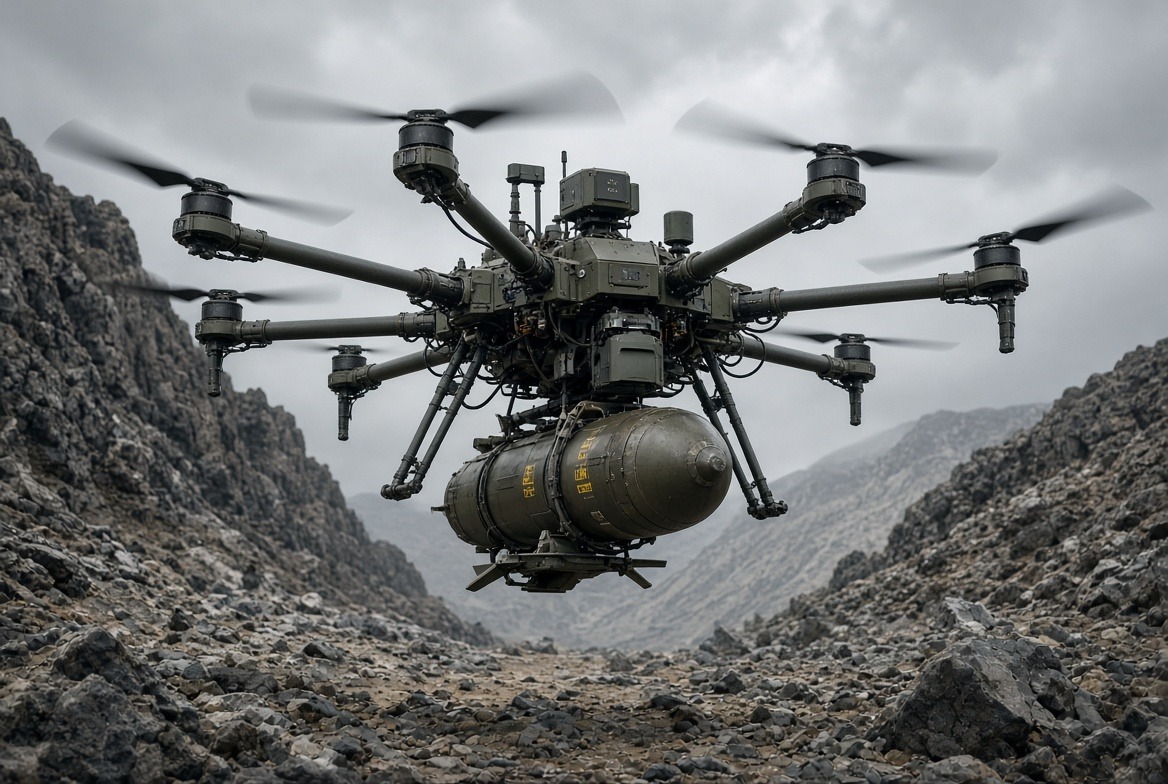
Sudan’s brutal civil war has escalated into a new phase of indiscriminate violence, with drone strikes becoming the primary weapon of mass civilian destruction. United Nations investigators have documented over 1,630 civilian deaths attributed to aerial bombardments between January and October 2026—a staggering 75% of all civilian fatalities recorded in the country during that period.
Civilian infrastructure targeted in systematic campaigns
Beyond the horrific death toll, UN reports detail a deliberate strategy to cripple Sudan’s ability to sustain life. Investigators have recorded dozens of attacks on everyday civilian hubs:
- Repeated strikes on crowded marketplaces where families gather to purchase food
- Indiscriminate attacks on civilian vehicles, hospitals, and schools, leaving medical facilities unable to operate
- Bombardments of fuel depots and power stations, cutting off electricity and clean water for millions
- Disruption of critical services like dialysis treatment and potable water distribution
Kordofan and Darfur bear the brunt of aerial warfare
The Kordofan region now accounts for two-thirds of all documented drone strike fatalities, while Darfur continues to suffer disproportionate devastation. These regions, far from traditional frontlines, have become hunting grounds where civilian spaces—both urban and rural—are treated as legitimate targets.
Volker Türk, UN High Commissioner for Human Rights, condemned the systematic violations as clear war crimes, emphasizing that the disregard for international humanitarian law has reached unprecedented levels.
From political rupture to drone warfare: The evolution of Sudan’s conflict
2019: Revolution and fragile transition
After thirty years of Omar al-Bashir’s authoritarian rule, massive protests forced his ousting in April 2019. A joint civilian-military Sovereignty Council took charge, led by General Abdel Fattah al-Burhan of the Sudanese Armed Forces and Mohamed Hamdane Daglo, known as “Hemetti,” commander of the Rapid Support Forces (RSF). Hemetti’s RSF emerged from the Janjaweed militias, notorious for atrocities in Darfur during the 2000s, and evolved into a powerful parallel military and economic force, largely funded through gold mining operations.
October 2021: Military coup derails democracy
The alliance between al-Burhan and Hemetti shattered in October 2021 when they jointly staged a coup, rejecting power-sharing agreements with civilian leaders and crushing hopes for democratic transition.
April 2023: Full-scale war erupts
Tensions boiled over on April 15, 2023, when al-Burhan and Hemetti’s forces clashed in Khartoum. The conflict quickly spread to Darfur and Kordofan, fueled by foreign arms supplies and growing regional rivalries.
2024–2026: Drone strikes escalate humanitarian catastrophe
What began as a power struggle has devolved into a war of annihilation. Following waves of ethnic violence in Darfur and the fall of strategic cities like El-Fasher in late 2025, both factions rapidly expanded their drone arsenals. The shift from ground combat to aerial warfare has displaced over 25 million Sudanese, pushing the nation into a catastrophic humanitarian and food security crisis.