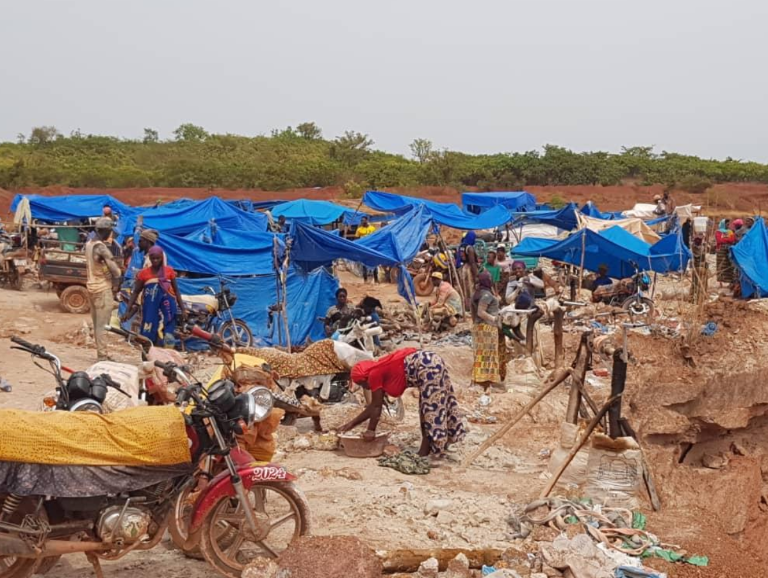
Guinea’s sweeping crackdown on illegal gold mining has exposed a painful truth: thousands of Burkinabè workers are risking everything in foreign mines, driven by economic despair at home. The arrests of 1,412 miners—including a majority of foreign nationals—highlight a migration crisis fueled by unmet livelihoods and broken economic promises.
Operation gold rush: The numbers behind Guinea’s latest enforcement wave
On November 10, 2026, Guinean authorities announced the prosecution of 1,263 individuals detained in a coordinated raid targeting illegal mining operations. The operation, carried out in partnership with the ministries of National Defense and Civil Protection, revealed a deeper social and economic fault line across West Africa. Just days earlier, 149 more arrests were logged in Kérouané and Siguiri, pushing the total tally to 1,412 detainees nationwide.
While authorities confirmed the scale of the crackdown, they did not disclose a full breakdown of nationalities among those detained. The absence of this detail leaves unanswered questions about the human cost of regional migration driven by poverty.
When survival trumps borders: Why Burkinabè miners stake everything on Guinea’s gold fields
The lure of Guinea’s artisanal gold mines has drawn laborers from across the Sahel, but Burkinabè workers represent a significant share. In a country grappling with deepening food insecurity, mass displacement due to insecurity, and a shrinking formal job market, subsistence mining in neighboring states has become a grim alternative to official poverty.
Artisanal mining, despite its dangers—land degradation, water pollution, and hazardous work conditions—offers a fragile lifeline to families struggling to meet basic needs. For many, the choice is not between opportunity and security, but between slow decline at home or risking arrest thousands of miles away.
Traoré’s economic promises face a harsh reality test
Since assuming power in 2022, Burkina Faso’s transitional leader Ibrahim Traoré has championed economic sovereignty, emphasizing national control over natural resource exploitation. Yet the exodus of Burkinabè miners to Guinea’s gold pits raises a glaring contradiction: why are citizens of a gold-rich nation turning to foreign soil for survival?
Critics point to structural weaknesses in Burkina Faso’s economy—rising unemployment, underdeveloped rural economies, and a mining sector that benefits elites rather than communities. While nationalization of mines and increased state revenue have been touted as successes, tangible improvements in daily living conditions remain elusive for millions.
The disconnect between policy and lived experience is now impossible to ignore. The state’s inability to provide stable livelihoods has pushed thousands toward informal, often dangerous livelihoods abroad.
The limits of enforcement: Can repression alone curb illegal mining?
Guinea’s crackdown reflects a broader regional struggle: balancing natural resource protection with the human factors driving illicit mining. Authorities argue that cracking down on illegal pits is necessary to safeguard the environment and prevent revenue loss from unregulated exploitation.
But experts warn that punitive measures alone will not resolve the crisis. Without addressing the root causes—lack of jobs, food insecurity, and regional inequality—new mining outposts will simply emerge elsewhere. Cooperation between affected countries, better tracking of migrant networks, and support for dignified local livelihoods are essential to long-term solutions.More than a security issue: The human faces behind the numbers
Each arrest represents a family’s fragile hope shattered. Behind the statistic of 1,412 detainees lies a story of desperation: a father leaving behind children unsure of his return, a young mother seeking income to pay for school fees, or an elderly farmer forced into dangerous labor after losing land to insurgency.
The Guinean government’s enforcement drive may restore order in some mining zones, but it cannot heal the economic fractures that drive migration. Meanwhile, Burkina Faso’s leadership faces mounting pressure to turn sovereignty rhetoric into real change—or risk watching its people seek survival elsewhere.
What sovereignty truly means: From mines to meals
True economic sovereignty is not measured in tons of gold extracted or contracts renegotiated—it is measured in the ability of citizens to feed their families, educate their children, and live with dignity. When a nation’s most vulnerable turn to foreign mines in search of basic survival, it signals a systemic failure.
Guinea’s enforcement crackdown offers a moment of clarity. It reveals not just the presence of illegal mining, but the invisible cost of unmet development promises. For both nations, the challenge is clear: either reform or resign to watching generations continue to flee in search of sustenance.