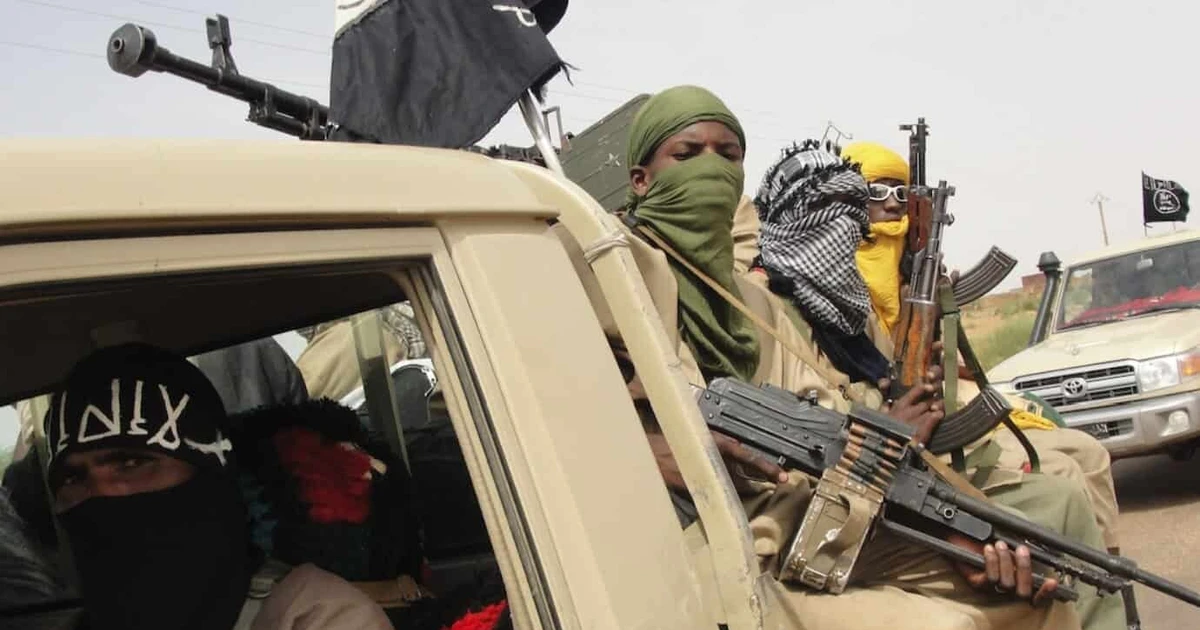
A deadly assault has struck a joint military convoy in the Mopti region, where fighters from the Jama’at Nusrat al-Islam wal-Muslimin (JNIM) targeted a combined force of the Russian African Corps and Malian government troops.
Deadly confrontation near Kaka village
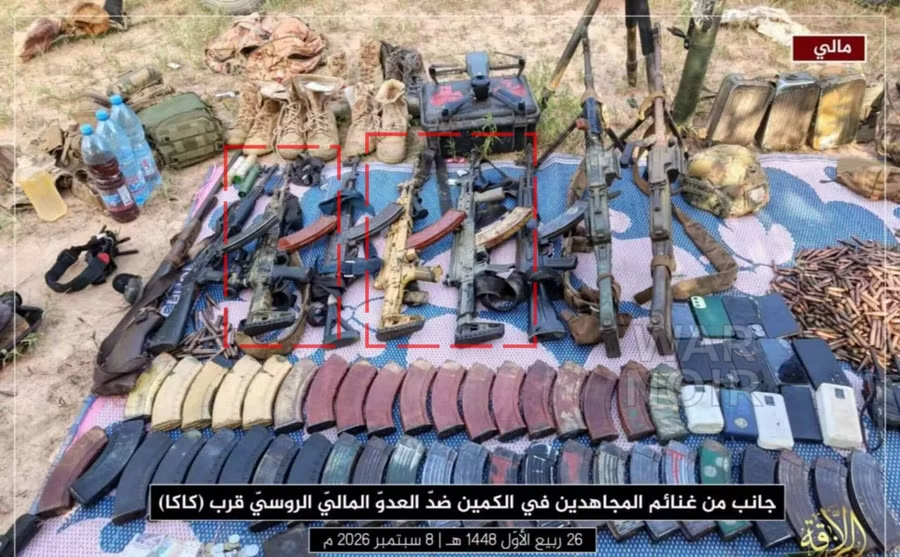
The ambush was executed near the settlement of Kaka. The fierce engagement resulted in the deaths of 13 soldiers, including both Malian military personnel and Russian fighters.
Following the clash, JNIM militants claimed to have captured a significant haul of military equipment. The seized items reportedly include 14 motorcycles, two PKM machine guns, six Kalashnikov assault rifles, six hand grenades, and a large cache of ammunition.
A pattern of escalation in northern Mali
This latest incident follows a massive confrontation earlier in the summer. On July 14, insurgent forces intercepted another large military column in northern Mali, which was transporting Malian soldiers alongside mercenaries from the Russian Ministry of Defense’s African Corps.
That previous operation involved a column of over 200 Russian operatives and approximately 100 Malian troops. The devastating encounter left roughly 60 Malian soldiers dead, dozens wounded, and at least 30 taken as prisoners of war. Despite the rising frequency of these highly coordinated attacks, joint Malian and Russian strategic planners have yet to implement effective countermeasures to secure these highly vulnerable transit routes.
The growing influence of JNIM in the Sahel
Formed on March 2, 2017, JNIM operates as the official franchise of Al-Qaeda in the region. The coalition emerged from the unification of several pre-existing militant factions, including Ansar Dine, Al-Mourabitoun, the Sahara Emirate branch of Al-Qaeda in the Islamic Maghreb (AQIM), and Katiba Macina.
While Mali remains the operational epicenter for the coalition, the group has systematically expanded its reach across international borders. Its combatants routinely launch operations in Burkina Faso and Niger, while steadily pushing southward to establish a presence in coastal West African nations like Benin and Togo. This shifting geography highlights JNIM’s transition from a localized Sahelian threat into a broader regional challenge for West Africa.