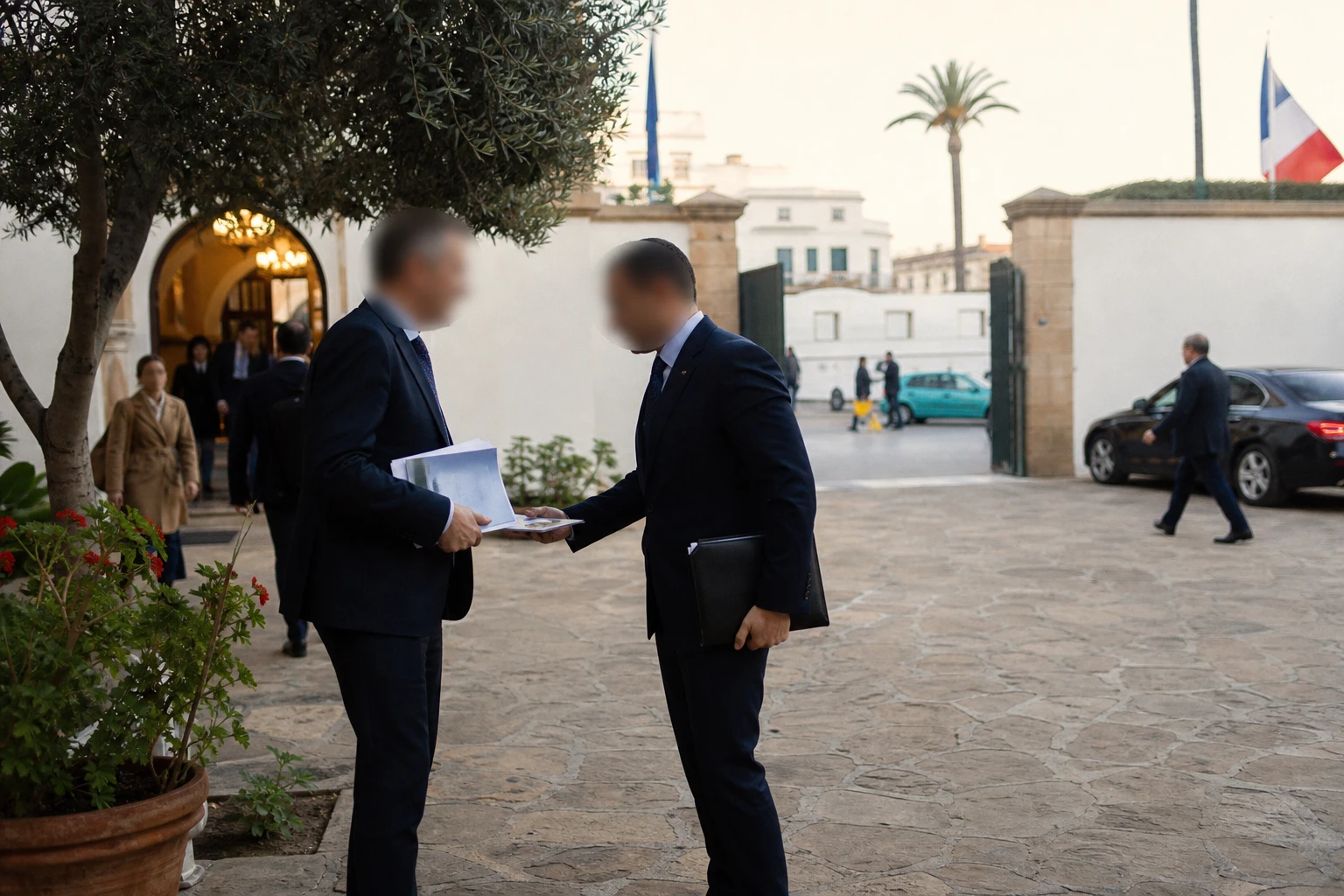
Sébastien Lecornu’s inaugural overseas trip as France’s new Prime Minister is more than a routine courtesy call—it’s a calculated statement of intent. His itinerary, from Doha to Rabat, signals which alliances matter most to Paris and where the government intends to exert influence in a shifting geopolitical landscape.
Diplomatic choreography with purpose
The choice of destinations is no coincidence. The Gulf and North Africa are regions where France holds strategic interests, and these visits are designed to reinforce partnerships at a time when global alignments are in flux. In Doha, the focus was on respect and continuity; in Rabat, the goal was to cement a burgeoning rapprochement that has reshaped France’s role in the Maghreb.
Doha: a gesture with deeper implications
Lecornu’s stop in Qatar was brief but symbolically rich. The French delegation, led by former Foreign Minister Jean-Yves Le Drian—a veteran of Gulf diplomacy—paid tribute to the late Emir, Hamad ben Khalifa al-Thani, whose 18-year reign left a lasting mark on the country’s modernization and regional engagement. This was not merely a ceremonial visit; it was a reaffirmation of a long-standing partnership built on shared economic and security interests.
With around 6,000 French expatriates in Qatar and robust trade ties—particularly in aviation and defense—the relationship extends beyond diplomacy. In a region fraught with tensions, France’s engagement with Doha remains a critical channel for dialogue, ensuring Paris maintains a voice in Gulf affairs.
Rabat: from warming ties to strategic alignment
The real momentum, however, was in Morocco. Lecornu’s high-level meetings in Rabat marked the first such visit since 2019, signaling a deliberate effort to deepen ties that have rapidly improved since mid-2024. That’s when France formally endorsed Morocco’s autonomy plan for Western Sahara—a move that drew sharp criticism from Algiers but solidified Paris’s alignment with Rabat.
The shift was underscored during President Macron’s state visit in October 2024, where both nations unveiled a “reinforced exceptional partnership,” accompanied by over €10 billion in investment agreements. For Morocco, this support bolsters its diplomatic stance on Western Sahara, a cornerstone of its foreign policy. For France, it’s an opportunity to reclaim a leading role in a key North African market.
The unspoken challenge: managing Algeria’s reaction
The rapprochement with Morocco has come at a cost. Algeria, which has long viewed Western Sahara as a red line, responded to France’s 2024 stance by recalling its ambassador, a move that underscored the depth of the rift. Paris now walks a tightrope—strengthening ties with Rabat while leaving the door ajar for Algiers.
Lecornu’s mission in Rabat wasn’t just about celebrating progress; it was a deliberate signal to other Maghreb capitals. France has made its choice, and it’s one that prioritizes strategic alignment with Morocco. The immediate beneficiary is Rabat, whose position is now more secure. The clear loser? Algiers, which sees this as a clear French tilt toward its rival.
Yet the controversy doesn’t end there. The Polisario Front and its supporters argue that France’s support for Morocco’s autonomy plan legitimizes an occupation they deem illegitimate. From Paris’s perspective, the stance is framed as a foundation for negotiation, not a final resolution. Still, the debate highlights the high stakes surrounding Western Sahara—a dossier that continues to inflame tensions.
What’s next? The road ahead for France-Morocco relations
Two key developments will shape the trajectory of this alliance. First, the substance of the agreements inked in Rabat—whether they focus on economic cooperation, security, migration, or mobility. Second, the potential visit of Morocco’s King Mohammed VI to France, which would symbolize the transition from warming ties to a firmly entrenched partnership.
Beyond the optics, a larger question lingers: How far can France push its alignment with Morocco without permanently alienating Algeria? This is the crux of Lecornu’s mission. It won’t resolve the tensions overnight, but it sets a clear direction—one where Paris’s priorities in the Maghreb are firmly, and deliberately, recalibrated.