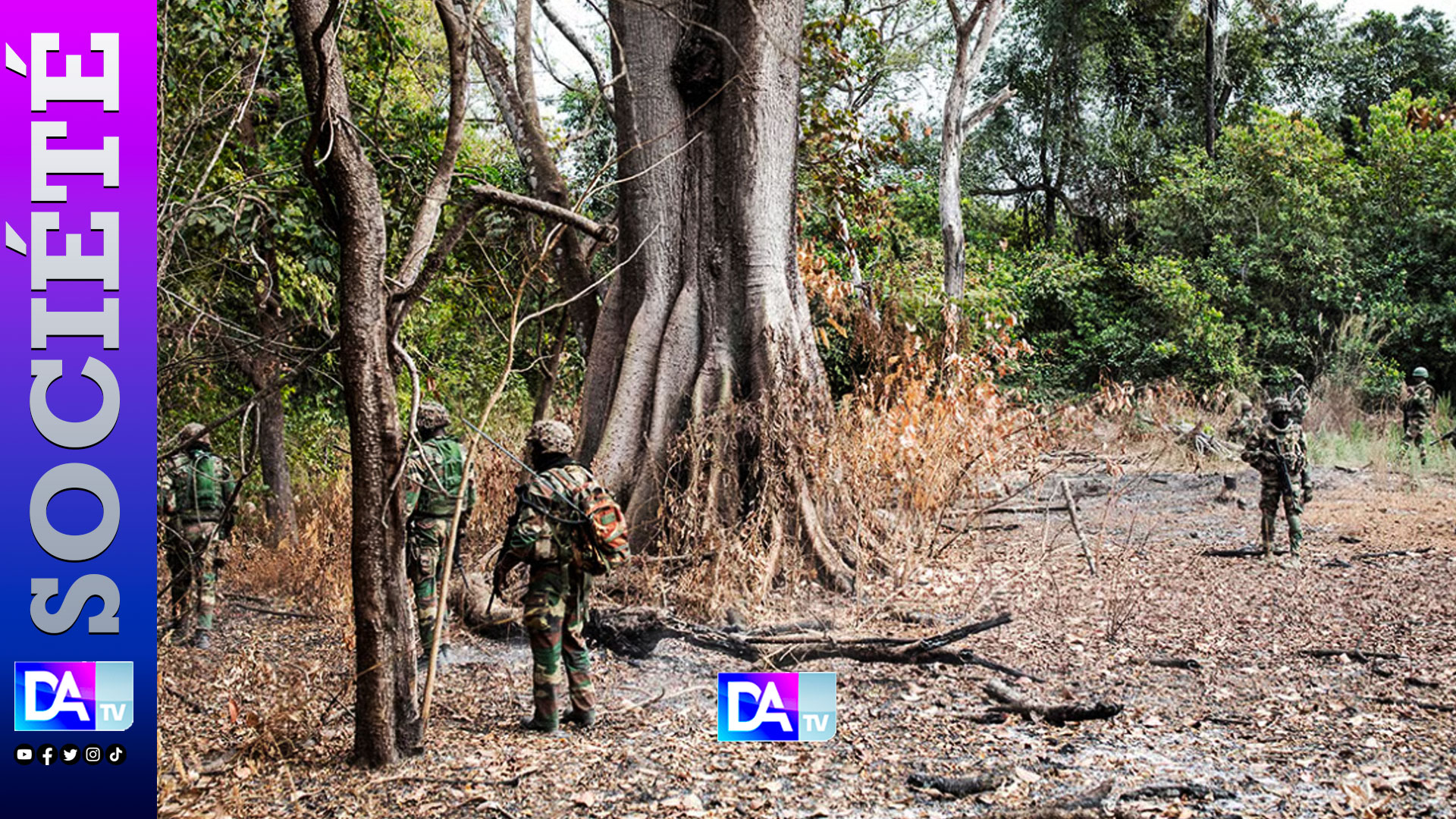
Security forces in Senegal’s Casamance region, supported by sniffer dogs, recently dismantled cannabis plantations near the Gambian border—a region historically tied to the Movement of Democratic Forces of Casamance (MFDC). The operation marks the latest chapter in a decades-long conflict that has simmered since 1982, despite the rebel group’s dwindling influence.
Conducted close to MFDC strongholds, the mission resulted in 14 arrests, the seizure of firearms, and over six tons of cannabis, according to regional military commander Colonel Cheikh Guèye. The Ziguinchor area, one of three divisions in Casamance and the epicenter of the low-intensity war that has claimed numerous lives, saw minimal resistance during the crackdown.
Once a formidable force, the MFDC now struggles with internal fractures, aging fighters, and a critical shortage of weapons and ammunition. Cooperation between Gambia and Guinea-Bissau—formerly safe havens for rebels—has further crippled the group’s operational capacity. A local civil society leader explains, “The rebellion has lost its political and emotional hold over communities, which now prioritize peace after years of disillusionment.”
Political shifts in Dakar have also played a role in weakening the MFDC’s appeal. With leaders from Casamance now holding national office—including Prime Minister Ousmane Sonko—many former supporters believe their region’s grievances are being addressed within the political system. “They feel a long-overdue sense of justice,” the source notes.
a rebellion with no territory to claim
During a March visit to Ziguinchor, Prime Minister Sonko highlighted the MFDC’s inability to control even a single village in over 40 years of armed struggle. His remarks followed a deadly explosion in mid-March that killed three soldiers and injured three others during anti-cannabis operations. Just days earlier, another attack had claimed one life and wounded six troops. In November 2025, a soldier held hostage for seven months by armed factions was finally freed.
Sonko emphasized that while independence rhetoric lingers, the real threat is cannabis cultivation. “We will deploy every means necessary to eradicate it,” he stated. The drug trade, he argued, provides armed groups with the financial resources to sustain their activities. Colonel Guèye echoed this, calling the recent operation an effort to “strike at the heart of their war economy.”
Conflict hotspots have shifted to the northern Sindian area near the Gambian border, despite relative calm in the Guinea-Bissau frontier zone since the army dismantled rebel bases in 2021. The dense forests and isolation of Sindian—despite its agricultural potential—make it a haven for illicit trade, leaving impoverished residents with few alternatives.
peace agreements and lingering tensions
The region’s instability is compounded by communities that rely on cannabis for survival. A local administrator revealed that some residents have even sought religious justification for cultivation from imams. Sonko has extended an olive branch to the MFDC but made one thing clear: “We will never tolerate any erosion of Senegal’s territorial integrity.”
This week, civil society in Ziguinchor marked the third anniversary of a peace deal between a rebel faction and the government. Another agreement, signed in Bissau in February 2025 with a different faction, has shown mixed results. While many displaced residents have begun returning home amid reduced hostilities and partial disarmament, challenges persist. “Some armed elements remain reluctant to lay down their weapons,” warns the civil society figure. “True pacification remains elusive.”