In a deeply disturbing development, forces identified as Africa Corps, operating under the control of the Russian government, summarily executed nine civilians, including four children, and subjected dozens more to brutal beatings in central Mali during early July 2026. This investigation reveals that Africa Corps combatants also engaged in widespread looting and torched at least eight homes, likely targeting individuals perceived to have ties with Islamist armed groups.
On July 10, around 5:00 AM, more than 100 Africa Corps fighters, accompanied by several Malian soldiers, stormed the village of Bombori in the Mopti region. Traveling in pick-up trucks and on motorcycles, they forcibly entered homes within the Fulani quarter, dragging residents outside. At least 80 men and boys were then rounded up and held under a tree. There, the fighters subjected them to severe beatings, interrogated them about alleged connections to Islamist armed groups, and issued death threats if they withheld information. Six civilians who attempted to flee were shot dead, while three others were apprehended and executed, one of whom was decapitated.
“The Malian junta appears to have granted Russian Africa Corps forces a free hand to kill civilians,” stated Ilaria Allegrozzi, a senior Sahel researcher with Human Rights Watch. “Malian authorities cannot evade their legal obligations by allowing Africa Corps to commit such atrocities. They must swiftly and impartially investigate these abuses and bring all those responsible to justice, including any Malian military personnel involved.”
Between July 19 and July 30, our team conducted remote interviews with 13 individuals, including four direct witnesses to the attack and nine civil society members and community leaders.
The bombori raid: witness accounts
Witnesses confirmed that Russian forces spearheaded the operation in Bombori, with four Malian soldiers primarily serving as interpreters. “The Russians were in charge… There were over 100 of them, all in military uniforms and heavily armed,” recounted a 39-year-old villager. “A white man [with] two walkie-talkies seemed to be the leader. Each time he asked a question, he fired into the air.”
Another witness, a 57-year-old butcher, described seeing “seven pick-up trucks mounted with machine guns, and over 60 motorcycles displaying Malian flags.”
The Al-Qaeda-linked Group for the Support of Islam and Muslims (GSIM or Jama’at Nusrat al-Islam wal-Muslimin, JNIM) has maintained control over Bombori since 2017, with a base situated just one kilometer away. Witnesses indicated that GSIM combatants had departed the village on the eve of the attack.
Mali’s shifting alliances and the rise of africa corps
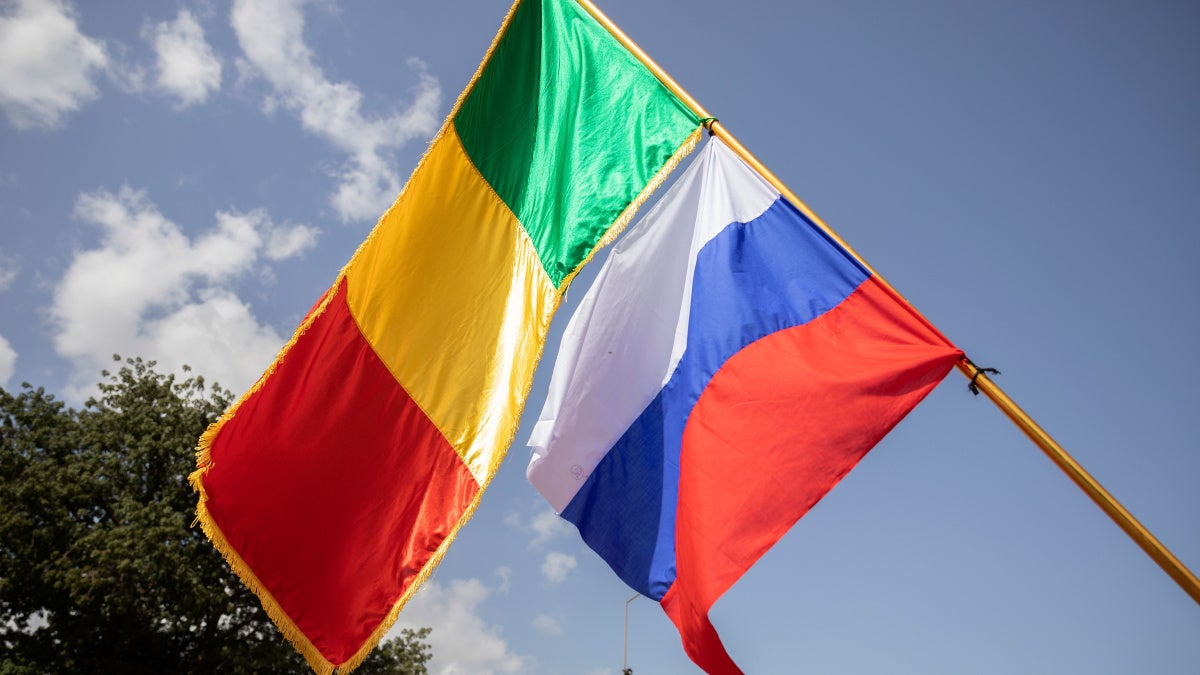
Successive Malian governments have grappled with Islamist armed groups since 2012. Following coups in 2020 and 2021, the military junta expelled French and United Nations forces, subsequently strengthening its ties with Russia. Since 2021, the junta has relied on assistance from the Russian-linked Wagner Group for security operations. In June 2025, the Wagner Group announced its withdrawal from Mali, claiming its mission was “accomplished.” The group was subsequently replaced by Africa Corps, which falls under Kremlin control and comprises largely the same personnel, including many former Wagner combatants and some of its key leaders.
Since 2021, Human Rights Watch has consistently documented widespread abuses committed by the Malian army, the Wagner Group, and Africa Corps during counter-insurgency operations across the country.
Brutal interrogations and executions
Witness accounts from July 10 detail Africa Corps forces firing upon fleeing civilians before detaining and assaulting men and boys. “I saw two men fall from gunshots,” a 40-year-old man stated. “I looked to my left and saw two motorcycles with two white soldiers; the first one on a motorcycle kept shooting at the two men on the ground.” He added that a Russian fighter then led him to a tree where dozens of men and boys were held at gunpoint. “The Russian fighters pointed their weapons at us, searched our pockets, seized all our phones, and photographed us,” he continued. “One [fighter] kicked us, another struck us with his weapon, and I received several blows to my back and chest… while others continued to bring in men they had arrested from the village.”
The 39-year-old explained that he had hidden in his home with his wife and children when three Russian fighters arrived, “grabbed me by the hand and violently pushed me out face down,” before forcing him towards the gathering point. “We were all sitting on the ground, heads down,” he recounted. “A Russian fighter hit anyone who looked up with the butt of his rifle.”
The man described the Africa Corps fighters’ interrogation methods: “A Malian soldier translated: ‘Where are the jihadists? Whoever points out a combatant goes home, whoever reveals weapons caches will receive a reward. If you don’t cooperate, we will kill you all!’”
Witnesses reported that Africa Corps forces separated three young men from the detained group and departed with them in a vehicle. “Around 9:00 AM, they took three young men… and drove them towards the GSIM base,” a 38-year-old man recalled. “Later, we found them dead.” Locals explained that these three men had occasionally assisted GSIM in collecting “taxes” (“zakat” in Arabic) but were not combatants.
The shadow of gsim in bombori
Residents indicated that GSIM, which has perpetrated widespread abuses across Mali since 2017, had controlled Bombori for nine years, collecting “taxes,” recruiting and training young men, and enforcing Sharia (Islamic law). They noted a significant increase in Islamist fighters within the village following coordinated GSIM and allied attacks in April and July across Mali. “Since the GSIM offensives, the security situation in our region has changed,” observed the butcher. “Many [GSIM] fighters, mostly foreigners, joined those already here.”
However, witnesses asserted that on July 10, GSIM combatants were absent from Bombori. “The GSIM fighters left during the night, while everyone was asleep,” the 39-year-old man revealed. “They do not protect us in case of an army attack.”
Aftermath: a village in mourning
When Africa Corps departed Bombori around 2:00 PM, residents recovered the bodies of nine individuals, including five men aged 19 to 34 and four children aged 6 to 17.
The 40-year-old man described the bodies of the two men shot in front of him as having “large, bloody open wounds on their chests and backs.” Regarding the three men who were taken away, he stated that “one had been decapitated, his head displayed in the middle of the village… the other two had their throats slit and were tied up, hands behind their backs.”
The 38-year-old explained finding “the bodies of two children, both around 6 years old, shot dead next to a burned house,” and two other bodies “near the national road [with] bullet signs to the head and… lying face down next to each other.”
Targeting the fulani community
Bombori village is divided into a Rimaïbé ethnic quarter and a Fulani quarter. Africa Corps forces exclusively targeted the Fulani sector. “I remained seated at my brother’s forge, and I had no problems,” observed the butcher, a Rimaïbé. “The assailants did not enter our homes, nor search inside, and no one was arrested or killed among us.”
GSIM has historically focused its recruitment efforts on the Fulani community, leading Malian governments to conflate the Fulani people with Islamist fighters, which has resulted in severe abuses against them.
Africa Corps forces also stole money and jewelry and set fire to at least eight homes belonging to Fulani families whose sons, according to witnesses, were GSIM combatants. “I saw smoke rising from the Fulani quarter towards the mosque,” the 57-year-old man indicated. “It was afterwards that I saw that they [the assailants] had burned eight huts and also destroyed five grain silos.”
Call for accountability in Mali
On August 4 and 5, our investigation sent letters detailing these findings and posing questions to the Russian Defense Minister and Assimi Goïta, President and Defense Minister of Mali, respectively, but has yet to receive any response.
All parties engaged in the armed conflict in Mali are bound by international humanitarian law, including Common Article 3 of the 1949 Geneva Conventions and customary laws of war. Deliberate or indiscriminate attacks against civilians or civilian property, as well as murder, cruel treatment, and torture of any person in detention, are strictly prohibited. Individuals who commit grave violations of the laws of war with criminal intent, or who are implicated under command responsibility, may face prosecution for war crimes.
“The Bombori massacre is emblematic of the atrocities being committed in Mali,” concluded Ilaria Allegrozzi. “Villagers have been caught in a deadly crossfire between an Islamist armed group and the government with its Russian allies, with neither belligerent upholding international law.”