The Nigerien government faces a critical test following the World Bank’s pledge of an additional $760 million in funding, earmarked for energy, agriculture, and water infrastructure. But with the country’s budget transparency score plummeting to just 6 out of 100 in 2025—down from 33 in 2023—experts and citizens alike are questioning whether the funds will be managed with the necessary oversight.
What the $760 million World Bank pledge means for Niger
On November 12, 2026, in Niamey, Ousmane Diagana, World Bank Vice President for West and Central Africa, announced the upcoming allocation of approximately $760 million in additional financing. This comes as part of a broader partnership with Niger, which already includes a portfolio exceeding $4 billion. The new funding aims to address pressing infrastructure gaps and social needs across three key sectors.
While the financial boost represents a significant opportunity for economic growth, the deterioration in governance indicators raises concerns. The World Bank’s commitment hinges on whether Niger can establish robust accountability mechanisms to prevent mismanagement or corruption.
A sharp decline in budget transparency
The International Budget Partnership’s 2025 Open Budget Survey reveals a troubling trend. Niger’s transparency score dropped from 33 in 2023 to a mere 6 in 2025, ranking 151st out of 155 countries. This places the country far below the threshold of 61, which is considered the minimum for enabling informed public debate on state finances.
The survey also highlights critical deficiencies in citizen participation (0/100) and budget oversight mechanisms (0/100). These scores reflect a severe lack of access to financial information, limited public involvement in budgetary decisions, and an almost complete absence of independent scrutiny of public spending.
Weak civic space complicates financial accountability
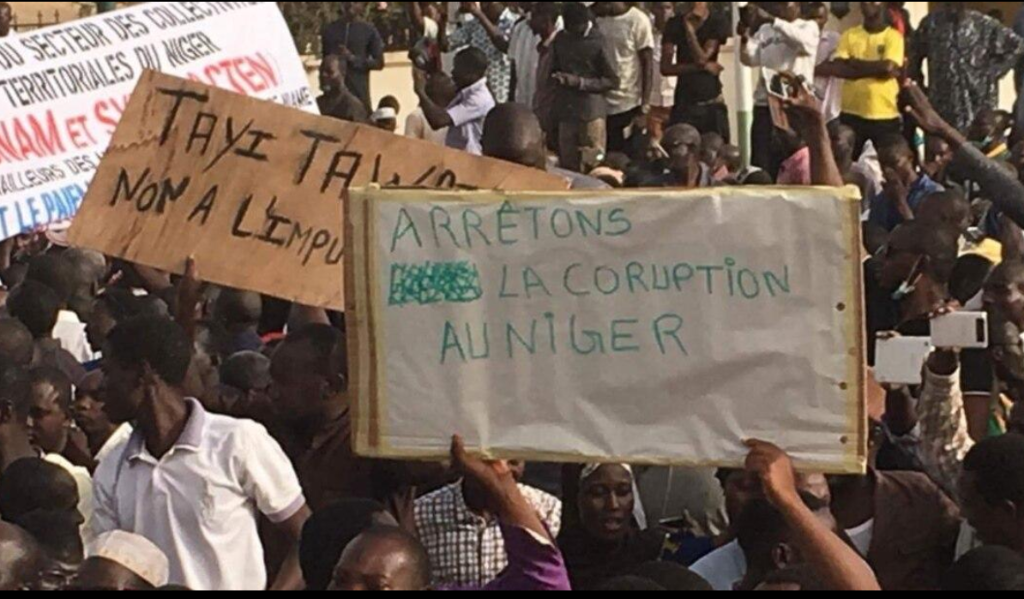
The timing of the funding announcement coincides with growing restrictions on civic freedoms in Niger. Independent media outlets face increasing pressure, while civil society organizations report difficulties in operating freely. The suspension or withdrawal of permits for several NGOs has raised alarms about the government’s willingness to tolerate critical oversight.
Financial transparency is not solely the responsibility of government institutions. It requires an ecosystem of independent watchdogs—vigilant journalists, active civil society groups, and robust oversight bodies—to ensure public funds are used as intended.
When dissenting voices are suppressed and investigative journalism is stifled, the risk of financial mismanagement and corruption escalates. A shrinking civic space undermines the very pillars needed to ensure that $760 million in development funds does not go astray.
Who will oversee the 760 million dollars?
The Nigerien government must act swiftly to address these concerns before the funds are disbursed. Transparency must begin with the full disclosure of financial agreements, sectoral allocations, and repayment terms for any loan-based components. Publishable documents should include:
- Signed financing agreements with the World Bank
- Detailed project lists and budgets for energy, agriculture, and water sectors
- Lists of beneficiary companies and tender results
- Regular progress and audit reports
The World Bank also bears responsibility in ensuring that its safeguards—corruption prevention, anti-fraud measures, and community protection—are strictly enforced. Without these controls, the funds risk being diverted or wasted, defeating the purpose of development financing.
Sovereignty without accountability: A contradiction in terms
Niger’s leadership has emphasized economic sovereignty as a cornerstone of its national agenda. However, true sovereignty extends beyond reducing financial dependence on external partners. It demands transparent governance, institutional accountability, and the ability of citizens to hold leaders responsible for their actions.
The paradox is clear: Niger seeks greater financial autonomy while simultaneously restricting civic freedoms and weakening oversight mechanisms. If the government fails to open its financial management to public scrutiny, the $760 million World Bank pledge could become more of a liability than an asset for the nation.
The path forward: Transparency as a development prerequisite
For the funds to deliver tangible benefits—improved infrastructure, food security, and access to clean water—they must be managed with absolute accountability. This means:
- Allowing independent audits without interference
- Ensuring journalists can investigate and report freely
- Protecting civil society organizations from punitive measures for oversight activities
- Publishing real-time financial reports accessible to the public
The World Bank and Nigerien authorities must collaborate to establish a framework that guarantees financial integrity. Otherwise, the $760 million could end up deepening governance deficits rather than addressing them. The real test of Niger’s sovereignty lies not in securing funds, but in demonstrating the political will to manage them with integrity and transparency.
Conclusion: From promise to performance
The World Bank’s $760 million pledge is a historic opportunity for Niger. But history shows that financial pledges without robust accountability mechanisms often fail to deliver meaningful change. The question for Niger is no longer how much money it can attract, but whether it can ensure that every dollar is used effectively, transparently, and for the benefit of its people. Without such guarantees, the funds risk becoming just another chapter in the cycle of unfulfilled development promises.