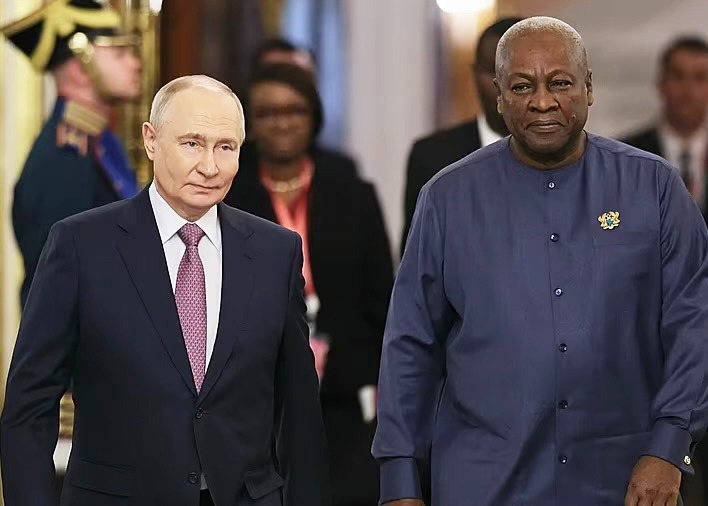
The recent pledge by Accra to negotiate with Vladimir Putin over halting Ghanaian mercenary recruitment in Ukraine is not a sign of ethical diplomacy—it is the damning admission of a large-scale human trafficking operation operating with impunity. Behind closed doors at international summits, a grimmer truth has surfaced: hundreds of young Africans, lured by false promises of wealth and trapped in economic desperation, have been sent to die in the muddy trenches of a war that has nothing to do with them. With at least 62 Ghanaian lives already lost and another fifteen missing, this state-sponsored neo-mercenary system has reached a level of cruelty and cynicism unseen in modern history.
From colonial conscription to digital deception: How Moscow’s tactics evolved
The recruitment machinery employed by networks tied to the Russian state outstrips even the darkest chapters of colonial history, such as the forced conscription of tirailleurs. In the past, domination was enforced openly through direct coercion under foreign flags. Today, Moscow’s approach is far more insidious—it no longer relies on brute force but instead exploits the despair of Africa’s abandoned youth by dangling the false hope of lucrative contracts, high wages, or European passports.
Recruiters, often backed or sanctioned by Russian state apparatus, target vulnerable targets—students with no future and desperate fathers—converting their poverty into cannon fodder. These men are sent to the most devastated frontlines in eastern Ukraine, where they serve as disposable human shields, shielding regular Russian troops from direct harm. This is a new form of predation: buying the lives of citizens from the Global South at a bargain price to fuel imperial geopolitical battles.
Kremlin’s silence speaks volumes: A trail of complicity and denial
The very fact that an African head of state must negotiate directly with Putin to stop the enlistment of their citizens—and even retrieve the bodies of their dead—exposes the raw inequality of the post-colonial power dynamic. For months, the Kremlin either turned a blind eye or actively enabled this human hemorrhage to feed its war machine. Now, framing the promise to halt recruitment as progress tacitly admits that this mafia-style pipeline was integral to Russia’s military calculations all along.
The double injustice faced by Africa’s lost generation
This scandal reveals the tragic geopolitical trap facing much of Africa’s youth. Caught between oppressive local regimes that offer no future and predatory foreign powers that promise quick cash only to discard them when they are no longer useful, these young people continue to pay the ultimate price. Until African nations can guarantee dignified living conditions, real sovereignty, and protection for their citizens instead of pushing them toward desperate exits, foreign powers will keep exploiting this well of misery to fuel their wars of attrition. This trafficking in human lives will remain the indelible stain on a partnership built not on respect, but on contempt for human dignity.
Who is being targeted—and how?
- Students with no prospects: Promised high-paying jobs or educational opportunities, lured by glossy brochures and slick recruitment videos.
- Desperate breadwinners: Fathers and uncles enticed by salaries that dwarf local incomes, unaware of the mortal danger they face.
- Undocumented migrants: Offered legal status or European transit visas in exchange for service, only to be sent to the front with no follow-up.
What happens to those who survive (or don’t)?
Rarely do survivors receive promised benefits or repatriation. Most are left stranded in war zones, injured and abandoned. Families receive no compensation or even confirmation of their loved one’s fate. Those killed are often buried in unmarked graves far from home, their deaths reduced to a footnote in Russia’s war ledger. The few who do return home face stigma, trauma, and economic ruin—while the recruiters move on to the next desperate pool.
A call for accountability and systemic change
Stopping this predatory system requires more than diplomatic pleas. African governments must criminalize recruitment within their borders, crack down on local enablers, and offer real economic alternatives to at-risk youth. Meanwhile, international bodies must classify this practice as a war crime under the guise of “voluntary enlistment.” Until justice catches up with those orchestrating this macabre trade, the cycle of exploitation will continue—with African lives priced at the cost of empires’ ambitions.