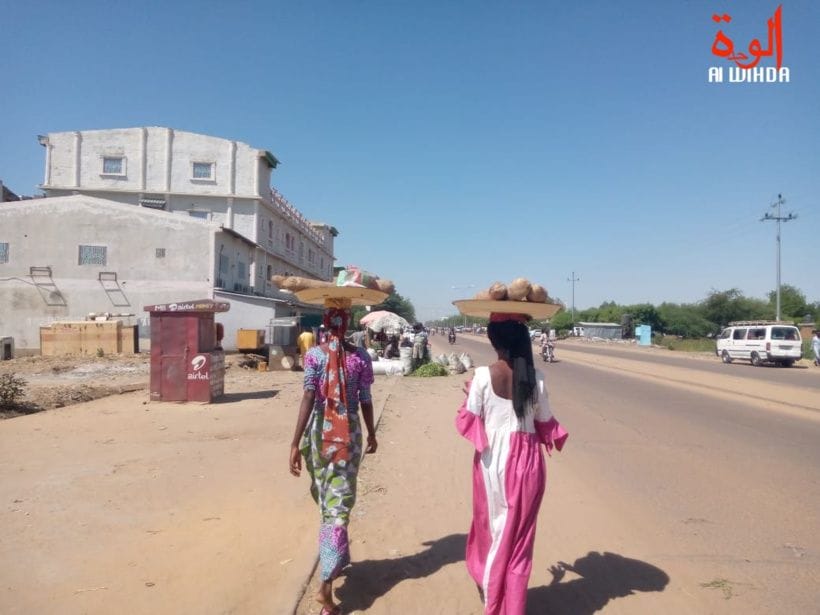
Across Chad’s bustling cities, a new wave of entrepreneurship is reshaping daily life. Women balance trays overflowing with fresh mangoes, golden fried snacks, and vibrant fabric bundles as they navigate crowded alleyways. With headscarves shielding sun-kissed faces, they call out to passersby, weaving between motorbikes and pedestrians under relentless midday heat.
Freedom on the streets, childhood in the balance
Aïcha, in her early thirties, adjusts the weight of her tray of roasted peanuts. Her youngest child clings to her back, their small hands gripping her shoulders as she scans the crowd for customers. “It’s exhausting, but now I call the shots,” she admits, offering a handful of nuts to a customer. Nearby, Fanta tends to her sizzling flatbreads over a makeshift charcoal burner while her five-year-old plays unattended with a scrap of plastic in the dirt. These are not isolated cases—women like them are claiming the streets of N’Djamena, Moundou, and Abéché, building livelihoods brick by brick.
Yet, behind the hustle, a quieter struggle unfolds. Children accompany their mothers, exposed to thick smoke from the burners, carrying bags too heavy for their frames, or begging for shade along the pavement. Last week in Abéché, a seven-year-old boy lugged a bucket of water while shouting, “One franc!” as his mother haggled over a sack of millet. Schoolbooks gather dust. For many, the classroom has long since been replaced by the cacophony of the market.
The cost of maternal empowerment
This dual reality raises pressing questions: Is a mother’s hard-won independence worth the sacrifice of her child’s future? The women of Chad’s streets are rewriting the rules of survival, but the next generation risks paying the price through lost education and unrelenting labor. As the sun sets on another day of trade, the echoes of their cries linger—along with the weight of unresolved choices.