UN praises Togo’s commitment to peace mediation in eastern DRC led by Faure Gnassingbé
- Security
Women
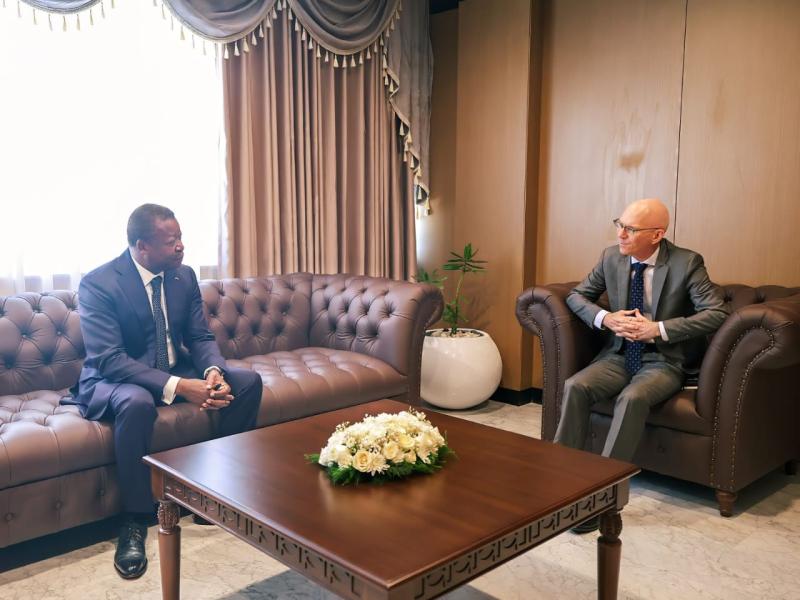
The United Nations Special Representative for the Democratic Republic of Congo (DRC) and head of MONUSCO, James Swan, alongside the UN Secretary-General’s Special Envoy for the Great Lakes region, Huang Xia, met with Togolese President Faure Essozimna Gnassingbé in Lomé on Monday, June 8, 2026. The Togolese leader serves as the African Union’s mediator in the ongoing peace talks for eastern DRC.
The discussions focused on the progress of diplomatic initiatives and the UN’s contribution to the African Union-led mediation efforts aimed at achieving a lasting resolution to the crisis in eastern DRC.
Both UN officials are actively engaged in peace and stabilization efforts in eastern DRC and the Great Lakes region. Their visit to Lomé coincides with the semi-annual evaluation meeting of the African Union’s mediation process for this part of Africa.
“The UN representatives commended Togo’s dedication to promoting peace, stability, and peaceful conflict resolution across Africa. They reaffirmed their commitment to supporting President Gnassingbé’s leadership as the AU mediator in finding a fair and sustainable solution to the crisis affecting this region,” stated the Togolese presidency.
Appointed as the African Union’s mediator for the eastern DRC crisis in early 2026, replacing Angolan President João Lourenço, Faure Gnassingbé has been conducting extensive consultations with the UN to foster a coordinated approach to peace in the Great Lakes region.
James Swan’s participation in Lomé holds particular significance. Having taken office less than two months ago, this marked his first attendance at the semi-annual review of African Union-led peace initiatives under Togo’s mediation.
This meeting comes at a critical juncture. Despite the existence of the Washington Agreement and repeated evaluation meetings, the security and humanitarian situation in eastern DRC continues to deteriorate. The ongoing diplomatic initiatives, though numerous, have yet to yield tangible results.
Key challenges persist, including eroding trust between parties and a lack of political will among some regional actors, which hinders the effective implementation of commitments made. Mediators, including the United States and Qatar, are under renewed pressure to intensify efforts toward resolving the current security crisis, exacerbated by the presence of the M23 rebel group, which Kinshasa accuses Rwanda of supporting.
Calls for compliance with peace agreements continue to resonate at national, regional, and international levels. However, these appeals have yet to translate into meaningful action. Bridging the persistent gap between diplomatic progress and ground realities remains an elusive goal, as each party interprets the agreement’s provisions differently, further complicating its implementation.
The Doha Process, facilitated by Qatar, faces similar hurdles. Despite multiple rounds of negotiations, Kinshasa and the M23 rebellion remain far apart on critical issues. The Montreux phase in Switzerland, intended to inject new momentum, failed to deliver the expected results. Commitments made during this stage have not been fully honored, and the deteriorating security situation in the Middle East has further sidelined this process, slowing mediation efforts.
Related Posts