The US raises red flags on Russia’s military ties with Madagascar
Washington has issued a stark warning to Madagascar after observing its deepening military cooperation with Russia, citing the Kremlin’s failed security model in the Sahel as a cause for concern. Senior US military officials argue that Moscow’s approach—rolled out in Mali, Burkina Faso, and Niger—has not delivered durable stability and could destabilize the Indian Ocean region.
AFRICOM’s top general flags risks of exporting Sahel strategy
Lieutenant-General John Brennan, Deputy Commander of the US Africa Command (AFRICOM), publicly cautioned Malagasy authorities during a press briefing on November 10, 2026, following his week-long tour of Madagascar and Mozambique from November 1 to 8. His key message: Washington opposes any attempt to replicate Russia’s Sahel security model in the Indian Ocean.
“Our concern is the model Russia has applied in the Sahel and its apparent willingness to export this approach elsewhere across the continent,” Brennan stated, stressing that the United States does not want to see this strategy take root in Madagascar or Mozambique.
Why the Sahel precedent worries Washington
Following military coups in Mali, Burkina Faso, and Niger, these countries gradually distanced themselves from Western partners—particularly France—opt for closer ties with Russia. Moscow’s military support, channeled through the Africa Corps (a Defense Ministry-linked structure replacing Wagner), has expanded, yet violent extremist attacks remain unabated in the region. US officials argue this demonstrates the model’s inefficacy.
“We see the Sahel example as largely ineffective, and replicating it risks amplifying instability in other regions,” Brennan said. He acknowledged that Moscow’s operations across Africa vary in impact but emphasized Washington’s strategic assessment of the overall approach.
Madagascar’s strategic pivot draws US attention
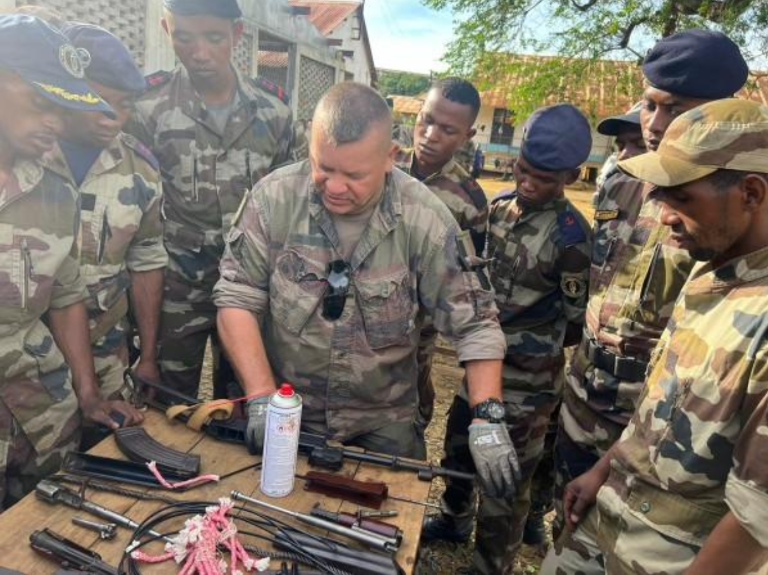
Since Colonel Michaël Randrianirina’s rise to power in 2025, Madagascar has accelerated its military partnership with Russia. Deliveries of drones and small arms, along with training programs led by Russian instructors, have intensified. During a February 2026 visit to Moscow, Randrianirina met with President Vladimir Putin, marking a new chapter in political, military, and economic collaboration. At the October Russia-Africa Summit, both nations formalized defense, trade, and tourism agreements.
For Washington, Madagascar’s pivot carries geopolitical weight. Its location in the Indian Ocean places the country at the nexus of key maritime trade routes and energy corridors.
Indian Ocean security at stake
The Mozambique Channel—sandwiched between Madagascar and continental Africa—serves as a critical artery for global commerce. Controlling the flow of merchant ships, energy shipments, and economic exchanges makes it a flashpoint of international interest. Brennan also highlighted rising threats from Islamic State-affiliated groups in northern Mozambique, which are reportedly adapting their tactics and targeting maritime activities.
In response, the US is intensifying security cooperation with Madagascar and Mozambique, focusing on maritime surveillance, intelligence sharing, and military training—a push underscored by the November visit.
Antananarivo’s balancing act: autonomy or alignment?
Despite US criticism, Brennan clarified that African nations retain the sovereign right to choose their security partners. However, he urged Malagasy leaders to weigh the risks of aligning too closely with Moscow’s model, warning that poor strategic choices could compromise regional stability.
So far, Washington has stopped short of imposing sanctions or coercive measures on Madagascar. Instead, it appears intent on preserving its influence in the Indian Ocean while dissuading Antananarivo from adopting Moscow’s Sahel playbook.
Can Madagascar navigate great-power rivalry?
The fundamental question now is whether Madagascar can maintain balanced relations with both Russia and Western powers without sacrificing its strategic autonomy or national sovereignty. The challenge lies in leveraging new partnerships without entangling itself in geopolitical friction that could undermine regional security.
One thing is certain: the strengthening of Madagascar-Russia ties has entered a new phase, transforming the island nation into a focal point in the intensifying competition between global powers for influence in the Indian Ocean.