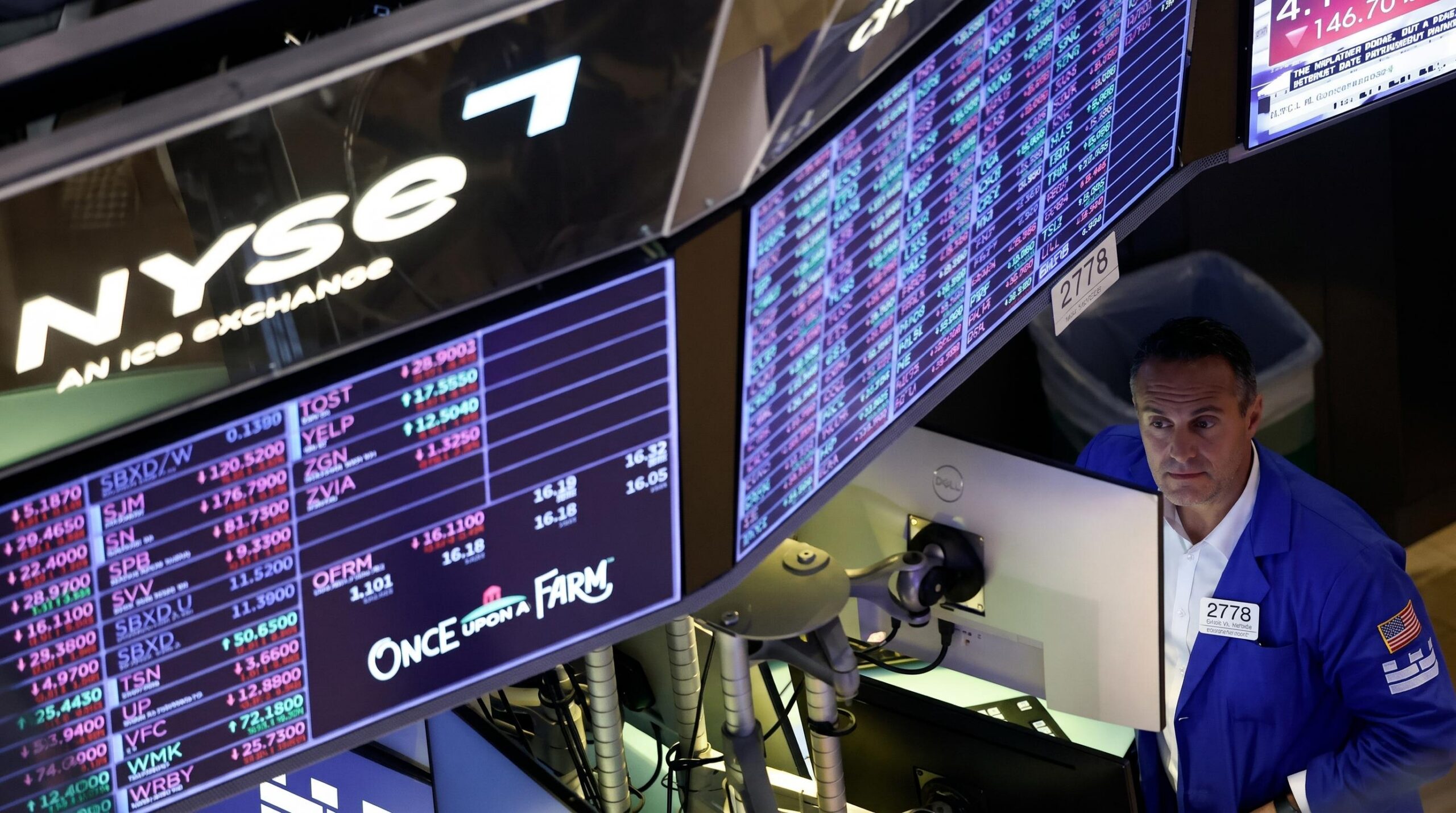
Wall Street just experienced one of its most brutal sell-offs in 18 months, with the Nasdaq Composite Index leading the freefall. The tech-heavy index dragged global markets into turmoil as over $2.5 trillion in market capitalization vanished overnight, wiping out years of gains in a single trading session.
AI giants bear the brunt: Nvidia, AMD, and chipmakers take a pounding
The artificial intelligence sector—long hailed as the driving force behind Wall Street’s upward surge—faced a harsh reality check. Major players in the AI ecosystem saw their stocks crumble under intense selling pressure:
- Nvidia, the undisputed leader in AI processors, suffered a devastating 6% to 9% drop, erasing tens of billions in market value within hours of trading.
- AMD and Broadcom weren’t spared either, with shares plummeting between 6% and 17%, signaling deep investor unease over the sustainability of current valuations.
- The semiconductor supply chain came under severe strain as Micron Technology (-10% to -17%), Western Digital (-13%), and SanDisk (-15% to -22%) bore the brunt of the sell-off. The sector’s retreat reflects growing skepticism about future demand for data center infrastructure.
The Philadelphia Semiconductor Index (SOX) nosedived by over 12%, wiping out nearly all gains accumulated over the past few months. The sell-off wasn’t confined to AI-focused stocks—it spread like wildfire across the entire tech landscape.
Major indices plummet across the board
The market rout extended far beyond tech stocks, sending shockwaves through all major U.S. indices:
- Nasdaq Composite: Crushed by mega-cap tech stocks, suffering its steepest single-day drop in recent memory.
- S&P 500: Shed more than 2.6% to 4.3%, marking its worst performance of the year so far.
- Dow Jones Industrial Average: Plunged over 3%, dragged down by industrial and tech-heavy constituents.
- VIX Index: Skyrocketed by 33%, breaching 60 points—a clear indicator of heightened fear and volatility among portfolio managers.
Three key triggers behind the market meltdown
The unprecedented sell-off wasn’t an isolated incident—it was the result of converging pressures that finally broke investor confidence:
1. Doubts over AI profitability
The market’s skepticism deepened around the actual returns on AI investments. Despite trillions poured into data centers, servers, and energy infrastructure, profits have failed to materialize at the expected pace, prompting mass profit-taking and position unwinding.
2. Regulatory clouds over data centers
Emerging political and policy uncertainties in the U.S. are raising concerns over the future of data center expansion. Stricter regulations on energy consumption and grid capacity could slow growth, directly threatening chip demand and tech valuations.
3. Automated liquidations and technical breakdowns
After months of relentless gains, algorithmic trading systems and hedge funds triggered automatic sell orders once key technical levels were breached—turning a healthy correction into a full-blown liquidation spiral.
Global markets reel from Wall Street’s shockwave
The tremors were felt worldwide. In Asia, panic selling hit hard:
- Nikkei 225 (Tokyo): Dropped 6% as investor sentiment soured rapidly.
- Kospi (Seoul): Shed over 8%, dragged lower by chip giants Samsung and SK Hynix, both deeply exposed to AI and semiconductor demand.
As analysts debate whether this is merely a technical correction or the beginning of a deeper tech bubble deflation, investors are now closely watching policy signals from central banks and awaiting upcoming earnings reports for clues on the road ahead.