
In the heart of Côte d’Ivoire’s political landscape, the long-standing relationship between President Alassane Ouattara and French leaders has played a defining role in shaping bilateral ties. From private gatherings in Mougins to high-profile diplomatic encounters at the Élysée Palace, these connections have endured through decades, transcending political shifts in both nations.
From personal bonds to strategic alliances
The roots of this enduring friendship trace back to Ouattara’s years in France, where he cultivated close ties with influential figures in politics and business. These relationships proved instrumental during his early political career and later as Côte d’Ivoire’s leader, where they helped navigate complex regional and international challenges.
One of the most notable figures in this dynamic was Nicolas Sarkozy, whose presidency coincided with a period of renewed cooperation between Abidjan and Paris. The two leaders collaborated closely on economic projects, security initiatives, and regional stability efforts, reinforcing the strategic partnership between their countries.
Diplomatic milestones under Macron’s leadership
Under Emmanuel Macron, the bond between Côte d’Ivoire and France has continued to flourish. The French president’s engagement with Ouattara has been marked by frequent high-level meetings, joint economic ventures, and a shared commitment to addressing security concerns in West Africa.
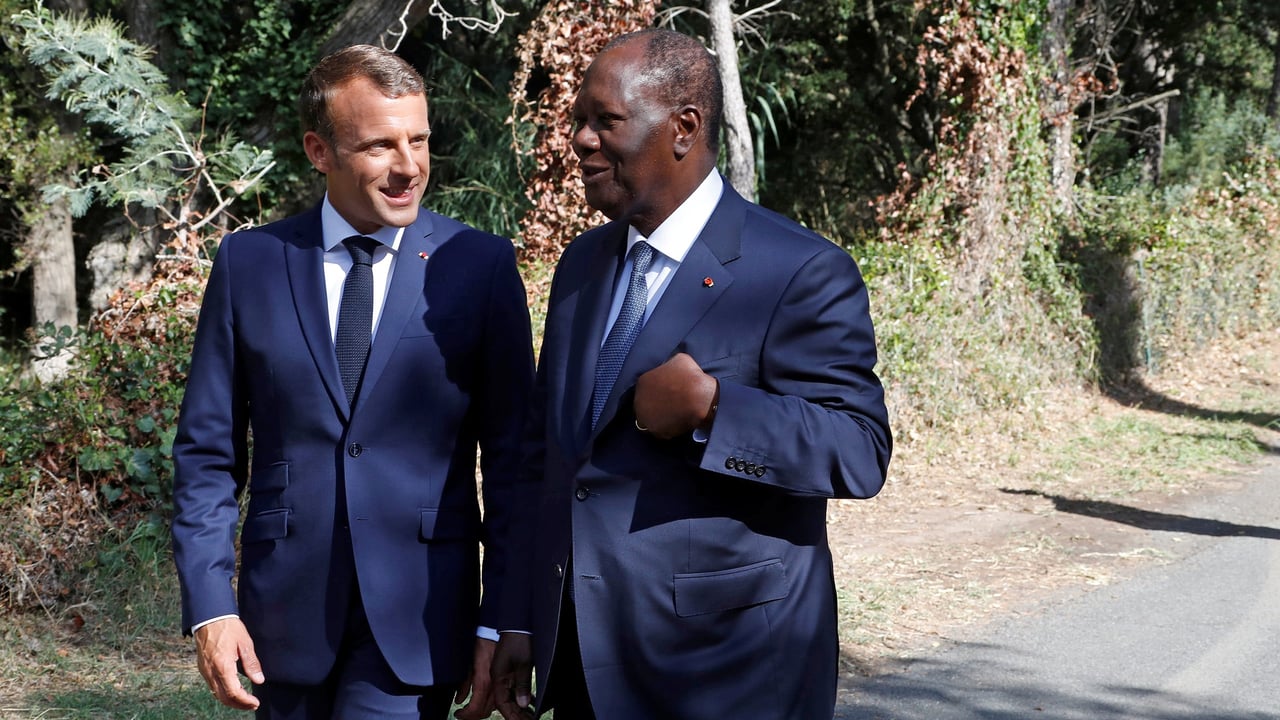
A defining moment in their relationship came during a ceremonial event in Boulouris, France, where Macron hosted Ouattara to commemorate the 75th anniversary of the Allied landing in Provence—a pivotal event that contributed to liberating southern France during World War II. The gathering underscored the historical ties binding the two nations, while also highlighting their ongoing collaboration in defense and economic development.
Economic cooperation as a cornerstone
France remains one of Côte d’Ivoire’s top economic partners, with investments spanning sectors such as infrastructure, agriculture, and energy. Bilateral trade has flourished under Ouattara’s leadership, with French companies playing a key role in major projects across the country. These economic ties have not only fueled Côte d’Ivoire’s growth but have also strengthened the broader West African economy.
Security and regional stability
Beyond economics, the partnership between Côte d’Ivoire and France has been vital in addressing security challenges in the Sahel and Gulf of Guinea. Both nations have worked together to combat terrorism, maritime piracy, and organized crime, reinforcing stability in a region plagued by instability. French military support has been particularly crucial in training Ivorian forces and enhancing their operational capabilities.
The personal dimension of diplomacy
At the heart of this enduring alliance lies a personal rapport between Ouattara and successive French leaders. Whether in private discussions or public appearances, the mutual respect and understanding between the leaders have fostered trust and facilitated smoother negotiations. This personal connection has often acted as a catalyst for progress, enabling both countries to overcome diplomatic hurdles with greater ease.
Looking ahead: A partnership built to last
As Côte d’Ivoire continues to chart its path toward sustainable development and regional leadership, the strong ties with France remain a cornerstone of its foreign policy. With shared economic interests, security priorities, and historical bonds, the future of this partnership appears promising. Both nations are poised to deepen their collaboration in areas such as renewable energy, digital innovation, and inclusive growth, ensuring that their relationship remains resilient in the face of evolving global challenges.