A nation’s quest for identity confronts a harsh security landscape
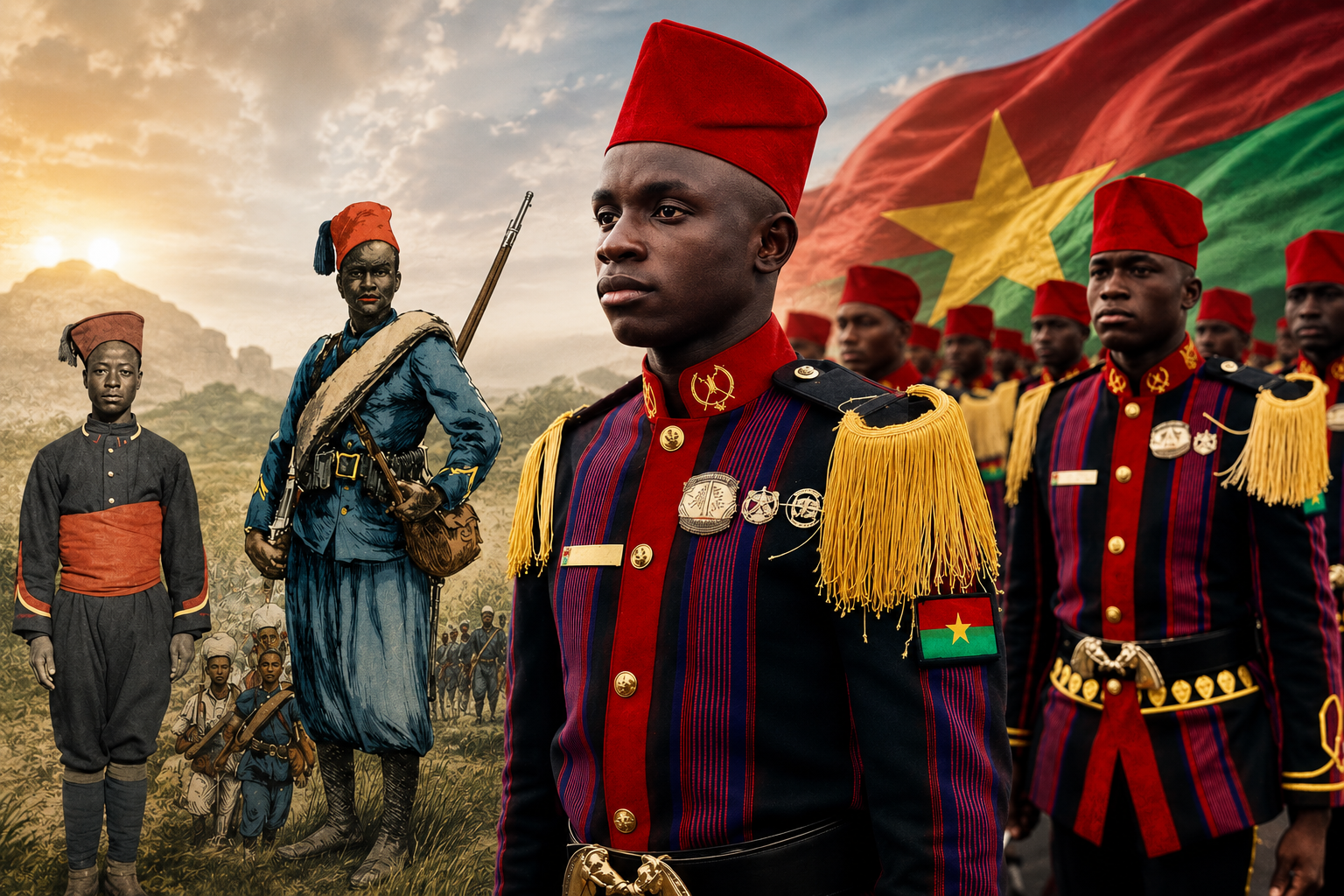
In Burkina Faso, the line between performative politics and the stark realities on the ground appears to blur with each passing day. A recent decree by the military junta, establishing a ‘memory attire’ to accompany significant decolonization commemorations, serves as a potent illustration. While presented as a symbol of reasserted sovereignty and national pride, this initiative is part of a broader strategy to elevate national identity markers. However, it also brings a fundamental question to the fore: what truly constitutes the priorities of a state grappling with an unprecedented security crisis?
The sovereignist gamble
It would be an oversimplification to discount the significant political capital Captain Ibrahim Traoré still commands among a substantial segment of the Burkinabe populace, and indeed, within certain opinion streams across West Africa. By departing from conventional international cooperation frameworks and adopting a distinctly anti-imperialist posture, the transitional leader has effectively harnessed a deep-seated frustration stemming from decades of largely unsuccessful counter-terrorism efforts.
This sovereignist rhetoric resonates strongly with many citizens who believe that previous security strategies failed to restore peace. In alignment with this viewpoint, the authorities have introduced numerous symbolic gestures: promoting Faso Dan Fani as official attire, elevating national languages, rehabilitating historical resistance figures, and now, creating the ‘memory attire’. For supporters of the current administration, these actions contribute to rebuilding a national identity that has long been perceived as fragile.
On the security front, the increasing prominence of the Volunteers for the Defense of the Homeland (VDP) also signals a commitment to mobilize the population in the war effort. The declared aim is to diminish external reliance and cultivate an indigenous defense capability capable of sustainably addressing prevailing threats.
An alarming security reality persists
Yet, symbols, no matter how powerful, cannot substitute for tangible results on the ground. Almost four years after the military assumed power, the security challenge remains formidable.
Vast swathes of the national territory continue to lie beyond the effective control of the state. In numerous provinces, armed groups persist in their assaults against defense forces, civilian auxiliaries, and local populations. Ambushes targeting convoys, village raids, destruction of vital infrastructure, and kidnappings continue to fuel a pervasive climate of chronic insecurity.
The humanitarian repercussions remain particularly severe. Hundreds of thousands of individuals are internally displaced, while numerous communities live under the constant menace of armed factions. Access to healthcare, education, markets, and administrative services remains severely disrupted across several regions. Supply chain difficulties exacerbate the economic precariousness of households, particularly in rural areas.
Adding to this security pressure is a substantial economic cost. A significant portion of public resources is now diverted towards military expenditures, even as needs in health, education, infrastructure, and development remain immense. The downturn in agricultural activities, the closure of numerous artisanal mining operations, and challenges in goods transportation also weigh heavily on the nation’s economic growth.
The risk of a communication-governance disconnect
An increasingly pronounced disparity is emerging between official communications and the expectations of the populace. While the authorities emphasize symbols of rediscovered sovereignty, a segment of citizens primarily awaits concrete solutions: enhanced security, the reopening of crucial road networks, the return of public services to abandoned zones, and the opportunity for displaced persons to return to their villages.
Sovereignty is not solely measured through symbols, ceremonies, or sartorial shifts. It is also manifested in the state’s capacity to exercise its authority across its entire territory, guarantee the free movement of individuals, protect civilian populations, and ensure the essential functions of public power.
Patriotic mobilization speeches can bolster national cohesion, but they struggle to convince when communities continue to live under the daily threat of violence. As the conflict extends, there is a risk of a widening chasm between the regime’s stated ambitions and the realities experienced in rural areas.
The true crucible of the transition
Burkina Faso is navigating one of the most critical junctures in its contemporary history. The restoration of security remains the indispensable prerequisite for any political, economic, and social reconstruction. Without tangible improvements on this front, symbolic initiatives, however potent their identity message, risk progressively losing their mobilizing force.
History will judge the military transition not primarily on the impact of its slogans or the proliferation of sovereignist symbols, but on its ability to re-establish state authority, reclaim lost territories, sustainably protect populations, and foster conditions for a return to normalcy. For a fully assumed sovereignty extends beyond merely asserting political independence; it is measured, above all, by a state’s capacity to guarantee the security, stability, and future of its citizens.