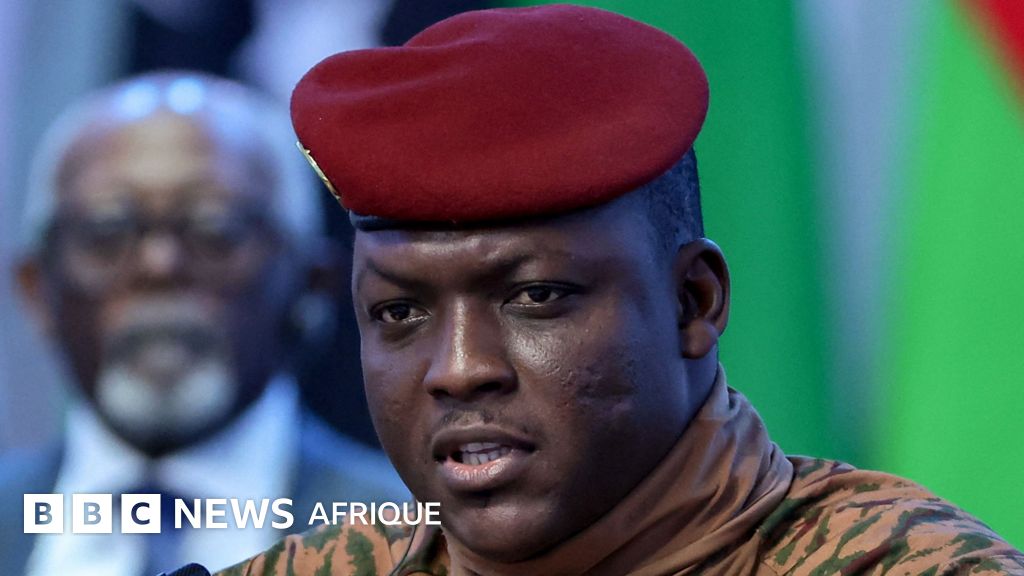
Ouagadougou — In a nationally televised interview on Thursday, Burkina Faso’s military head Captain Ibrahim Traoré declared that the nation must abandon its pursuit of democracy, calling the system fundamentally incompatible with Burkinabè values.
Rejection of democratic governance
The 38-year-old leader, who seized power in a 2022 coup, asserted that democracy has “failed” Burkinabè society, stating: “People must forget about democracy. It is not for us.” He framed his stance within a broader critique of Western political models, arguing that attempts to impose democracy abroad consistently result in violence and instability.
Traoré referenced Libya as a cautionary tale, noting how Western intervention following the 2011 fall of Mouammar Kadhafi plunged the nation into prolonged conflict and political fragmentation. Since then, Libya has struggled to hold elections and remains divided between rival administrations and armed factions.
Security crisis and shifting alliances
Three years into his rule, Traoré has extended his transitional mandate by five years, citing the need to stabilize the country amid a jihadist insurgency that has claimed thousands of lives. In January, his government banned all political parties, transferring their assets to the state—a move framed as necessary to dismantle “divisive” structures and consolidate revolutionary progress.
The military leadership has increasingly distanced Burkina Faso from Western partners, particularly France, in favor of cooperation with Russia. While Traoré champions this pivot as a path to sovereignty, the security situation remains dire. According to recent estimates, over 1,800 civilians have died since 2023, with human rights groups attributing two-thirds of the violence to state-aligned forces.
Vision for a new Burkina Faso
Traoré outlined a governance model centered on economic and military self-reliance, with traditional leaders and grassroots structures playing pivotal roles. He dismissed conventional politics as inherently corrupt, describing politicians as “liars, flatterers, and demagogues” driven by personal ambition rather than national progress.
Critics warn that his administration’s suppression of dissent—targeting opposition figures, media outlets, and civil society—has eroded civic freedoms. Yet Traoré’s anti-Western rhetoric and panafricanist posturing have earned him significant support across the region, mirroring the rise of similar military regimes in neighboring Mali and Niger.
As Burkina Faso grapples with escalating violence and political upheaval, the debate over Traoré’s vision for the nation’s future continues to intensify.