Burkina Faso’s military head declares democracy ‘not for us’

- Temps de lecture: 5 min
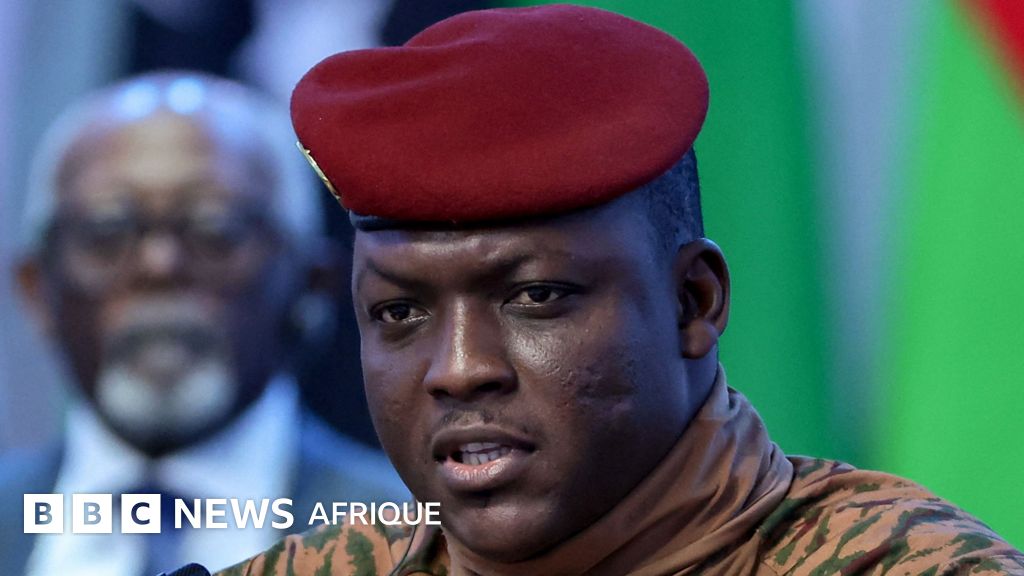
Captain Ibrahim Traoré, Burkina Faso’s military leader, has declared that democracy is a system foreign to his nation and must be abandoned. Speaking on national television during a late-evening broadcast, he stated: « The people should forget the issue of democracy. Democracy is not for us. »
Traoré, who seized power in a 2022 coup, initially pledged a return to civilian rule by July 2024. However, just two months before that deadline, his administration announced a five-year extension of the transition period, effectively prolonging military rule.
In January 2026, the government dissolved all political parties as part of a broader plan to « rebuild the state, » seizing their assets and transferring control to the government. Traoré justified the move, calling political parties divisive and incompatible with his revolutionary vision. « The truth is that in Africa—at least in Burkina Faso—real politicians embody all the vices: liars, flatterers, smooth-talkers, » he argued.
Traoré’s vision: sovereignty over western-style governance
During the interview, Traoré dismissed Western-style democracy as ineffective and dangerous, citing the instability in Libya—a former stronghold of authoritarian rule—as a cautionary example. « Look at Libya. It’s a nearby case. Western-imposed democracy led to chaos and division. That won’t happen here, » he asserted.
He emphasized a new system rooted in « revolutionary mobilization, » where traditional leaders and grassroots structures would play a central role. « We have our own approach. We’re not copying anyone. We’re here to completely change how things are done, » he declared.
Economic and military autonomy at the core
Traoré argued that Burkina Faso’s development hinges on self-reliance. « Working six or eight hours a day won’t lift us out of poverty, » he stated, advocating for longer workdays and stricter labor policies to accelerate progress. He also stressed the need for military and economic sovereignty, aligning Burkina Faso with other West African juntas in distancing itself from former colonial power France.
Like neighboring Mali and Niger, Burkina Faso has shifted its security partnerships away from Western nations, instead turning to Russia for military support. Despite these alliances, militant Islamist violence persists across the region, with no end in sight.
A crackdown on dissent
Traoré’s administration has faced criticism for suppressing opposition voices. Human rights organizations report that over 1,800 civilians have been killed since the 2022 coup, with two-thirds of these deaths attributed to state forces and allied militias. Critics accuse Traoré of punishing dissent by sending opponents to the frontlines of the Islamist insurgency.
Despite these controversies, Traoré has cultivated a following across Africa for his anti-Western rhetoric and panafricanist stance. However, the humanitarian toll of his rule raises serious questions about the sustainability of Burkina Faso’s current trajectory.
What’s next for Burkina Faso?
With no clear timeline for a return to civilian governance, Traoré’s government remains focused on « revolutionary transformation. » Whether this approach will stabilize the country—or deepen its crisis—remains to be seen. One thing is certain: Burkina Faso’s political future is being written outside the frameworks of traditional democracy.