Burkina Faso’s captain-turned-leader challenges conventional governance with bold statement
-
- Reading time: 5 minutes
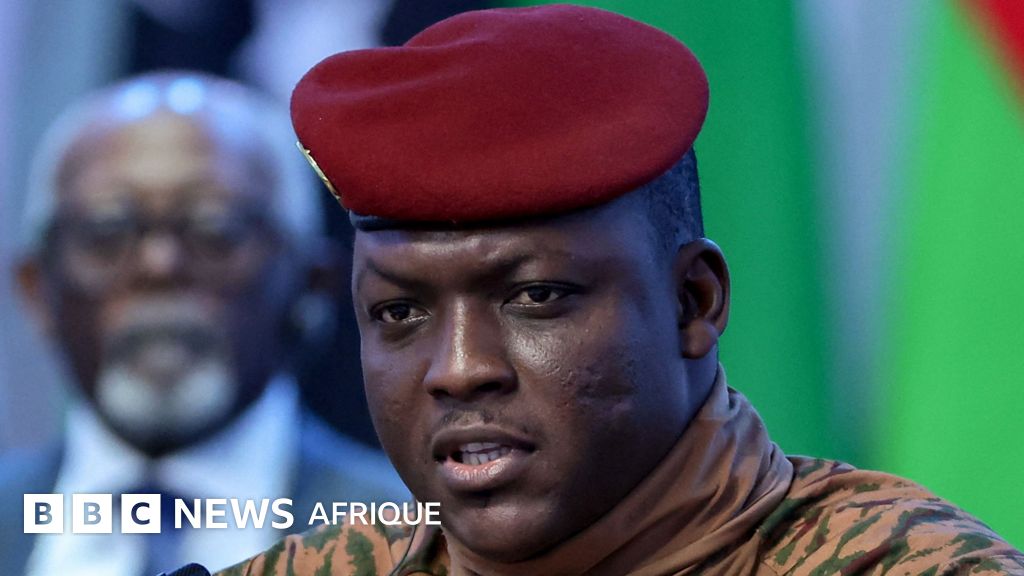
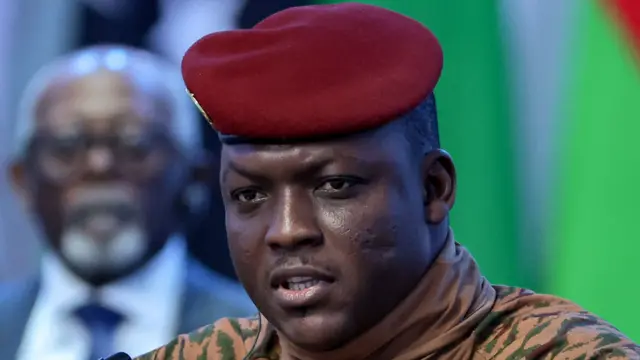
In a nationally televised address, Burkina Faso’s military leader, Captain Ibrahim Traoré, delivered a striking message: the nation must abandon democratic principles entirely. Speaking from Ouagadougou’s state television studios, he declared that democracy is fundamentally incompatible with Burkina Faso’s needs and aspirations.
Traoré, who seized power in a 2023 coup, argued that democratic systems have brought only instability and suffering to African nations. He stated plainly: “People must forget about democracy. It is not for us.” The 38-year-old leader, positioning himself as a revolutionary figure opposing Western influence, drew parallels with Libya’s turbulent post-Gaddafi transition.
His comments come amid a dramatic shift in Burkina Faso’s political trajectory. Initially pledging to restore civilian rule by July 2024, Traoré’s junta has since extended its rule by five years, citing security challenges as justification. January saw the outright ban on all political parties, accompanied by the transfer of their assets to state control—a move framed as essential for national reconstruction.
Rejecting Western models, embracing radical transformation
Traoré’s critique extended beyond governance structures. He condemned democratic elections as vehicles for foreign manipulation, asserting that “wherever Western powers impose democracy, bloodshed follows.” His vision prioritizes sovereignty, patriotic mobilization, and economic self-reliance, with traditional leaders and grassroots structures playing pivotal roles.
The captain-turned-leader dismissed political parties as inherently divisive and corrupt, describing them as breeding grounds for deceit and empty rhetoric. “In Burkina Faso—and much of Africa—a true politician embodies every vice: a liar, a flatterer, a charlatan,” he argued. While he offered no concrete alternative to replace democracy, Traoré insisted Burkina Faso would forge its own path. “We are not copying anyone. We are here to completely change how things are done.”
A call for unrelenting effort
Traoré’s leadership philosophy demands extraordinary dedication from citizens. He criticized the conventional 8-hour workday as insufficient for national development, advocating instead for exhaustive labor to bridge Burkina Faso’s economic gap with wealthier nations. This ethos extends to military strategy, where he has prioritized domestic capacity over foreign partnerships.
Since taking office, Traoré has systematically suppressed dissent. Opposition figures, critical media outlets, and civil society groups face severe restrictions. Reports indicate that regime critics are sometimes deployed to frontline combat positions against Islamist militants—a practice that has drawn international condemnation.
Regional solidarity and shifting alliances
Despite escalating violence and accusations of human rights abuses, Traoré has cultivated substantial support across Africa through his panafricanist rhetoric and anti-Western stance. Burkina Faso’s pivot away from traditional Western allies—particularly France—mirrors moves by neighboring military-led governments in Mali and Niger. All three nations have turned to Russia for military assistance, yet the insurgency rages on unabated.
Recent analysis by Human Rights Watch reveals sobering statistics: since Traoré’s 2023 takeover, over 1,800 civilians have been killed in Burkina Faso. Disturbingly, two-thirds of these fatalities are attributed to government forces and allied militias, with Islamist militants responsible for the remainder.
The junta’s approach has sparked intense debate on the continent. Supporters praise Traoré’s commitment to sovereignty and development, while critics warn of authoritarianism and humanitarian crises. As Burkina Faso enters its fourth year under military rule, the question remains: Can revolutionary governance deliver security and prosperity where democracy allegedly failed?