The absence of Cameroon’s president, Paul Biya, now stretching beyond 57 days, has plunged the nation into uncharted territory. While the 93-year-old leader remains in Geneva, a series of controversial military appointments has raised concerns about the militarization and ethnicization of power.
Prolonged absence fuels speculation
Since departing Yaoundé on June 7, 2026, for what was officially described as a private visit to Switzerland, President Biya has not been seen in public. Reports suggest he underwent knee surgery in early July, though details remain scarce. His prolonged absence has intensified rumors, with some suggesting complications from the procedure. Meanwhile, government spokesman René Sadi insists Biya is in good health and will return soon—but the lack of transparency has done little to ease concerns.
Critics question the timing of his extended absence. « Why risk undermining electoral credibility to spend weeks abroad? » asks Roger Justin Noah, Secretary-General of the Movement for the Republic of Cameroon (MRC). « The Cameroonian people deserve clarity about his condition. »
Military reshuffle sparks fears of ethnic succession
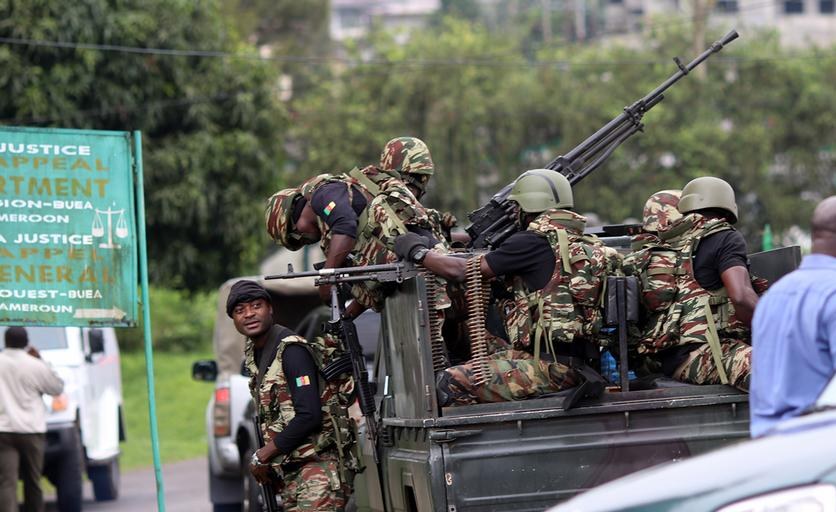
On August 3, 2026, a presidential decree (No. 2026/265) appointed General Beko’o Abondo Raymond Jean Charles as the new head of the Presidential Guard—a critical role responsible for the president’s personal security. This appointment, along with several others, has deepened anxieties about a hidden agenda.
The reshuffle included:
- Five new brigadier generals
- A new Chief of Staff of the Armed Forces, General Ebaka Hippolyte
- Six new regional military commanders in four of Cameroon’s five military zones
A retired colonel, speaking on condition of anonymity, noted, « Only the president can authorize such high-level military appointments. » The timing—while Biya remains unseen—has fueled suspicions that these moves are part of a preemptive power grab.
The vice-presidency gap leaves succession in limbo
The April 2026 constitutional amendment reintroduced the vice-presidential position, theoretically designed to ensure a smooth transfer of power. Yet, the role remains unfilled, leaving a dangerous vacuum. « The mechanism is broken, » says political analyst Jean-Pierre Bekolo. « Without a vice-president, the constitutional pathway to succession is blocked. »
Opposition figures, including Maurice Kamto of the MRC, have urged the Constitutional Council to declare a power vacuum. Deputy Jean-Michel Nintcheu stated, « The Council must recognize the absence of leadership at the highest level. » However, without a vice-president, the process cannot proceed.
Ethnic tensions and historical parallels
The specter of ethnic conflict looms large. Bekolo warns that Cameroon risks repeating the dark chapter of Rwanda in 1994, where political instability and ethnic manipulation led to catastrophe. « We are witnessing both the militarization and ethnicization of succession, » he writes. « No one knows where this path ends. »
Tensions between two dominant factions have intensified:
- The pro-Frank Biya faction—seen as the guarantor of the current system
- The faction led by First Lady Chantal Biya and Secretary-General Ferdinand Ngoh Ngoh
Government silence deepens distrust
Why proceed with such sensitive appointments while the president is absent? The government has not provided a clear explanation. Some speculate that those signing the decrees may already know Biya will not return. Rumors of forged documents have surfaced, though the government denies them. Yet, once doubt takes root, it lingers.
Can Cameroon avoid disaster?
The situation is dire but not irreversible. Key steps could restore stability:
- Transparency: The government must disclose Biya’s health status and return timeline.
- National dialogue: A structured conversation among political forces to ease ethnic tensions.
- Filling the vice-presidency: Appointing a vice-president would restore institutional trust.
« History remembers not only the actions but also the silences, » Bekolo writes. « Cameroon stands at a crossroads. The path forward—toward ethnic militarization and clan warfare—leads only to ruin. »
« Stop playing with fire, » he warns. « Tomorrow, it may be too late to say, We did not know. »