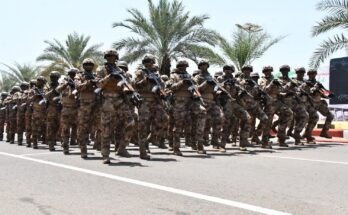
In a brazen assault on Friday morning, armed militants linked to Boko Haram launched a deadly strike against a Nigerien military outpost near the strategic border town of N’Guigmi, located in the Diffa region. The attack, which unfolded at dawn, left a significant toll among the country’s defense forces.
Attack details and immediate aftermath
The jihadist group targeted the garrison positioned near the shores of Lake Chad, an area notorious for its cross-border volatility. Local residents, speaking on condition of anonymity due to security concerns, confirmed the assault resulted in the deaths of around ten soldiers. One witness recounted: “The attack began shortly after sunrise, catching our troops off guard. We heard heavy gunfire and explosions before the militants retreated.”
Military sources later disclosed that the ambush also claimed the lives of four members of the National Guard, bringing the confirmed death toll to fourteen. Rescue operations are currently underway as authorities scramble to secure the perimeter and prevent further incursions. The governor of the Diffa region, General Mahamadou Ibrahim Bagadoma, personally supervised the evacuation of the wounded and the recovery of the fallen soldiers.
Regional threats and ongoing military response
N’Guigmi has long been a flashpoint in the Sahel’s security crisis, serving as a stronghold for both Boko Haram and the Islamic State’s West Africa Province (ISWAP). The vast, marshy expanse of Lake Chad has become a sanctuary for these groups, enabling them to stage cross-border raids into neighboring nations. Since 2009, the insurgency has claimed thousands of lives and displaced millions, primarily in Nigeria’s northeast, while steadily spreading to neighboring Niger, Chad, and Cameroon.
In response to the escalating threat, the countries bordering Lake Chad have reinvigorated the Multinational Joint Task Force (MNJTF), originally established in 1994. Recent coordinated efforts have seen Chad conduct aerial and ground operations against Boko Haram hideouts, with support from Nigerian and Nigerien forces. However, Niger continues to face persistent violence in its western regions, where jihadist factions tied to Al-Qaeda and ISIS remain active despite the military government’s countermeasures since July 2023.
Humanitarian toll and long-term security challenges
The attack underscores the persistent instability gripping the region, where civilian populations bear the brunt of the conflict. Displacement camps around N’Guigmi are already stretched thin, housing families who have fled repeated violence. Military analysts warn that without sustained regional cooperation and robust counter-terrorism strategies, such incidents will likely recur, further destabilizing an already fragile security landscape.