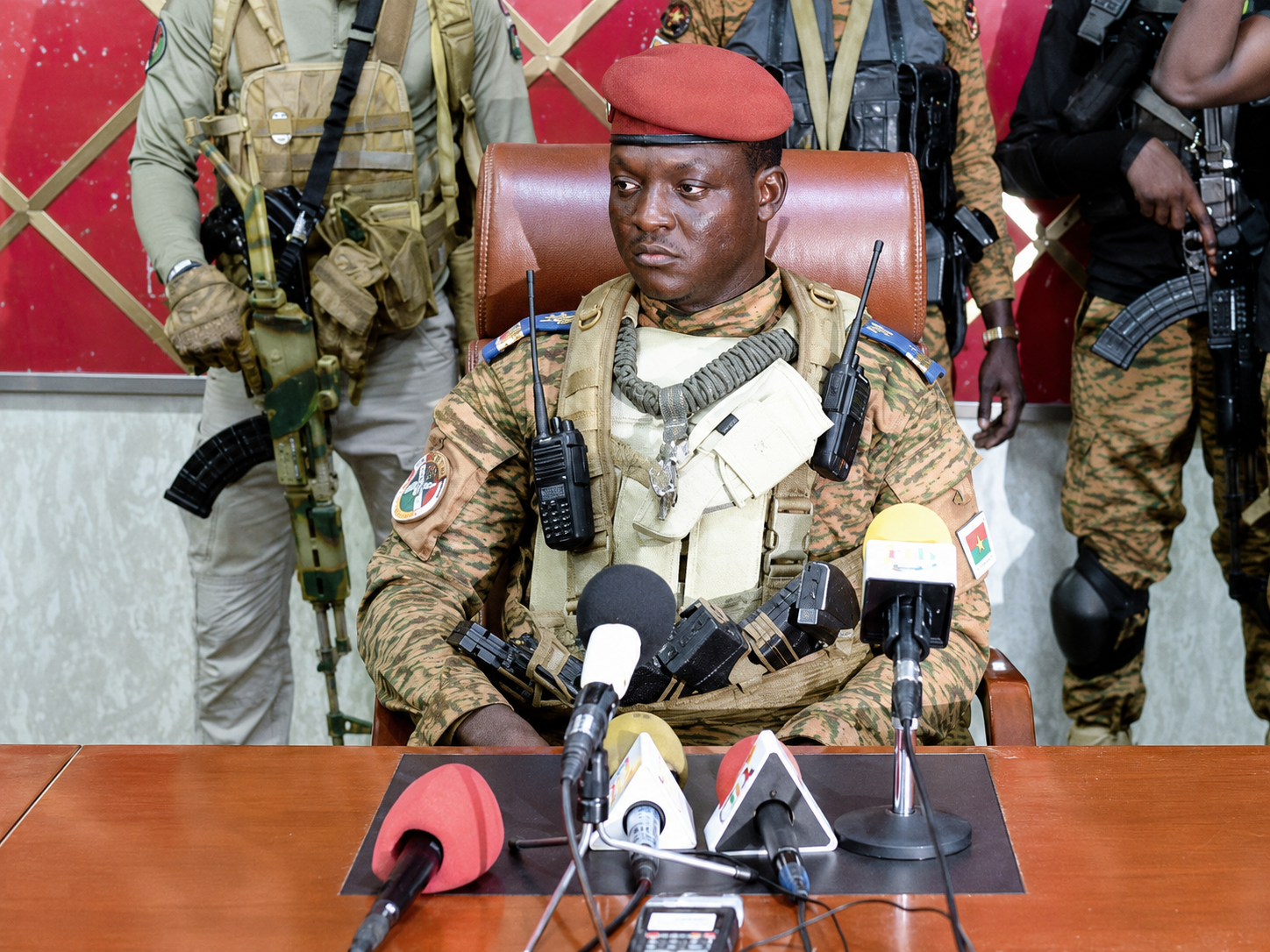
The trajectory of Captain Ibrahim Traoré’s rise to power in Burkina Faso cannot be understood without revisiting a pivotal date in the nation’s recent history: September 26, 2022. On that day, a military convoy en route to the besieged town of Djibo fell victim to a devastating ambush near Gaskindé, in northern Burkina Faso. The attack, claimed by the Group for the Support of Islam and Muslims (GSIM), an Al-Qaeda affiliate, resulted in at least 37 fatalities, including 27 soldiers, and left dozens more injured.
Yet the human toll was not the only consequence of this assault. The Gaskindé ambush triggered a political earthquake that would reshape Burkina Faso’s leadership. Just four days later, on September 30, 2022, Captain Traoré overthrew Lieutenant Colonel Paul-Henri Sandaogo Damiba in a swift military coup. The rapid succession of these events has since fueled persistent questions about the precise circumstances surrounding the Gaskindé attack and its political fallout.
An investigation abruptly halted
In the immediate aftermath of the ambush, calls emerged for an internal probe to uncover how a military convoy could be so precisely targeted. Initial inquiries focused on several critical aspects:
- The attackers’ exceptional level of preparation and coordination;
- Their apparent knowledge of the convoy’s route;
- Gaps in the security protocols that allowed the ambush to succeed;
- Possible leaks of sensitive information or internal complicity.
These lines of inquiry pointed toward a sensitive investigation that could have implicated military personnel. However, the coup against Damiba occurred before any official conclusions could be released, leaving the probe incomplete and its findings unpublished.
A climate of institutional silence
In any nation facing an attack of this magnitude, transparency is expected. Authorities typically conduct independent inquiries, publish detailed reports, identify potential responsibilities, and, where applicable, initiate legal proceedings. In the case of Gaskindé, however, these expectations have gone largely unmet.
Three key factors continue to fuel public skepticism:
- The absence of an official breakdown of the investigation’s findings;
- The lack of public accountability for any potential internal failures;
- The persistent uncertainty faced by the families of the victims regarding the exact circumstances of their loved ones’ deaths.
This deficit of clarity has inevitably bred speculation and eroded trust between citizens and military institutions.
The shadow of political context
The Gaskindé ambush has become a cornerstone of the argument that the Damiba administration failed to restore security. Captain Traoré justified his seizure of power by citing the worsening security crisis. Yet a lingering question remains: why, once in office, has the new regime not addressed the lingering uncertainties surrounding one of the defining attacks used to justify its rise?
If the coup was intended to correct the failures of the previous system, it also presented an opportunity to establish accountability for Gaskindé and restore public confidence. The lack of transparency has only deepened the paradox: the very tragedy that helped legitimize the change in leadership remains shrouded in ambiguity.
Transparency as a pillar of governance
Any authority that claims legitimacy by promising to break from past practices must also demonstrate transparency. Good governance is not merely about exposing the mistakes of predecessors; it also demands concrete answers to unresolved questions. By failing to disclose the status of the Gaskindé investigation, the military leadership risks reinforcing a damaging perception: holding former leaders to account while avoiding the same scrutiny for itself.
This perceived double standard fosters a climate of suspicion that ultimately undermines institutional credibility.
Counterterrorism cannot ignore internal weaknesses
International experience shows that armed groups often exploit internal vulnerabilities—deficient intelligence, corruption, infiltration, inter-service rivalries, or command failures—to gain an advantage. To frame Burkina Faso’s security crisis solely as the result of jihadist activity would be to overlook the domestic factors that enable their success.
When a military convoy falls prey to an ambush of this scale, the question of internal responsibility must be examined rigorously. Effective counterterrorism efforts depend as much on operational excellence as on the willingness of institutions to confront their own shortcomings.
A strong army is built on trust—between soldiers, their leadership, and the population. This trust cannot endure if major national tragedies remain shrouded in uncertainty.
The imperative of truth
Nearly four years after the attack, the Gaskindé case remains a sensitive issue in Burkina Faso’s political landscape. The families of the victims, the soldiers on the front lines, and the broader public deserve clarity on the circumstances of this tragedy. Beyond political considerations, this is a matter of justice, remembrance, and public accountability.
History demonstrates that no nation can achieve lasting stability when shrouded in ambiguity. The events of Gaskindé will continue to haunt the nation until a credible, independent, and transparent inquiry provides definitive answers. Burkina Faso cannot truly move forward until the questions raised in September 2022 are fully resolved—a prerequisite for justice for the victims and the restoration of institutional trust.