Togolese leader secures second mandate at UN labor agency as financial and organizational challenges loom
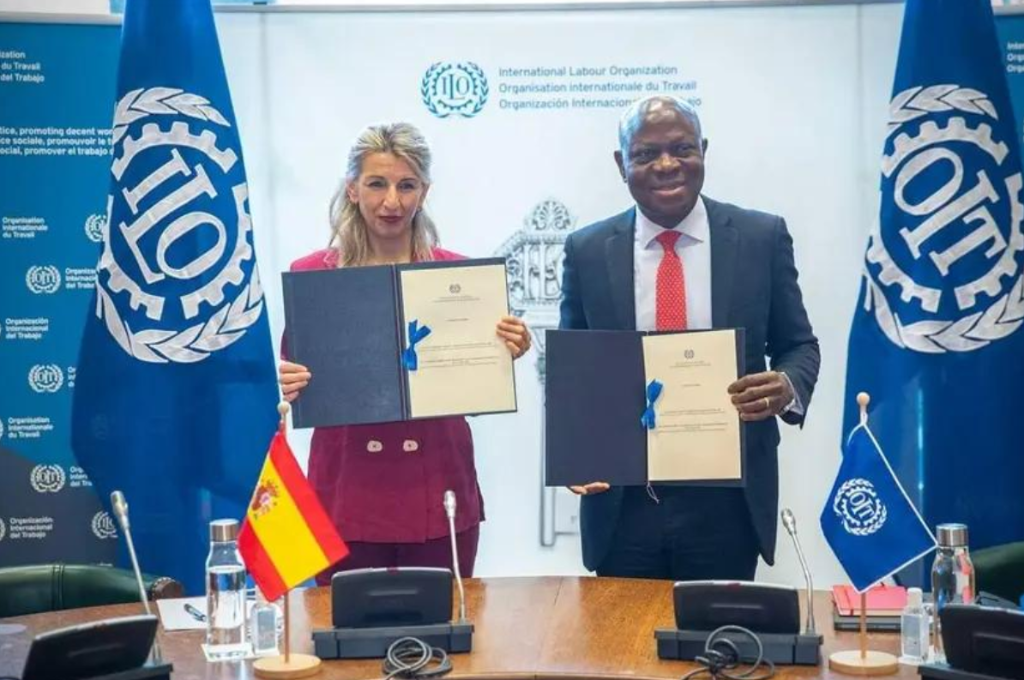
The International Labour Organization (ILO) announced on November 16, 2026, that Gilbert Houngbo had been re-elected as Director-General for a second five-year term after his sole challenger, Spanish Labour Minister Yolanda Díaz, withdrew from the race just before voting began. The unprecedented move left Houngbo without competition, but the circumstances surrounding Díaz’s exit have intensified scrutiny of his leadership and the financial health of the organization.
Yolanda Díaz’s sudden decision: Political strategy or signal of deeper problems?
In a surprise announcement, Yolanda Díaz stated that her withdrawal was intended to prevent further division within the global labour movement. However, her decision followed sharp public criticism of the ILO’s financial mismanagement and governance under Houngbo’s administration. In a press statement, she accused the organization of being trapped in its worst financial crisis in decades, exacerbated by unpaid dues from member states, including the United States.
Díaz emphasized that the ILO’s response to its budget shortfall—through staff reductions, hiring freezes, and service cuts—had come at the expense of frontline workers rather than addressing structural inefficiencies. She questioned whether the organization was prioritizing its own survival over its core mission of protecting workers’ rights.
Her remarks underscored a paradox: an institution dedicated to social justice is grappling with internal systemic issues that undermine its credibility and functioning.
Structural challenges and financial instability
The ILO’s financial strain is not new, but Díaz’s decision to step aside drew global attention to the severity of the situation. She highlighted that chronic underfunding, coupled with delays in member state contributions, had forced the agency to impose drastic austerity measures. These include:
- Unpaid staff salaries for several months
- Reduction in training programs for labour inspectors
- Limited funding for international labor standards projects
- Suppression of nearly 15% of non-essential staff positions
While the ILO has argued these measures were necessary to ensure financial sustainability, Díaz and labour unions within the organization have condemned them as counterproductive, warning that further cuts could erode the agency’s ability to monitor violations or support vulnerable workers worldwide.
Internal dissent: The voice of ILO employees
Behind the closed doors of the Geneva headquarters, staff representatives have openly criticized the Houngbo administration. Union leaders have condemned what they describe as a lack of transparency in decision-making, particularly concerning staff reductions and restructuring plans.
Díaz, a former labour lawyer, went further in her critique, arguing that the ILO was failing to uphold the principles of social dialogue it champions globally. She pointed to deteriorating labour relations within the organization itself, where staff unions have filed grievances over unfair working conditions and inadequate consultation procedures.
The Spanish Minister’s withdrawal reflects broader concerns that the ILO’s internal governance is disconnected from its public mandate—raising doubts about its ability to lead the global labour movement during a time of increased precarity for workers worldwide.
Why Yolanda Díaz stepped back: The politics behind the withdrawal
Díaz’s exit was not solely a response to financial mismanagement. It also reflected a strategic calculation within the labour movement. Though she represented a significant faction of European unions, the International Trade Union Confederation (ITUC) and the International Organisation of Employers (IOE) had already endorsed Houngbo’s re-election.
Her criticism of the ITUC’s decision highlighted growing fractures among global unions. She argued that the confederation’s support for Houngbo ignored widespread discontent over accountability, inclusivity, and the direction of the ILO’s reform agenda.
In choosing to withdraw rather than challenge Houngbo in an election, Díaz framed her move as a deliberate act to preserve unity—but one that also exposed deep divisions over the future leadership of the world’s only tripartite labour agency.What’s next for the ILO under Houngbo?
With Houngbo now confirmed for a second term, the pressure is on to address the financial and reputational damage highlighted during the election cycle. His administration faces immediate priorities:
- Restoring financial stability by securing timely payments from major contributors
- Repairing relationships with the international labour movement
- Implementing meaningful social dialogue reforms within the organization
- Avoiding further erosion of staff morale and institutional capacity
Yet the absence of a competitive election raises questions about Houngbo’s mandate. Without a formal challenger, he gains legitimacy through process—but legitimacy through performance has yet to be proven.
As global inequality and precarious work rise, the ILO’s role as a guardian of workers’ rights has never been more critical. The challenge now is whether it can heal its internal fractures—and its bank account—enough to fulfill that role effectively.
The global stakes: Can the ILO regain its authority?
The re-election of Gilbert Houngbo marks the start of a pivotal period for the ILO. While his uncontested victory ensures continuity, the critiques that led to Díaz’s withdrawal reveal systemic vulnerabilities that go beyond finance.
For the organization to recover its standing, it must demonstrate that it can govern itself with the same principles it advocates globally: fairness, transparency, and respect for workers—starting within its own ranks.