Military leadership in Burkina Faso under scrutiny as coercive rhetoric deepens divisions
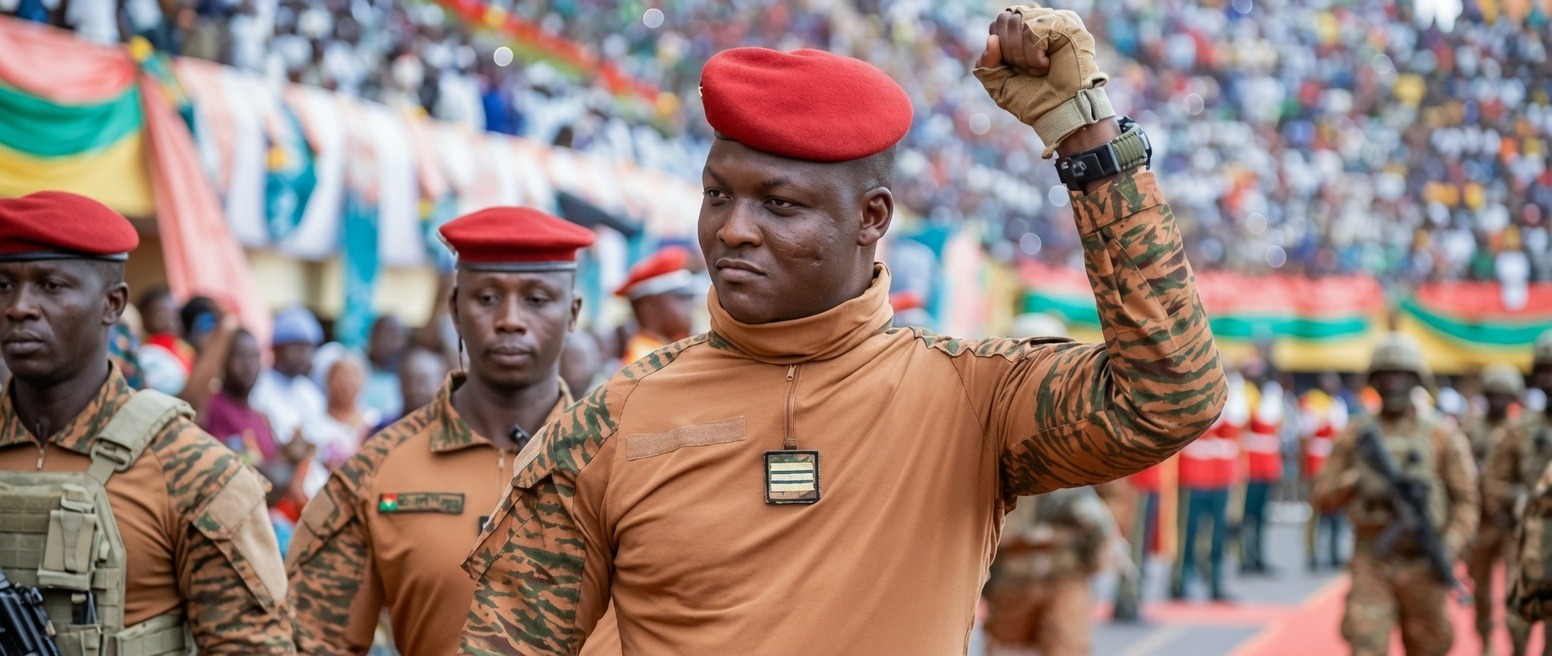
The recent address by Captain Ibrahim Traoré in Ouahigouya has laid bare a critical fracture within Burkina Faso’s transitional power structure. His blunt, combative language—replete with crude expressions—betrays a profound erosion of trust within the military apparatus itself.
In both governance and warfare, the overreliance on aggressive rhetoric and uncompromising threats is not a sign of strength but a clear indicator of systemic weakness. A leadership forced to publicly vow to suppress its own officers implicitly admits that the cohesion of the ruling junta no longer rests on shared doctrine or strategic alignment but solely on the fear of elimination. This approach is not just unsustainable—it is a recipe for long-term instability.
A fragile legitimacy built on fear
By dismissing hierarchical distinctions—declaring, for instance, that there are “no number ones or number twos”—Traoré seeks to preempt internal rivalries. Yet, this deliberate flattening of command structures concentrates all risks onto a single figure. By staking his legitimacy exclusively on battlefield experience, he mirrors a classic pitfall of military-led regimes: a fragile, non-transferable authority that hinges entirely on short-term military victories.
This discursive hardening does little to conceal the operational dangers of such a strategy. By prioritizing political loyalty over structural military reform, the transitional government risks suffocating the very command chain it depends on. Officers, now more concerned with self-preservation and internal monitoring than tactical initiative, may retreat into cautious conformity. An army paralyzed by the specter of false accusations of disloyalty inevitably loses its edge in combat, widening the gap between Ouagadougou’s rhetoric of resolve and the stark realities on the frontlines.
Intimidation as a double-edged sword
History shows that when dissent is suppressed through fear, it does not vanish—it merely goes underground. The same holds true in Burkina Faso. Rather than unifying the armed forces, the current climate of paranoia and blanket surveillance pushes dissident factions deeper into secrecy. Experience from past military regimes in the Sahel reminds us that when internal debate is stifled by the threat of harsh reprisals, opposition does not disappear; it simply waits for the moment when power dynamics shift.
The captain’s approach may silence immediate challenges, but it sows the seeds of future instability. Without genuine cohesion and structural reform, Burkina Faso’s transition risks becoming hostage to its own coercive tactics.