Kinshasa overwhelmed by war-displaced crisis
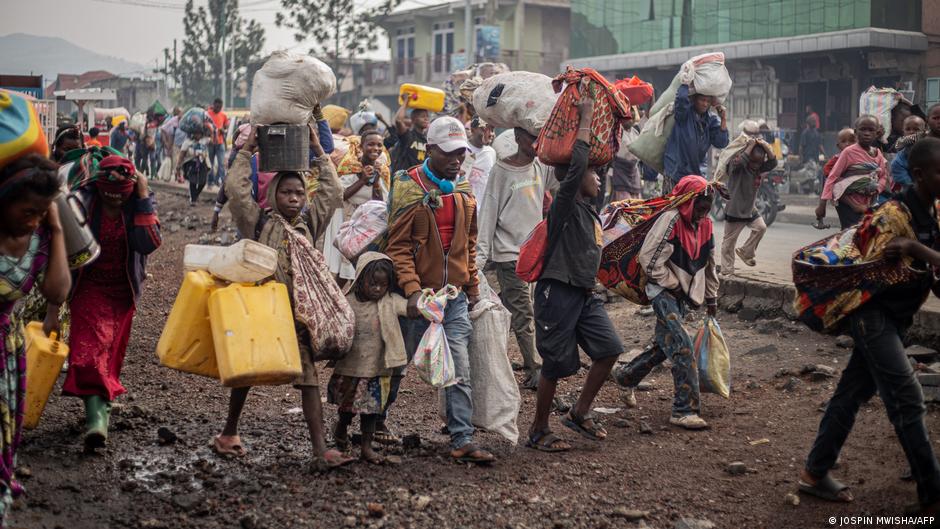
Thousands of internally displaced persons fleeing eastern Democratic Republic of the Congo’s conflict zones are facing a severe humanitarian crisis in Kinshasa. Sixteen deaths have already been recorded due to lack of medical care.
Most displaced individuals originate from North Kivu and South Kivu provinces, where they fled the advance of the M23 rebel group over a year ago. Others came from Ituri province, escaping attacks by armed factions including the Cooperative for the Development of Congo (Codéco) and the Allied Democratic Forces (ADF).
Left to fend for themselves
More than 2,600 households are enduring dire conditions, with many now homeless after being evicted from churches and mosques that had temporarily sheltered them. The most alarming aspect is the presence of highly vulnerable individuals among the displaced.
“We have pregnant women, people with disabilities, children, students, and elderly citizens. They remain in Kinshasa without access to healthcare, shelter, or food. Their situation is utterly desperate,” explains Jordan Mulikuza, spokesperson for eastern displaced persons in the capital.
Struggling students face bleak prospects
Students displaced by the conflict include both those who fled the violence and others who had relocated to Kinshasa before the crisis to pursue their education. Many now live on the streets after losing contact with their families or worse—learning of their relatives’ deaths. Jacques Chiza, a student representative, describes their plight:
“Life is unbearable. We lack food, and most spend nights outdoors with no shelter. No assistance reaches us. We urge anyone willing to help—this situation has reached a critical point.”
Government urged to act immediately
Sixteen fatalities have occurred in Kinshasa due to inadequate healthcare access for displaced persons. Despite repeated appeals to authorities and humanitarian groups, minimal progress has been made. The displaced demand immediate state intervention.
“Disease cases emerge daily. I call on the international community, United Nations agencies, and the government to intervene urgently,” warns Jordan Mulikuza. “Authorities must act before it’s too late. We are sounding the alarm to the President to take immediate action.”
While displaced persons request relocation to organized sites for better humanitarian access, Théogène Nkundiye, advisor to the Ministry of Social Affairs, Humanitarian Action, and National Solidarity, states: “Their situation is recognized, and a sustainable solution is under study. It’s premature to discuss details now—updates will follow in due course.”
For now, no concrete measures have been implemented to assist these thousands of internally displaced persons struggling to survive in Kinshasa.