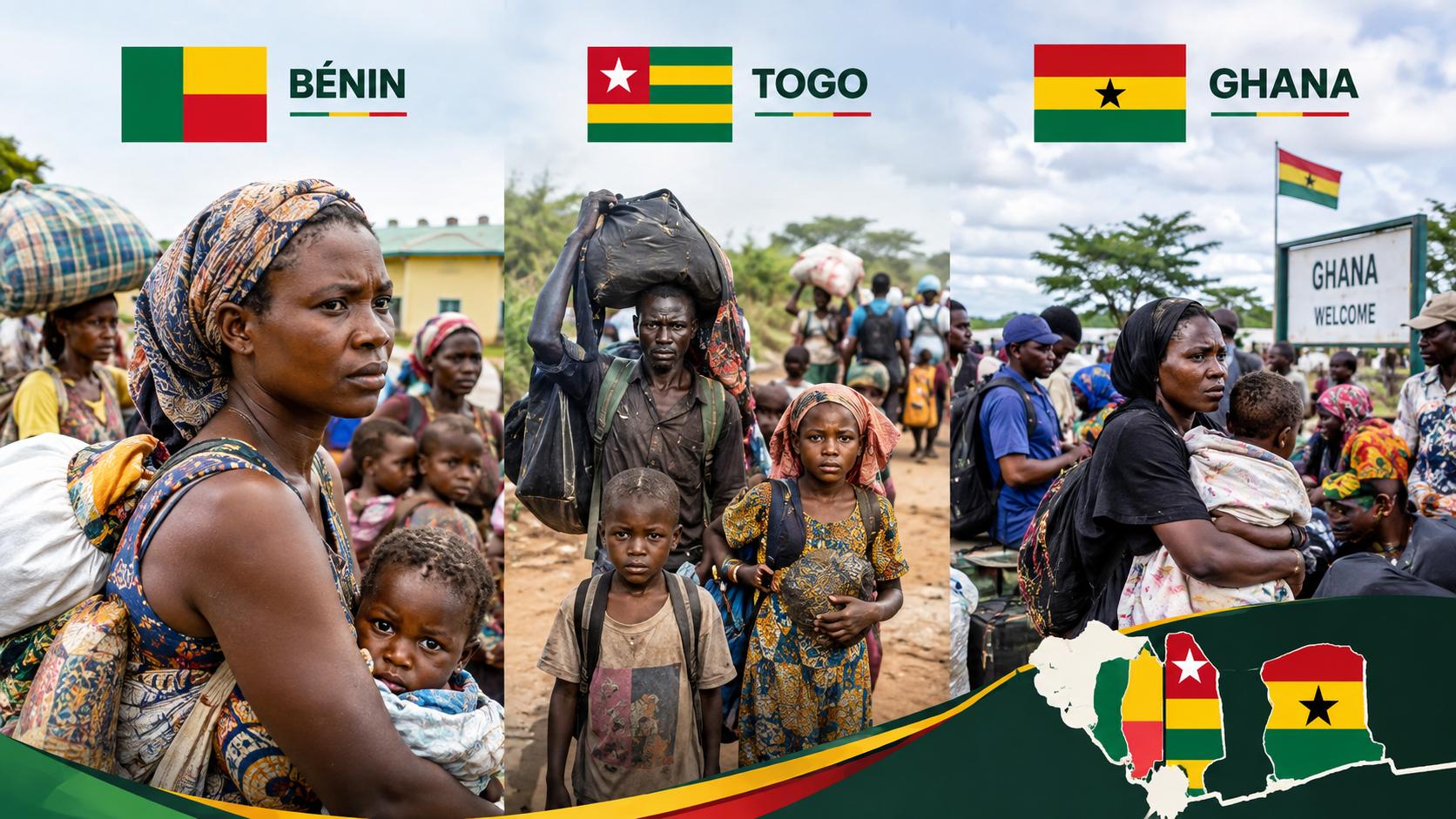
Diplomatic breakthrough creates pathway for safe repatriation
The governments of Benin, Ghana and Togo have joined forces with Burkina Faso and the UNHCR to establish a structured framework for the eventual voluntary return of Burkinabè refugees. Three tripartite agreements signed in Lomé on September 11 outline mechanisms for repatriation when security and dignity can be guaranteed — not before.
Key provisions of the Lomé accords
While the accords do not authorize immediate repatriation, they create a cooperative structure between Burkina Faso, its neighboring host countries and the UNHCR. The agreements include provisions for:
- Joint monitoring and coordination committees
- Preparation phases for proposed repatriation operations
- Mechanisms for reintegration support upon return
- Safeguards to prevent forced returns
The framework explicitly upholds the principle that returns must be voluntary, safe and dignified — with refugees making informed decisions about their future.
Neighboring countries bear the burden of displacement
Benin, Ghana and Togo have become primary destinations for Burkinabè fleeing conflict in the Sahel region. As of mid-2026, official figures showed:
- Benin hosting over 11,000 Burkinabè refugees
- Ghana accommodating 13,368 refugees (comprising two-thirds of its refugee population)
- Togo sheltering approximately 56,000 Burkinabè among its 65,100 refugees and asylum-seekers
Ghana formally recognized the refugee status of Burkinabè arrivals as early as February 2025 by granting prima facie refugee status to new arrivals.
Security conditions remain the decisive factor
The proposed repatriation framework cannot be separated from the ongoing security crisis in Burkina Faso, which has displaced hundreds of thousands since escalating in 2022. Human Rights Watch reports document widespread abuses attributed to both Islamist militant groups and government-aligned forces, including:
- Mass civilian casualties through deliberate attacks and indiscriminate violence
- Forced displacement campaigns by multiple armed actors
- Systematic restrictions targeting independent media and civil society
- Documented atrocities that may constitute war crimes or crimes against humanity
The transitional military government, led by Captain Ibrahim Traoré since September 2022, has further centralized authority while reducing political and civic freedoms. Reports indicate continued restrictions on media outlets and repression of opposition voices as recently as May 2026.
Return guarantees must address fundamental rights
For refugees to consider returning, critical conditions must be met:
- Guaranteed physical safety from armed violence in their home communities
- Restoration of access to abandoned property and land
- Availability of civil documentation and legal recognition
- Restoration of essential services including healthcare and education
- Mechanisms for reporting violations and seeking redress
The UNHCR emphasizes that sustainable returns require addressing the root causes that forced displacement in the first place.
Regional cooperation takes center stage
The Lomé agreements represent more than just a repatriation mechanism. They signal growing recognition among Gulf of Guinea states that population movements across the Sahel do not respect national borders. The accords provide:
- A platform for coordinated regional response
- Shared responsibility for refugee protection
- Structured dialogue between affected countries
- A balance between immediate protection needs and long-term solutions
Benin, Ghana and Togo thus transition from passive hosts to active participants in shaping the regional response to Burkina Faso’s displacement crisis.
Timeline remains conditional on security improvements
The Lomé accords establish a roadmap rather than a timetable. Implementation will depend entirely on:
- Improved security conditions in Burkina Faso
- Implementation of accountability measures for documented violations
- Full restoration of civil and political rights
- Sustainable reintegration support mechanisms
The message to refugees is unambiguous: returns will only proceed when safety and dignity can be guaranteed. This caution is particularly crucial given ongoing reports of continued violence involving multiple armed factions in Burkina Faso.
The ultimate measure of success will not be how many people are returned, but how many can return voluntarily to rebuild their lives without fear of renewed displacement.