Journalist Moussa Kaka held without clear charges in Niger
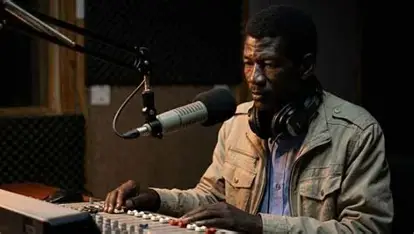
Prominent Nigerien journalist Moussa Kaka has been detained since late August, raising immediate concerns about the state of press freedom under General Abdourahamane Tiani’s leadership. As a former correspondent for international media and current director of Radio Télévision Saraounia (RTS), Kaka’s detention follows his departure from the broadcaster’s facilities, though authorities only confirmed his detention in early October.
The lack of transparency surrounding his arrest has intensified worries about the legal grounds for his detention, his access to legal representation, and the conditions of his confinement. Legal experts emphasize that while governments retain authority under national sovereignty, this authority cannot justify arbitrary detentions or the suppression of dissenting voices.
Without immediate clarification from Nigerien authorities, Kaka’s case risks becoming emblematic of broader constraints on journalism in a country where reporting on governance issues has grown increasingly perilous.
What international standards say about arbitrary detention
International law mandates that any detention must be justified by legal basis, conducted through transparent procedures, and subject to judicial review. Citizens detained without clear charges or access to legal counsel are denied fundamental rights that protect against state overreach. Kaka’s situation where authorities disclosed his detention weeks after he went missing raises serious questions about compliance with these legal norms.
Human rights organizations have repeatedly highlighted how governments manipulate national security narratives to justify silencing critics. In Niger, where military rule has reshaped political dynamics, such tactics threaten to erode public trust and undermine democratic institutions.
Kaka’s case is not isolated; it reflects a growing pattern where investigative journalists face retaliation for uncovering alleged corruption, mismanagement, or human rights abuses. The absence of due process in his detention underscores a dangerous precedent: that journalism itself may soon be criminalized under military governance.
Why criticism is not a crime in a functioning democracy
A government’s strength is measured not by its ability to suppress criticism but by its willingness to engage with it. Democratic systems rely on checks and balances, where journalists, civil society, and citizens play crucial roles in holding power accountable. When reporting on inefficiencies or irregularities is treated as a threat, governance suffers, and public trust erodes.
In Niger, where public institutions face scrutiny over transparency and accountability, suppressing voices like Kaka’s only deepens skepticism. The regime’s insistence on absolute control over information contradicts the very principles of national sovereignty it claims to uphold. True sovereignty is demonstrated through adherence to legal standards, not the arbitrary use of detention.
Citizens have a right to demand explanations from leaders, investigate alleged misconduct, and advocate for reforms without fear of imprisonment. Kaka’s detention sends a chilling message: that dissent is not tolerated, and that journalism is being redefined as subversion.
What must happen next for Kaka’s case
Nigerien authorities must immediately disclose the legal justification for Kaka’s detention, ensure his access to legal counsel, and allow his family to confirm his well-being. If no valid charges exist, his release should follow without delay. The opacity surrounding his case violates both national laws and international human rights obligations.
This is not merely a legal issue it is a test of Niger’s commitment to justice, transparency, and the rule of law. A nation’s greatness is not defined by how many voices it silences, but by how it protects them. Freedom of expression is not a privilege; it is a cornerstone of any free society.
Until authorities provide clarity and uphold these principles, questions will persist: Does Niger prioritize control over justice? And at what cost to its democracy?
By Nicolas Biyong — Journalist