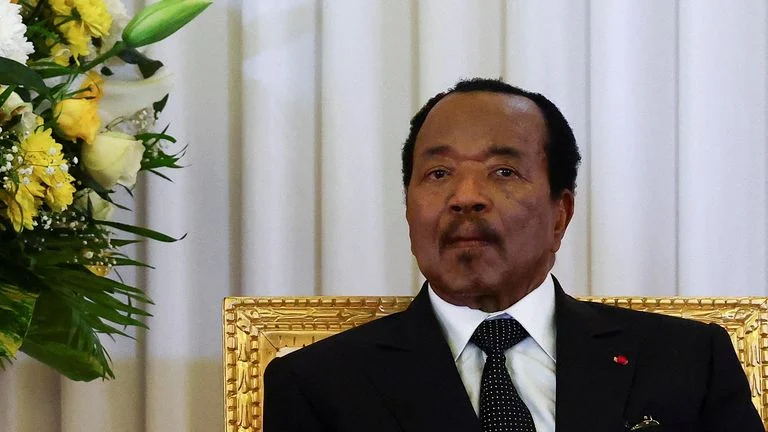
Paul Biya, Cameroon’s long-serving president, has once again vanished from the public eye, this time for over 40 days. The 93-year-old leader left the country on June 7, 2026, accompanied by his wife, for what was initially described as a private trip to Europe. Yet, as days turned into weeks, and weeks into a month and a half, the absence has grown increasingly conspicuous—especially in a nation where presidential transparency is a rare commodity.
What makes this extended disappearance particularly noteworthy is the complete silence from official channels. No statement, no update, not even a fleeting mention of the president’s whereabouts or condition. This lack of communication has left Cameroonians in the dark, fueling speculation and frustration across the nation. After all, Biya has a well-documented history of lengthy stays abroad, often in Switzerland, where he reportedly seeks medical care and enjoys the comforts of high-end hotels over the confines of his own presidential palace in Yaoundé.
a pattern of prolonged absences and unanswered questions
Biya’s repeated absences have become a defining feature of his decades-long rule. Since taking office in 1982, the president has spent far more time outside Cameroon than within its borders, raising persistent questions about his ability to govern effectively. At his advanced age, with a visibly declining health, the situation has only intensified debates about whether he remains capable of fulfilling his presidential duties. His latest re-election in November 2025—amid allegations of electoral irregularities—has done little to quell concerns.
Among the most vocal critics is opposition lawmaker Jean Michel Nintcheu, who has gone so far as to urge the Constitutional Council to declare the presidency vacant. The response from the ruling party was swift and dismissive: «The Lion hasn’t left», declared the director of propaganda, invoking the regime’s signature symbolism to dismiss growing discontent.
who really holds power in Cameroon?
The prolonged absence of Paul Biya has reignited a long-standing question: Who is truly in charge in Cameroon? With no vice president appointed despite constitutional provisions, and the government remaining unchanged since January 2019, critics argue the country operates on autopilot. The current prime minister, Joseph Dion Ngute, has held his position for over seven years, longer than a single presidential term in Cameroon.
Adding to the intrigue is the recent milestone of Martin Mbarga Nguélé, Cameroon’s national security chief, who turned 90 on July 1, 2026. His tenure, like much of Biya’s administration, reflects a government that moves at a glacial pace—one where leadership positions are held by figures well past retirement age.
a culture of silence and unchecked authority
In a nation where presidential health is treated as a state secret, rumors flourish in the absence of facts. The government’s refusal to address Biya’s prolonged absence only deepens the mystery, leaving citizens to wonder whether their leader is physically or mentally capable of governing. Meanwhile, the ruling party’s propaganda machine continues to project an image of unwavering stability, dismissing concerns with hollow reassurances.
Yet behind the official narrative, frustration is building. Cameroonians are growing weary of a system where a president’s prolonged absences are met with impunity, and where dissent is swiftly met with repression. As the days pass without word from Yaoundé, one thing is clear: the longer Paul Biya remains absent, the louder the calls for accountability become.