Africa Corps: Russia’s shadowy military force reshaping Mali’s conflict
A highly secretive Russian paramilitary unit, Africa Corps, has recently withdrawn from a key position in Mali held for years. Despite this setback, the group remains a critical tool for Moscow’s strategic interests across the Sahel.
A weekend of intense violence rocked Mali. On April 25, Islamist militants aligned with Tuareg rebels launched simultaneous attacks on multiple strategic positions controlled by the ruling junta near Bamako — where Defense Minister Sadio Camara was killed — and in several major cities.
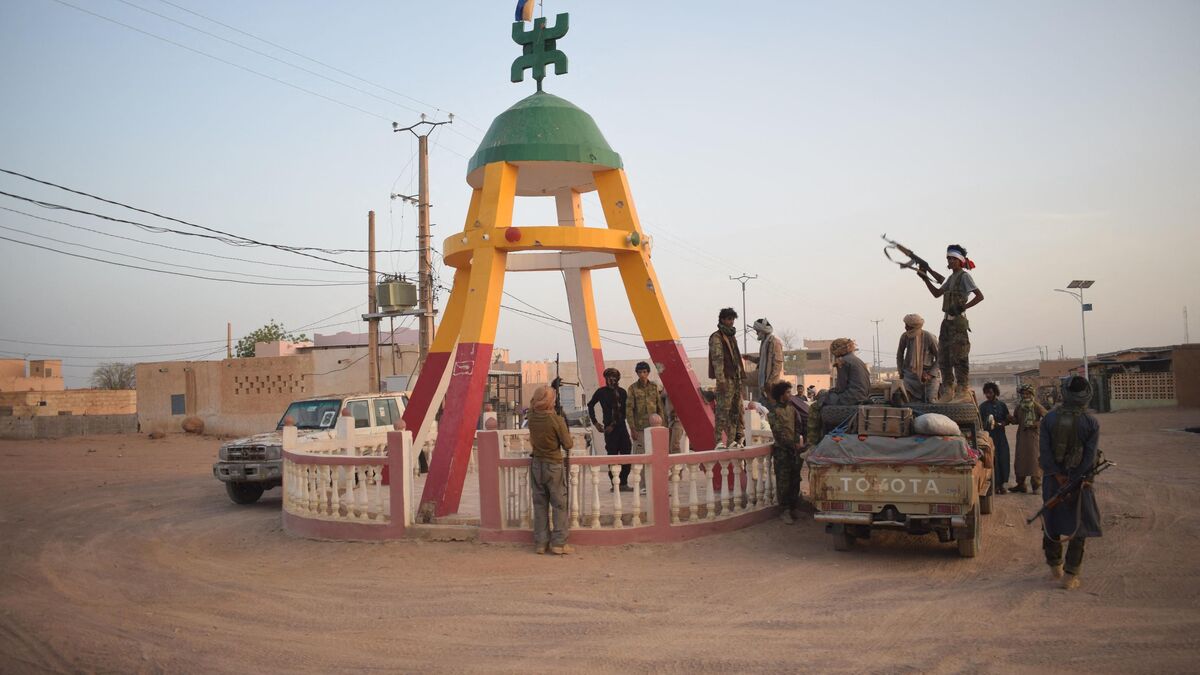
In eastern Mali, rebels successfully reclaimed Kidal, a key stronghold of the junta that had been firmly under Africa Corps’ control for years. After intense clashes and prolonged negotiations, the Russian paramilitary force withdrew from the city. However, its influence extends far beyond Mali’s borders throughout North Africa.
#Mali départ de tous les éléments de l’Africa Corps rassemblés à l’entrée de l’ancien camp sous escorte du FLA. Avec ce convoi les mercenaires russes quittent la ville et le camp. https://t.co/fGS1yA4E24 pic.twitter.com/ovNPLWYINw
— Wassim Nasr (@SimNasr) April 26, 2026
Africa Corps, one of Russia’s most covert international military branches, was officially established in 2023. On November 20 of that year, military blogger Deux Majors announced its creation on Telegram, citing statements from Igor Korotchenko, a former colonel and Kremlin-affiliated journalist. The organization reportedly reports directly to Russian Deputy Defense Minister Yunus-bek Yevkurov.
The emergence of Africa Corps coincides with the decline of the Wagner Group, Russia’s infamous paramilitary organization founded in 2014 to advance Moscow’s interests abroad, particularly in Africa.
The deaths of Wagner Group founders Yevgeny Prigozhin and Dmitri Utkin in a mysterious plane crash in August 2023 marked a turning point. Just weeks earlier, Prigozhin had attempted a brief armed rebellion against the Kremlin, despite his previous close ties to President Vladimir Putin.
Russia’s Africa strategy takes a new form
Africa Corps has rapidly positioned itself as Wagner’s successor, absorbing personnel and operations across the continent. “Africa Corps serves as Wagner’s rival, designed to consolidate all Russian military activities in Africa,” noted a U.S. government official in 2023. Unlike its predecessor, Africa Corps operates with greater centralization and tighter Kremlin control.
The group’s name draws inspiration from the Nazi-era Afrikakorps, which fought in North Africa during World War II, though Africa Corps presents itself as a modern military structure rather than a historical reference.
Clear objectives in Africa
From its inception, Africa Corps has outlined its mission: “to conduct large-scale military operations across Africa to help nations break free from neocolonial dependence, eliminate Western influence, and achieve full sovereignty,” according to Igor Korotchenko. The group positions itself as an ally to African governments seeking to reduce foreign interference.
While Africa Corps maintains a lower profile than Wagner — which faced widespread accusations of war crimes and brutal repression — it focuses on strengthening ties with allied governments. The group provides military personnel and equipment to bolster pro-Russian regimes in Burkina Faso, Libya, Sudan, the Central African Republic, and Niger.
Mali: A critical battleground
Africa Corps replaced Wagner in Mali starting in 2024, deploying hundreds to thousands of fighters. Many former Wagner commanders and their troops have since joined Africa Corps’ ranks in the region. The group has played a pivotal role in supporting Mali’s junta against Tuareg rebels, helping Moscow extend its regional influence following the gradual withdrawal of Western powers, including France.
Beyond security, Africa Corps aims to secure strategic advantages, including control over migration routes and access to valuable mineral resources.
Despite its more subdued approach, Africa Corps has faced international sanctions. In 2024, the United Kingdom accused the group of “widespread human rights violations across Africa” and “exploiting natural resources for profit.”