What we know about the arrest of Sunni imam Mohamad Ishaq Kindo
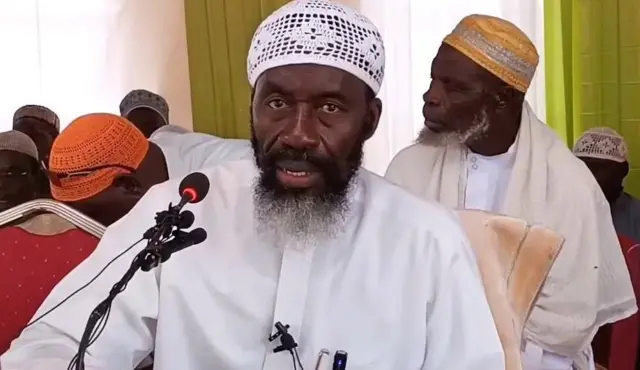
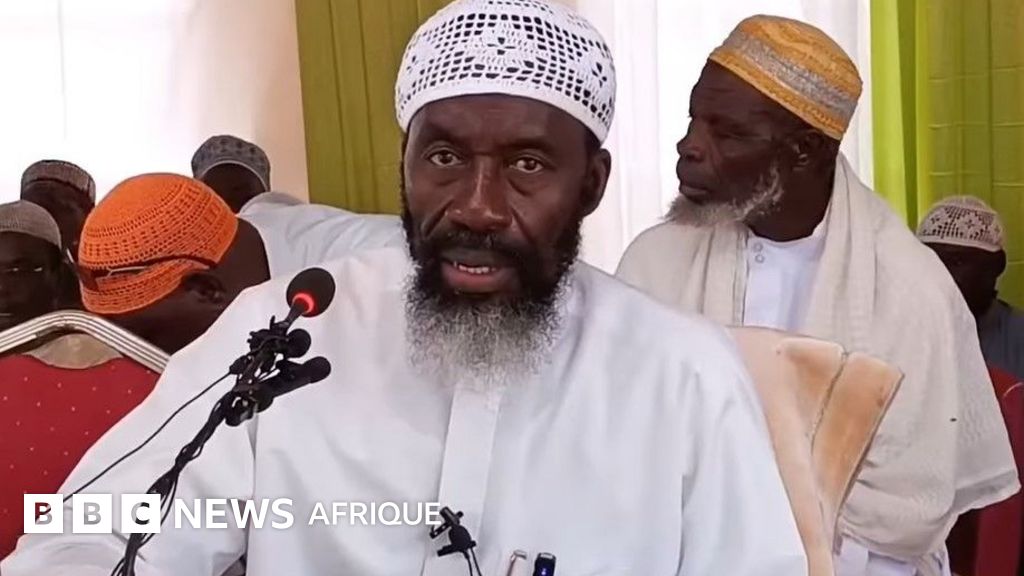
Ouagadougou — The arrest of influential Sunni imam Mohamad Ishaq Kindo, president of the country’s Sunni Oulémas, has sent shockwaves through Burkina Faso. Authorities took him into custody on the afternoon of May 26 in Ouagadougou, just two days after he publicly criticized the newly adopted religious freedoms bill passed on March 19. Witnesses described a heavy-handed operation involving masked security personnel.
The Fédération des associations islamiques du Burkina (FAIB) issued a statement shortly after the arrest, confirming Kindo was taken under unspecified circumstances. The organization has since filed formal requests with relevant authorities to obtain precise information about his detention and secure his release.
Controversial law fuels tensions
The timing of the arrest has intensified debate over the controversial religious freedoms bill, which aims to regulate religious practices to curb online extremism and hate speech. While authorities claim the law is necessary to combat radicalization, critics argue it restricts fundamental freedoms. Kindo’s opposition to the bill, expressed in a widely shared audio message, appears to have provoked his detention.
In the recording, he warned, “No leader, no matter how powerful, can stand against divine will. Be wary of attempts to ban public prayers.” His remarks have since sparked widespread reactions across the country.
A violent arrest amid growing unrest
Eyewitnesses reported that plainclothes and masked security forces, including police and military personnel, carried out the arrest around 2:00 PM local time. The operation sparked immediate resistance from Kindo’s followers, leading to clashes that left several worshippers injured. The tension was palpable, with many describing the scene as chaotic.
In response to the arrest, hundreds of protesters took to the streets of Ouagadougou the same evening, demanding Kindo’s immediate release. Authorities responded with tear gas to disperse the crowd, further escalating the situation.
The FAIB has since urged calm among the Muslim community, calling for restraint and patience while awaiting further developments.
No official explanation as the nation reflects
As the country celebrated Tabaski the following day, attention remained fixed on Kindo’s case. President Ibrahim Traoré addressed the nation on social media, praising security forces for their efforts against jihadist groups while warning against any attempts to destabilize the country. “Those who seek to undermine our progress will face the full consequences of their actions,” he stated.
Despite the public outcry, no official explanation has been provided regarding Kindo’s detention. Authorities have yet to clarify the legal basis for his arrest or his current whereabouts.
New religious law under scrutiny
The religious freedoms bill, adopted in March, includes measures prohibiting the construction of places of worship in public institutions, with exceptions for healthcare facilities, prisons, and military barracks. Authorities justify the restrictions as necessary to prevent radicalization and maintain national cohesion.
Mariem Sanogo, Director General of Religious, Customary, and Traditional Affairs, emphasized that the law is not new but has been updated to address rising extremism and online hate speech. “Our goal is to strengthen national unity while ensuring freedom of religion is respected,” she stated.
The law has drawn mixed reactions. Supporters argue it is essential for security, while critics see it as an overreach that could infringe on religious liberties. The arrest of a prominent religious figure like Kindo has only deepened concerns about the government’s approach to governance and freedom of expression.
Since the military takeover nearly four years ago, Burkina Faso has seen a series of high-profile detentions and disappearances of critics. Authorities attribute this to the ongoing fight against jihadist insurgencies that have plagued the country for over a decade.