Amid a wave of militarisation sweeping across Burkina Faso, a troubling incident has cast a harsh spotlight on the regime’s expanding influence over civilian spheres. An alleged case of sexual violence involving members of the national women’s football team during a military-organised training camp has raised serious questions about the consequences of unchecked military authority.
Patriotic training or systemic abuse?
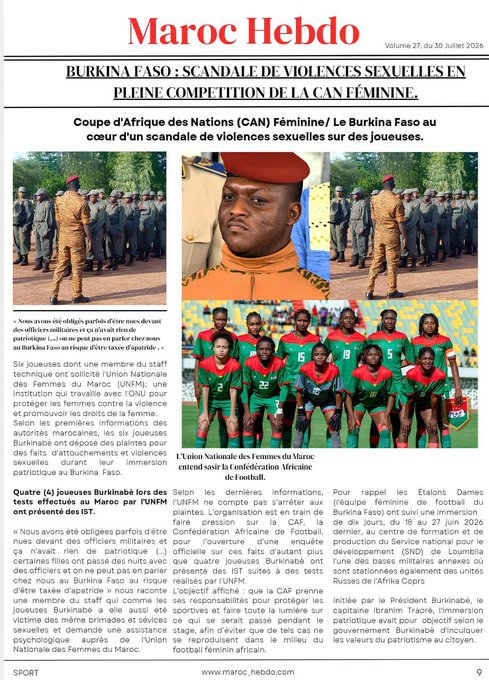
A so-called ‘patriotic immersion’ program, designed to instil discipline and national pride in athletes ahead of a continental competition, has instead become the centre of a disturbing controversy. Six players and one technical staff member have filed a complaint with a Moroccan women’s rights organisation, accusing military officers of sexual violence during their stay at a military base in Burkina Faso.
The allegations, if proven, would represent a severe breach of trust and a stark violation of the players’ fundamental rights. The incident also underscores broader concerns about the militarisation of civilian institutions, a policy central to the current government’s agenda.
From defence to domination: the army’s expanding role
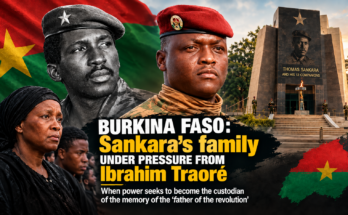
Since seizing power, Captain Ibrahim Traoré’s administration has systematically integrated the military into areas far beyond traditional defence. Education, youth programmes, cultural initiatives, and even sports now fall under military oversight—a strategy framed as essential for national rebuilding.
While proponents argue that this approach fosters discipline and cohesion, critics warn that it erodes civilian oversight. When military structures replace civilian institutions in non-defence sectors, accountability mechanisms weaken, and the risk of abuse increases. Human rights advocates have long cautioned that this shift undermines democratic safeguards and the rule of law.
The silence of institutions and the rise of impunity
A functioning democracy relies on checks and balances. When courts, independent media, civil society, and opposition parties face restrictions, the space for scrutiny shrinks. Victims of abuse may hesitate to come forward, fearing retaliation, intimidation, or professional consequences.
The current case exemplifies this dilemma. The complainants reportedly pursued legal action only after leaving Burkinabè territory, raising doubts about the reliability of domestic protection systems. This development signals a troubling erosion of public trust in national institutions.
A climate of fear and restricted freedoms
Several factors contribute to the stifling of dissent. Criticising military-led initiatives is often framed as unpatriotic or even sympathetic to armed groups. Journalists, activists, and civil society members face growing risks, including harassment or legal action. Independent media outlets have been silenced or restricted, limiting the flow of critical information.
Meanwhile, the government’s focus on security priorities has sidelined human rights concerns. In this environment, silence cannot be mistaken for consent; it often reflects fear of reprisal for speaking out.
Beyond football: a crisis of governance
This incident extends far beyond the realm of sport. It exposes deeper flaws in a system where military authority operates with minimal civilian oversight. The case also challenges the state’s ability to ensure the safety of citizens participating in government-led programmes.
More fundamentally, it highlights an uncomfortable truth: the fight against terrorism, while urgent, cannot justify the systematic weakening of judicial guarantees, public freedoms, or accountability mechanisms. A state that sacrifices these principles risks losing its moral legitimacy.
International intervention: a sign of lost confidence
The decision to file the complaint abroad rather than domestically is a telling indicator. Regardless of the outcome, it reflects a profound crisis of faith in Burkina Faso’s justice system.
For the victims, seeking recourse internationally may be the only path to impartiality and protection. This move could pressure authorities to conduct a thorough, transparent, and credible investigation—one that identifies those responsible, safeguards victims, and ensures justice is served.
A warning for Burkina Faso’s future
These allegations serve as a stark reminder: no political project, no matter how ambitious, can endure without adherence to the rule of law. Patriotism cannot be invoked to justify the abandonment of oversight mechanisms or the suppression of truth when grave human rights violations are alleged.
If the accusations are substantiated, this case may mark a pivotal moment in assessing Burkina Faso’s governance. It would illustrate the dangers of excessive power concentration and the erosion of institutions tasked with protecting citizens.