For countless Burkinabè, accessing healthcare was once a distant dream. The stark reality? A hefty price tag stood between patients and life-saving treatments. But on March 13, 2024, the government of Burkina Faso made a bold move to dismantle this financial barrier. By slashing the cost of critical medical exams and eliminating upfront payments for dialysis in public hospitals, the state has transformed healthcare from a privilege into a tangible right for its citizens.
From financial despair to renewed hope: the human cost of change
In the bustling corridors of public hospitals across Burkina Faso, the weight of financial despair was etched on every face. Families faced an impossible choice: pay exorbitant fees for medical exams or watch loved ones suffer. Madi Diallo’s heartbreaking story is one of many that highlights this harsh reality.
“Three years ago, my sister needed urgent dialysis. The hospital demanded a deposit of 500,000 FCFA—an amount we simply didn’t have. She passed away before treatment could begin,” he shares, his voice heavy with grief. Today, that deposit is a thing of the past. “The reform is just and necessary, but for us, it’s come too late,” he adds.
Breaking down the economic barriers to healthcare
The government’s decision to reduce costs wasn’t made in isolation. It was the culmination of years of advocacy and recognition that financial constraints were pushing essential healthcare out of reach for thousands. By lowering the prices of exams like CT scans and MRIs, and removing the mandatory deposit for dialysis, the state has taken a monumental step toward making healthcare accessible to all.
The reforms, announced by Dr. Robert Lucien Jean Claude Kargougou, Minister of Health, after the Council of Ministers meeting on March 13, 2024, have already made a significant impact:
- A CT scan, previously priced at 50,000 FCFA, now costs just 25,000 FCFA.
- An MRI, once 100,000 FCFA, is now available for 40,000 FCFA.
- The mandatory 500,000 FCFA deposit for dialysis has been completely abolished.
These changes are more than just numbers—they represent a lifeline for vulnerable populations who previously had no option but to forgo treatment.
Real-world impact: voices from the frontlines
At the Bogodogo University Hospital Center, the reforms are not just policy—they’re a daily reality. Dame Ouédraogo, née Nikiéma Élodie, recently underwent an MRI and shared her experience:
“The cost is now incredibly affordable. I paid just 40,000 FCFA, including consumables, whereas elsewhere, the same exam could cost up to 150,000 FCFA or more.”
For Dame Ouédraogo, the savings of over 100,000 FCFA mean more than just financial relief—it allows her to continue participating in community savings groups, a vital social and economic lifeline.
The hospital’s director general, Seydou Nombré, confirms the reforms are fully implemented. “The MRI now costs 40,000 FCFA, and the 500,000 FCFA deposit for dialysis has been scrapped. For urgent dialysis, the cost is now just 2,500 FCFA,” he explains.
The impact extends beyond the capital. In Ziniaré, the regional hospital has seen a similar transformation. Patients no longer need to travel to Ouagadougou for critical imaging exams, thanks to the availability of on-site services at reduced costs. Mady Zorné, director general of the Ziniaré hospital, notes a significant decrease in referrals to the capital since the reform took effect.
“The reduction in costs has not only eased financial burdens but also improved the efficiency of our healthcare system,” he says. “Clinicians now have access to the imaging tools they need to make accurate diagnoses, streamlining the entire care process.”
Dialysis: a lifeline for chronic patients
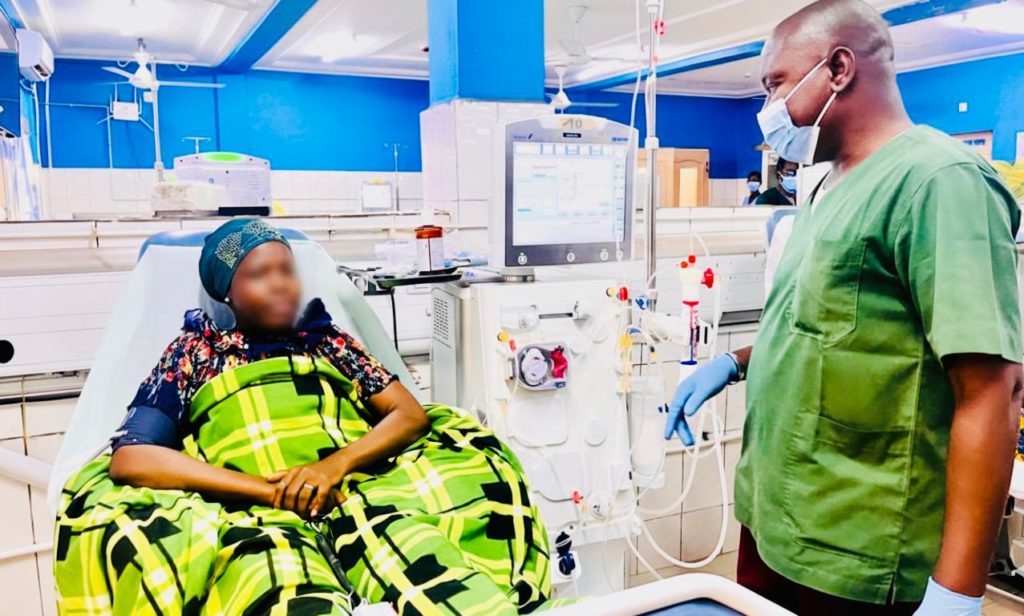
At the Yalgado Ouédraogo University Hospital Center in Ouagadougou, the dialysis unit is a hub of quiet intensity. With 34 machines servicing nearly 100 patients daily, the unit operates in three shifts to accommodate demand. Tuina Nsoma Hélène, head of the dialysis unit, highlights the significance of the reforms:
“The elimination of the 500,000 FCFA deposit has opened doors for patients who were previously excluded from care. Since the reform, 16 new patients have started dialysis without the financial hurdle.”
However, challenges remain. The limited number of machines means long waiting lists, and patients in critical condition often face delays. “A death frees up a spot for someone in need,” Hélène explains, underscoring the harsh reality of resource constraints.
Despite these obstacles, the reform has already made a tangible difference. Patients like Dame Sanou, née Traoré Salimata, who has lived with kidney failure since 2018, can now access treatment without the crippling financial burden that once delayed her care for years.
“This reform symbolizes the dignity of patients facing chronic illness,” she says. “It’s a recognition that healthcare is a right, not a privilege.”
The road ahead: challenges and opportunities
While the reforms have brought much-needed relief, they are not a panacea. Structural challenges persist, including a shortage of medical equipment and long waiting lists. Dr. Hamidou Sawadogo, a nephrologist at the Sourou Sanou University Hospital Center in Bobo-Dioulasso, emphasizes the need for further investment:
“Since the reform, we’ve only been able to integrate 17 new hemodialysis patients. Many acute cases requiring dialysis cannot be accommodated due to a lack of available machines.”
He calls for urgent action to expand dialysis centers, recruit qualified staff, and equip additional units to meet demand. “Decentralizing dialysis centers would allow patients to receive care closer to home, reducing the social and economic strain on families,” he argues.
Patients like Youl Sié, who has relied on dialysis since 2021 due to chronic hypertension, echo this sentiment. “We need more centers in our communities. Being forced to travel far from home for treatment disrupts family life and education,” he says. “Healthcare should bring people together, not tear families apart.”
A step toward equity in healthcare
While the road to equitable healthcare in Burkina Faso is long, the reforms represent a significant stride forward. Patients no longer face the agonizing choice between financial ruin and life-saving treatment. The government’s commitment to reducing costs and improving access is a testament to the belief that healthcare is a fundamental right.
Yet, as the experiences of patients and healthcare providers reveal, the journey is far from over. The elimination of financial barriers is just the beginning. Structural reforms, increased investment, and community-centered care are essential to building a healthcare system that truly serves all Burkinabè.
In a nation where integrity defines its people, these reforms are a promise—a promise that healthcare will no longer be a luxury, but a right within reach for every citizen.