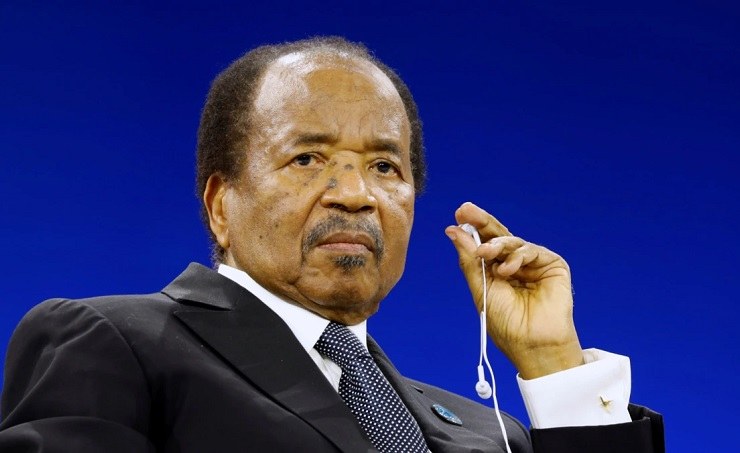
After 56 days shrouded in secrecy, Cameroon’s government finally broke its silence: President Paul Biya is alive and his return is imminent.
From 56 days of silence to a dramatic announcement
For over two months, Cameroon held its breath. The nation watched and waited, searching for any sign of life from a president who had vanished from public view. Then, on August 2, 2026, the government shattered the silence.
Speaking on national radio, Communication Minister and government spokesperson René Emmanuel Sadi delivered a clear message: “The president is alive”. He dismissed all rumors of power vacuums, firmly stating: “There is no vacancy of power.”
His words brought temporary relief, yet they left unanswered questions hanging in the air.
Paul Biya: Africa’s oldest leader with decades at the helm
To grasp the gravity of the situation, we must consider the man at its center. Paul Biya, 93, is the world’s oldest sitting head of state. Since taking office in 1982, he has ruled Cameroon for 43 uninterrupted years—a tenure that some see as stability, others as stagnation.
On June 7, 2026, the president left Yaoundé alongside his wife, reportedly for a private visit to Europe. What was meant to be a brief trip has stretched into an unprecedented absence.
A media blackout fuels speculation
Officially, little happened in the president’s absence. The presidency issued a few military decrees and sent official telegrams—including birthday greetings to French President Emmanuel Macron on Bastille Day. But no images, no statements, no public appearances. Only an eerie void, quickly filled by speculation.
Local media didn’t hold back. Le Messager, one of Cameroon’s leading newspapers, blasted in bold: “50 days is too long!” It criticized the prolonged absence as leaving the nation in paralysis, a government paralyzed, and citizens in a state of uncertainty about the future.
The ruling party’s reassurances fall short
President Biya’s party, the RDPC, attempted damage control. Christophe Mien Zok, the party’s propaganda director, penned an editorial in L’Action on July 15, declaring: “The Lion has not left.” But such statements did little to calm growing tensions.
The opposition seized the moment. Jean-Michel Nintcheu, a prominent opposition deputy, formally petitioned the Constitutional Council to declare a power vacuum. The UDC, another opposition party, warned that “a republic’s stability cannot rest on silence or assumptions.” It also highlighted the absence of a vice president—a position left vacant since a constitutional revision in April 2026.
René Emmanuel Sadi steps in: “The president is alive”
In a high-stakes interview broadcast on August 2, Sadi addressed the nation’s concerns head-on. He dismissed calls for a constitutional review, stating: “Those calling for a declaration of power vacancy should read the constitution more carefully and objectively.”
He emphasized constitutional facts: The Constitutional Council has not ruled on any vacancy of power. “President Paul Biya is alive. He has not resigned,” Sadi insisted.
But the question everyone wanted answered remained: When will he return? “I cannot give you an exact date. Even if I knew, it wouldn’t be my place to announce it here,” he said. Yet he offered a promise: “I can tell you he is coming back very soon.”
An unprecedented absence that breaks records
This 56-day absence is not just long—it’s historic. It surpasses even Biya’s 42-day absence in late 2024. Over 43 years in power, he has spent nearly seven years abroad—a record among African heads of state for private travel.
Rumors suggest members of the president’s inner circle, including family, are currently in Switzerland. While unverified by authorities, the claim only deepens public unease.
Constitution vs. reality: Can a president be absent indefinitely?
The legal debate has intensified. Opposition deputies have urged the Constitutional Council to rule on a potential power vacuum, arguing that absences exceeding 45 days should trigger review. Yet the reality is less straightforward.
The Cameroonian Constitution contains no legal limit on how long a president can stay abroad. The UDC points out: “No text regulates the duration of the president’s absence from national territory.”
The government has exploited this legal gray area. Meanwhile, critics denounce a dangerous “institutional void.”
Cameroon holds its breath
Cameroonians are divided. Some feel reassured by the government’s announcement. Others remain skeptical. Social media is alive with reactions. One user wrote: “Paul Biya is the luckiest president in the world—free to come and go as he pleases, with no consequences.”
Others focus on health concerns: “50 days abroad—the longest absence yet. No wonder rumors about his health are spreading.”
The promise of an imminent return may ease tensions—for now. But the lack of a firm timeline, the secrecy surrounding the trip, and the absence of health details could reignite demands for transparency.
The unspoken question: What comes after Biya?
Beyond the immediate crisis lies a deeper issue: succession. At 93, President Biya embodies the regime—but for how much longer? The opposition warns that his prolonged absence is no longer just about health rumors; it’s about the future of governance.
The UDC has called for “an institutional process to regulate long absences by the head of state.” A plea for transparency that quietly questions what comes after Biya.
What we still don’t know
- Where is Paul Biya exactly? Reports suggest Switzerland, but no official confirmation.
- Why has the trip lasted so long? Officially “private,” but duration and circumstances raise eyebrows.
- When will he return? “Very soon,” says the minister—a promise, not a date.
- What is his health status? Only that he is “alive.”
Will the government’s statement be enough?
Timing was everything—and the government got it wrong. By waiting 56 days to speak, it allowed rumors to fester. And its vague reassurances may not be enough to silence doubt.
Yet René Emmanuel Sadi stood firm. He defended the constitution, pushed back against critics, and offered hope of a return. But in a country where power is deeply personalized and information scarce, the words of a minister carry less weight than the silence of a president.
In the meantime…
Cameroon waits. Citizens wait. They wait for their president. They wait for answers. They wait for a sign that the “Lion of Africa” will roar again.
But more than that, they wait to know: Can a nation’s stability truly depend on the prolonged absence of its 93-year-old leader?